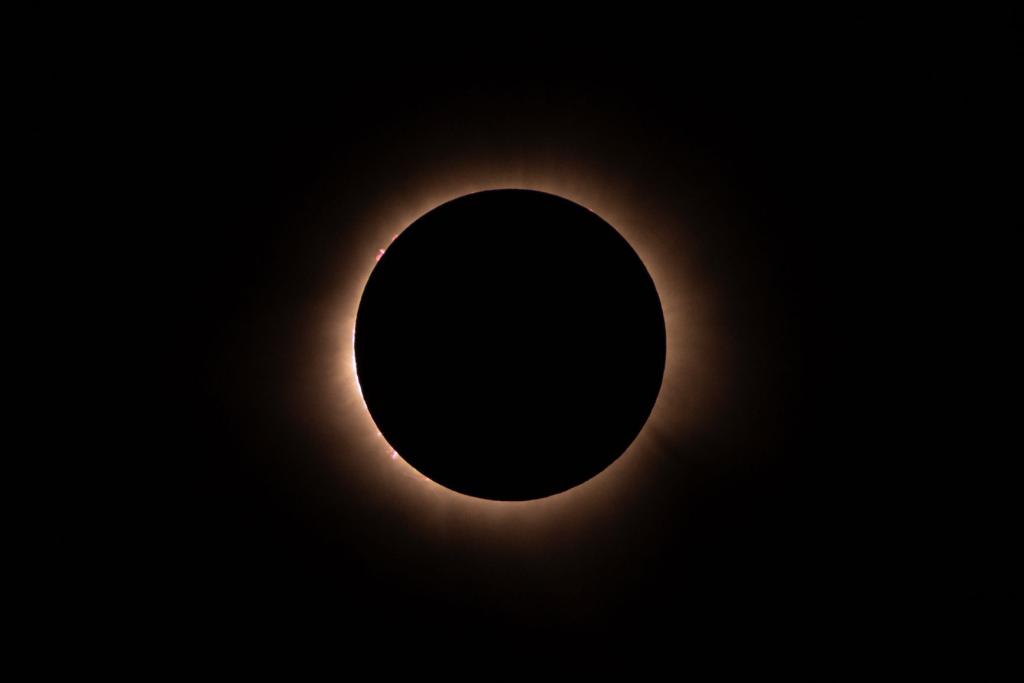
Viral posts have been warning that Earth will switch off its gravity for seven seconds on the day of this August's total solar eclipse, sending people, cars, and buildings floating before everything crashes back down. The Project Anchor Hoax even names a secret NASA program supposedly spending eighty-nine billion dollars on underground bunkers for the chosen few. None of it is real, and the space agency has said so in plain language, according to Universe Magazine's account of NASA's denial.
"The Earth will not lose its gravity because it is directly related to the planet's mass," a NASA spokesperson told fact-checkers, calling the theory complete nonsense. For gravity to vanish, the entire planet would have to shed its mass all at once, from its core to its atmosphere, and the problems would start long before the supposed date arrived. Independent fact-checkers at Fact Crescendo searched NASA's publications, technical reports, press releases, and the agency's Technical Reports Server and found no trace of any program called "Project Anchor," no leaked document, and no scientific paper supporting the claim.
How the rumor was assembled
The hoax did not appear overnight. The Evidence Network traced its construction across more than a year: between late 2024 and early 2025, videos on Instagram and TikTok began describing an imminent "global gravitational event." Within weeks, the story picked up invented specifics — a precise date, a code name, astronomical figures attributed to NASA. By February 2025, clickbait sites and conspiracy channels had pushed it to an international audience. That slow assembly is what makes the Project Anchor Hoax a textbook case for misinformation researchers: every new detail arrived dressed as leaked inside knowledge.
One widely shared version was traced to an Instagram post published on the final day of 2025, which gave exact timings and catastrophic scenarios and alleged the enormous contingency budget. Investigators found signs the post may have been written with AI-generated text, and the account behind it later became inaccessible. Fact-checking organizations published formal debunks in mid-January 2026, yet the story kept circulating through shares and reposts, eventually prompting the agency itself to respond.
The real event it hijacked
The hoax works because it is grafted onto something genuine. A total solar eclipse will indeed cross the sky on August 12, 2026, with the path of totality passing over Greenland, Iceland, and northern Spain. That date is fixed by orbital mechanics, not by any NASA contingency plan, and it is exactly the kind of real anchor that makes a fabricated story feel plausible.
What will actually happen that day is far less dramatic. In the eclipse path, the sky will darken for a minute or two, temperatures may dip slightly, and the light will take on a strange color. The Sun and Moon do exert tidal forces on Earth, but those forces are tiny, entirely predictable, and incapable of switching off planetary gravity. Gravitational waves from distant cosmic collisions are real too, but they stretch and squeeze spacetime by almost unimaginably small amounts as they pass through us — they cannot cancel Earth's gravitational field.
Why stories like this keep finding an audience
The Project Anchor Hoax follows a recipe that keeps working: an official-sounding program name, suspiciously precise numbers, a real date borrowed from astronomy, and a villain with a secret budget. Each ingredient is cheap to invent and expensive to check, which is why the claim outran the debunking for weeks. The Project Anchor Hoax dressed the same formula in a lab coat: a code name, a budget, and a date borrowed from real astronomy.
There is a practical reason to get the facts straight before August. The genuine danger of eclipse day is not weightlessness but eyesight: staring at the Sun without certified protective glasses can cause permanent retinal damage, and the only safe moment to look with the naked eye is the brief total phase when the Moon fully covers the solar disk. NASA's actual guidance for the event is about eclipse glasses, not bunkers.
The episode also fits a pattern this section has tracked all month, from a political conspiracy theory that collapsed within days to a fabricated county apology and false claims aimed at a vaccine rollout. Each began with a gap in public information and an audience ready to fill it with a sensational explanation before the facts arrived. The gravity story is unusual only in its physics: most hoaxes ask you to doubt institutions, while this one asked you to doubt the ground under your feet.
Comments 0
No comments yet. Be the first to share your thoughts!
Leave a comment
Share your thoughts. Your email will not be published.