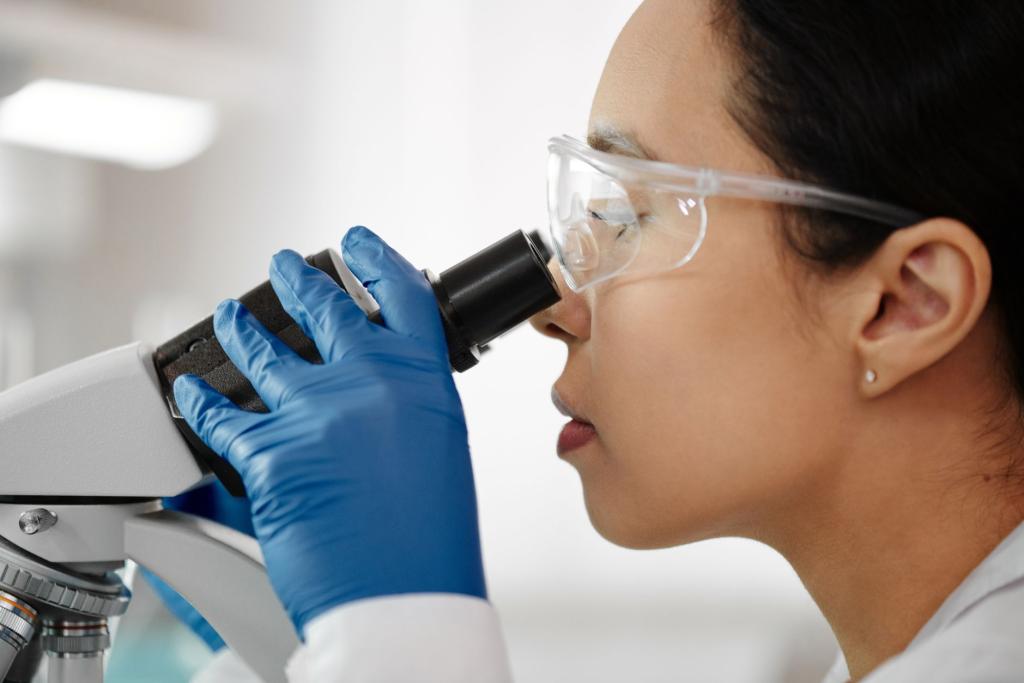
For generations, menopause has been treated as the moment the ovaries clock out for good. A new study of tissue from 28 women suggests that story is wrong. Postmenopausal ovaries keep changing at the molecular level decades after the last menstrual period, remodeling their structure, ramping up inflammation and showing patterns that overlap with ovarian cancer biology, according to researchers at Northwestern University and the Buck Institute for Research on Aging. The work appears in the journal Aging Cell, and it reframes an organ that medicine has long treated as retired.
The organ everyone assumed had retired
Co-corresponding author Francesca Duncan, a reproductive science professor at Northwestern's medical school, says most people assume that once the ovaries stop releasing eggs, they sit idle, much like the appendix. Her own team started the project expecting much the same thing. She predicted that ovaries from women in their fifties, sixties, seventies and eighties would look essentially identical: eggless and inactive. The data said otherwise, and the same pattern had already shown up in earlier work on mice in her lab, which gave the team confidence that something genuinely meaningful is happening in the biology.
The stakes are not abstract. Women now routinely live for decades after menopause, which means the postmenopausal years make up a large share of a woman's life. If the ovary keeps signaling to the rest of the body during that stretch, then understanding what it is doing becomes a core question for healthy aging, not a footnote to fertility. Duncan frames it as a test of whether aging in the ovary could set off a cascade of changes that ripple through the body as women get older.
What thousands of proteins revealed
Instead of looking only at hormones, the team mapped the tissue itself. Staff scientist Mark Watson led a proteomics analysis that measured 5,812 protein groups in normal ovarian tissue from postmenopausal donors between the ages of 50 and 75, as the team reports in a preprint posted on bioRxiv. Because human ovarian tissue is hard to obtain, a collection of that size is unusually valuable. By focusing on a narrow 25-year window after menopause rather than comparing young ovaries with old ones, the researchers could isolate changes that keep unfolding during the postmenopausal years themselves.
The contrast between age groups was sharp. Ovaries from women in their fifties carried more proteins tied to maintaining cells and tissue structure. Ovaries from women aged 70 and older carried more proteins tied to inflammation, immune activity and the ongoing breakdown and rebuilding of the tissue around cells. The aging tissue also showed molecular patterns resembling cellular senescence, a state in which damaged cells stop dividing but stay biologically active and send signals that affect their neighbors. Birgit Schilling, who directs the mass spectrometry center at the Buck Institute, said the organ was anything but stagnant, with some protein levels rising and others falling across the decades.
A possible link to ovarian cancer
The findings build on a discovery from Duncan's lab a decade ago: as ovaries age, they grow more inflamed, fibrotic and stiff, much like scarring in other tissues. Cancer cells are known to thrive in collagen-rich, stiff environments, which led the team to ask whether age-related remodeling could make the ovary more hospitable to tumors. The new study supplies a molecular view of that same process later in life, with structure-maintenance proteins declining as inflammation and tissue-reshaping proteins grow more prominent.
Although every sample in the study looked normal and cancer-free, some proteins previously connected with ovarian cancer grew more abundant in aging ovaries, with the strongest signal among women in their sixties. That does not mean the tissue was cancerous or precancerous, and the researchers stress that healthy ovarian aging and ovarian cancer may simply share some of the same biological processes. Still, Duncan describes the aging ovary as a possible third hit for ovarian cancer, after genetic and environmental hits, and raises the question of whether the aging ovary could one day be targeted to lower risk or mined for early-warning biomarkers.
Why this matters beyond the lab
Here is the counterpoint that keeps the study honest: nobody yet knows whether the postmenopausal ovary's continued activity helps women, harms them, or is simply a feature of normal aging. The findings do not answer whether healthy ovaries should ever be removed after menopause, and the researchers emphasize that the study raises questions rather than settling them. Any decision about surgery still belongs in a conversation with a clinician, not in a headline.
What the work does change is the frame. If postmenopausal ovaries keep talking to other organs after fertility ends, then they belong in conversations about bone loss, brain aging and chronic inflammation, not just reproduction. Schilling notes that the organ communicates with the brain and with bone, and women after menopause often face bone problems, which points to connections researchers have barely begun to map. The next steps are larger tissue collections, work on whether ovarian inflammation can be eased, and tests of whether the cancer-linked proteins could serve as biomarkers. For now, the takeaway is simple: menopause is a transition, not a shutdown, and one of the body's most underestimated organs is still on the job. For more on this stage of life, see our earlier coverage of the menopause cliff and more health coverage.
Read the full report from MedicalXpress for more detail on the study and its authors.
Comments 0
No comments yet. Be the first to share your thoughts!
Leave a comment
Share your thoughts. Your email will not be published.