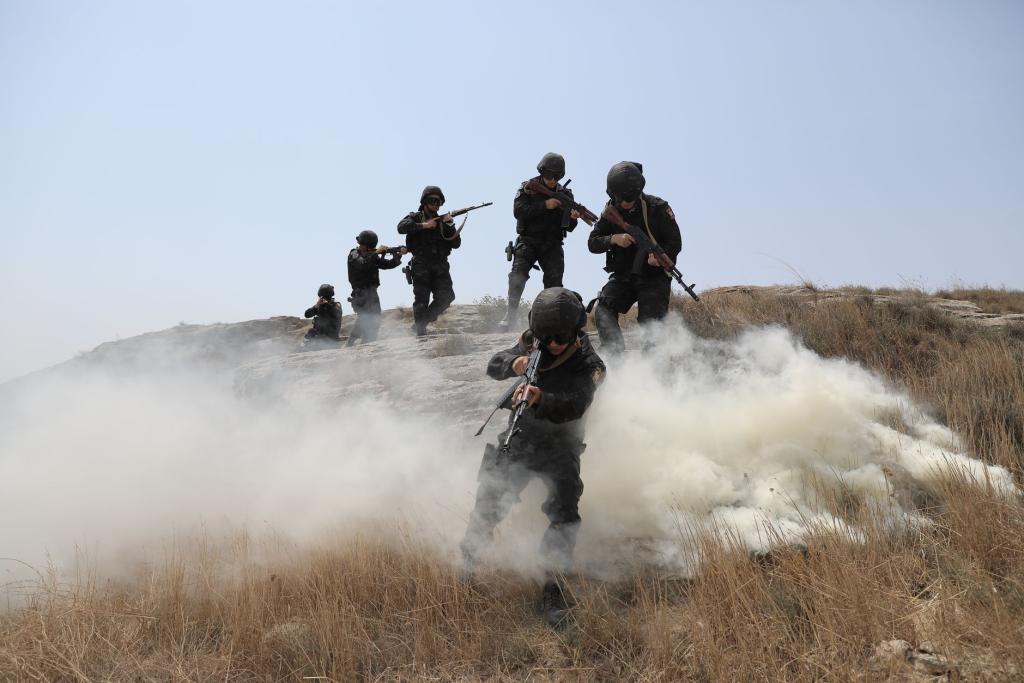
Ukraine has taken back another fifty-one square kilometres of northern Donetsk, the latest advance in an offensive its commanders call Operation Vivaldi. The news came on Monday, September 28, from Brigadier-General Andrii Biletskyi, who took command of operations in the area last month and spoke to Reuters about the fighting.
In total, Operation Vivaldi has recaptured one hundred seventy-six square kilometres in the north of Donetsk, according to Biletskyi, who said the operation has freed three villages outright and restored Ukrainian control over two more. The Institute for the Study of War, a Washington-based think tank, has called the operation "operationally-significant," saying it disrupted Moscow's effort to conduct a wide encirclement of the "fortress belt" of Ukrainian cities in the region. In plain terms, Russian forces had been trying to get around the defenders rather than hit them head-on, and Vivaldi got in the way of that.
What Vivaldi actually changed
The belt matters because Ukraine still holds only about twenty percent of the Donetsk region, while Moscow has made control of all of it the central demand at negotiations that have so far stalled even though the United States wants talks restarted. Every kilometre Ukraine holds in Donetsk is a kilometre it would not have to bargain for if those talks ever resume, which is why both sides have treated the region as the center of gravity of the war for years. Readers following the diplomacy can catch up with our earlier piece on the Zelenskyy-Trump meeting on Ukraine peace.
Those gains add to an earlier push this year in the southeast, where Kyiv said it clawed back more than seven hundred square kilometres during a months-long counterattack, as reported by Reuters. Donetsk itself has seen most of the fiercest fighting of the entire war, and this year has been no exception, with Russian pressure on the cities continuing even as Ukrainian units probed for weak points in the line.
There is also a timing element. Washington has been pressing for negotiations to restart, and every shift on the map changes what a settlement might look like. Ukraine holding its ground, or taking it back, in the very region Moscow demands in full gives Kyiv something concrete to point at whenever diplomats return to the table. It also gives Moscow a reason to keep pushing, which is why commanders on both sides treat Donetsk as the war's main event rather than a sideshow.
The rest of the front is not quiet
Russia's overall frontline advances have slowed this year, but its forces have kept bearing down on Donetsk's cities from the south and pushed deeper into the eastern city of Kostiantynivka, according to the same reporting. The picture is by now a familiar one: Russian pressure almost everywhere, Ukrainian counter-punches in a few chosen places. The wider threat picture was underlined recently when Denmark warned that a limited Russian strike on NATO could not be ruled out.
Above it all, the air war has not let up. Russia kept up its aerial assault on Kyiv for a fourth straight night, according to EA WorldView's daily Ukraine coverage, with drones hitting the Stolichny wholesale food market outside the capital and damaging buildings in the Podil district. President Volodymyr Zelensky posted on Sunday that if Moscow were truly preparing for de-escalation, as it claims to American negotiators, "this wave of 'shahed' terror would not be happening." He called for the recently passed United States sanctions bill to be put into effect, along with measures targeting the financial networks and supply chains behind Russian weapons production.
The Kremlin, for its part, says Ukraine is now paying for its own strikes on Russian territory. "Ukraine will have to pay a price for the actions that have taken place in recent months. This is what is happening now," spokesman Dmitry Peskov said on Monday, according to Reuters. President Vladimir Putin said on Friday that every proposal to settle the war remained on the table, but that Moscow first needed to work out what was in its own interest.
Comments 0
No comments yet. Be the first to share your thoughts!
Leave a comment
Share your thoughts. Your email will not be published.