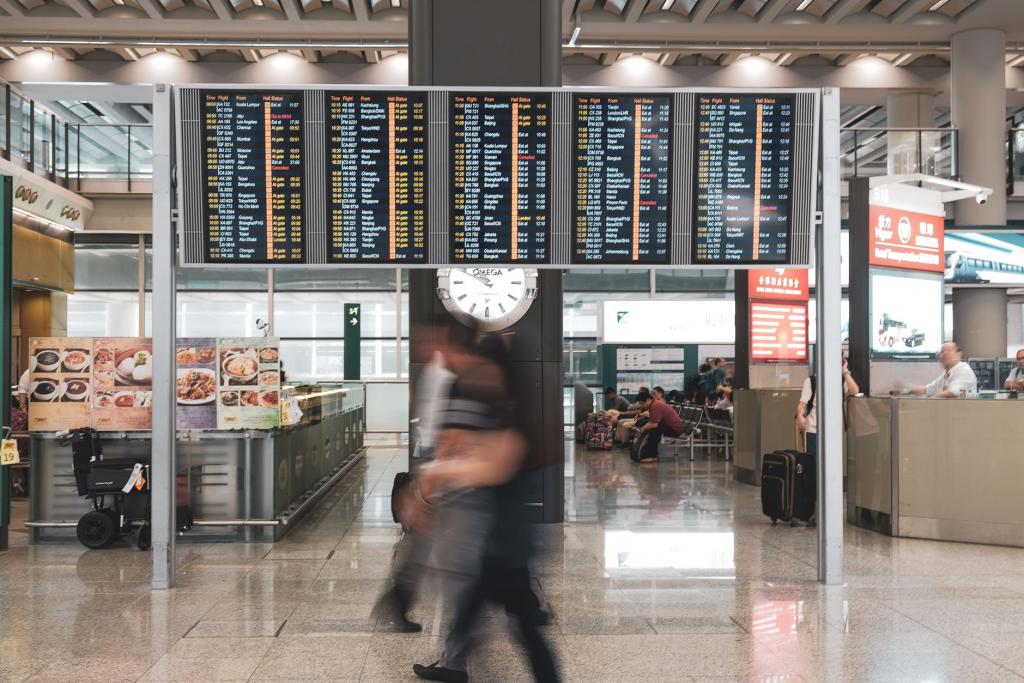
Chicago O'Hare International Airport just logged the worst day of O'Hare flight delays in its recent history. On September 17, 2026, the airport recorded 1,055 delayed flights and 175 cancellations, according to FlightAware data reported by Travel Tourister. Thunderstorms moving through the Chicago region forced the Federal Aviation Administration to slow arrivals to a crawl, and ground delays at O'Hare averaged 126 minutes. No other American airport came close.
The damage reached far beyond Illinois. Airlines across the United States reported 4,218 delays and 275 cancellations for the day, according to Travel And Tour World, meaning O'Hare alone absorbed roughly a quarter of the country's entire delay count. Southwest logged 893 delayed flights nationwide, the highest single-airline total, followed by American Airlines at 524 and SkyWest at 332, with regional carriers Republic Airways and Envoy Air also hit, per the same FlightAware snapshot logged at 1:41 PM ET. Chicago Midway, Boston Logan, San Francisco and Philadelphia all showed heavy disruption, and travelers through Seattle-Tacoma, Dallas-Fort Worth and Reagan National also watched their schedules shift.
Why one storm broke the whole country
It comes down to hub physics. O'Hare is one of the world's busiest connecting airports, so when the FAA limits how many planes can land per hour to keep them safely spaced around active storm cells, the backlog compounds fast. Aircraft, crews and connecting passengers scheduled through Chicago get stuck regardless of the weather at their final destination. Southwest's 893 delays show how a single hub disruption ripples across a national schedule, not problems at every airport it serves.
Chicago's geography makes this a recurring story. O'Hare sits at a genuinely difficult meteorological crossroads, absorbing cold fronts sweeping down from Canada, moisture-laden systems tracking up from the Gulf of Mexico, and lake-effect instability off Lake Michigan, which can intensify approaching storms in ways that are hard to forecast precisely. The airport has had rough days before this year: 326 delays and 18 cancellations in July, and 257 delays and 7 cancellations in mid-June. September 17 was roughly three to four times that volume, a genuine outlier. If you want to track how airport disruptions keep playing out, GenZNewZ's Travel section follows them as they happen.
Your rights if this happens to you
If your flight was one of the 175 cancelled, United States Department of Transportation rules entitle you to a full refund to your original payment method if you decline rebooking, regardless of the cause. That is cash back, not vouchers or airline credit, and it covers weather cancellations too. What you probably will not get is the up to $775 in cash compensation that DOT tracks for controllable delays of three hours or more, because thunderstorm-driven ground delays count as outside the airline's control.
There is one more right worth knowing. If your plane sat on the tarmac for three hours on a domestic flight, federal rules let you get off, with limited safety exceptions. And if you feel the airline stonewalled you, the order of operations is simple: get the stated reason in writing, file with the airline first, then escalate to the DOT complaint portal at airconsumer.dot.gov. The process rewards people who document what happened while it is happening.
How to survive the next meltdown
Flying through O'Hare today? Expect residual disruption even with clear skies, because aircraft and crews finished yesterday out of position for this morning's first wave of departures. Travelers caught in O'Hare flight delays should check their specific flight status before leaving for the airport, and favor morning departures when your itinerary allows, since afternoon and evening flights inherit whatever backlog is left. If yesterday's cancellation hit you, contact your airline directly instead of assuming you were automatically rebooked, and build extra buffer time into any connection routing through Chicago.
One bad afternoon in Chicago can rearrange a weekend three time zones away. Keep flying through O'Hare if it is your best route; just treat hub airports as single points of failure and travel with the refund rules and a backup plan in your pocket. For more on how big travel stories affect everyday plans, GenZNewZ's World coverage tracks the wider picture.
Comments 0
No comments yet. Be the first to share your thoughts!
Leave a comment
Share your thoughts. Your email will not be published.