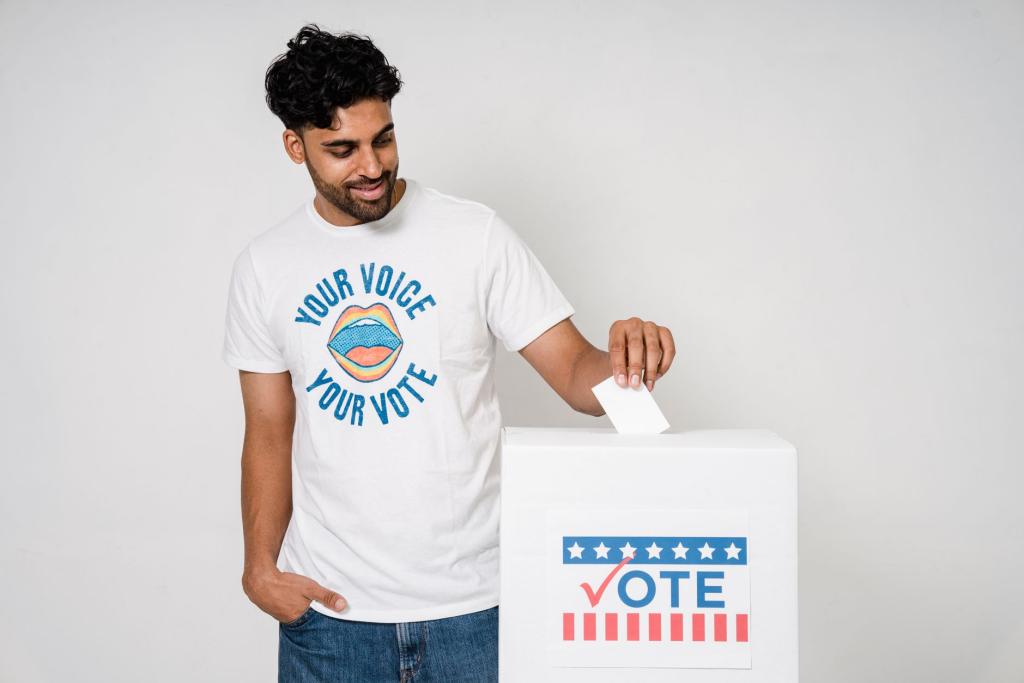
The No Kings movement spent three rounds of protests turning American streets into rivers of signs and hand-painted puppets. On October 17, it tried something far less photogenic: paperwork. The fourth nationwide day of action, billed as "No Kings: Vote Early," swapped march routes for ballot drop boxes and made early voting the movement's headline strategy ahead of the November 3 midterms, according to Reuters reporting carried by the USA TODAY Network.
The scale stayed protest-sized. Organizers staged more than three thousand events across the country on Saturday, built around early voting and turnout rather than the street demonstrations that had drawn millions to the three previous rounds. The No Kings early voting push carried one blunt message: if you oppose what is happening, stop shouting about it and vote about it.
The landslide theory of protest
There is a strategy underneath the branding. Organizers said the aim is turnout so historically high that the Trump administration would struggle to claim the results were rigged. The White House brushed that aside earlier in the week, arguing that the fact organizers are talking about voting at all proves there is no king and no authoritarian government, according to the Reuters report.
Public Citizen co-president Lisa Gilbert framed the shift as deliberate, calling the events "a strategic move and a critical one" to help people exercise what she described as "the most tangible aspect of their power": voting. She said it was critical that people vote, that they vote early, and "show in a landslide that this is not an acceptable way to govern."
Democracy activist Alma Couverthie put the same idea in blunter terms, warning of possible attempts to manipulate the midterm outcome and saying turnout had to be "so massive, so clear, and so overwhelming" that it would be "impossible to question" the result, according to Archyde's coverage of the day.
Less march, more tailgate
The No Kings early voting format meant Saturday resembled a get-out-the-vote operation with better snacks. In downtown Phoenix, demonstrators walked to the Maricopa County Tabulation and Election Center to drop off ballots. Two Indianapolis groups marched to the governor's residence. In Atlanta, Black Voters Matter set up a party with food trucks and music before heading to a polling place as a group. Chester, Pennsylvania, got a tailgate at a ballot drop box, and in Ferndale, Michigan, and Eagle County, Colorado, participants in superhero costumes rode decorated bikes and wagons to vote, according to Reuters.
The movement also took fire. White House spokesperson Lauren Bis dismissed the framing and suggested organizers should change their name, since they were actively campaigning in an election, according to Archyde. That is arguably the most backhanded compliment a protest movement can earn: being told its protest counts as politics.
The backdrop is genuinely tense. The Department of Justice warned local officials on Friday against processing mail-in ballots from suspected noncitizens, following a federal lawsuit filed against California election officials the day before, according to reporting based on Al Jazeera. President Trump has repeatedly criticized mail-in voting and tried to restrict the practice ahead of the midterms, according to DW's coverage. Every House seat and roughly one-third of the Senate are on the ballot, with Republicans facing potential losses amid anger over living costs and the Iran war while Democrats hope to take majorities in both chambers, according to Archyde.
Why the boring version might win
The No Kings early voting push works precisely because it is unsexy. The first three rounds proved the movement could make a crowd, and crowds photograph well while accomplishing very little on their own. What changes an election is the tedious machinery of democracy: registration checks, early ballots, drop boxes, rides to the polls. On Saturday the movement traded its talent for spectacle for a logistics job, and logistics jobs decide midterms. Gen Z News readers saw the same machinery-obsessed framing in our look at how the midterm war schedule is really about votes, not threats.
That is also why the White House's "no king" retort misfires. It treats voting as proof the system is fine, while the organizers treat voting as the emergency brake. Both sides now agree the ballot box is the battlefield; they just disagree about what is at stake. Compare that to the street-level energy in France, where student protests went national on the very same day, and the contrast is the whole argument: one movement filled the streets, the other filled the ballot boxes.
The generation that turned voter registration into a TikTok trend is the natural audience for this No Kings early voting format. Less march on Washington, more bring-your-ballot-to-the-party. The superhero costumes were not a gimmick; they were the thesis. Make the boring parts of democracy feel like an event, and turnout stops being a chore.
Protest signs say a movement is angry. Ballot totals say it counted. The No Kings early voting push is betting everything on the second kind of evidence, and if the landslide theory holds, this will be the round people remember for its arithmetic instead of its signs.
Comments 0
No comments yet. Be the first to share your thoughts!
Leave a comment
Share your thoughts. Your email will not be published.