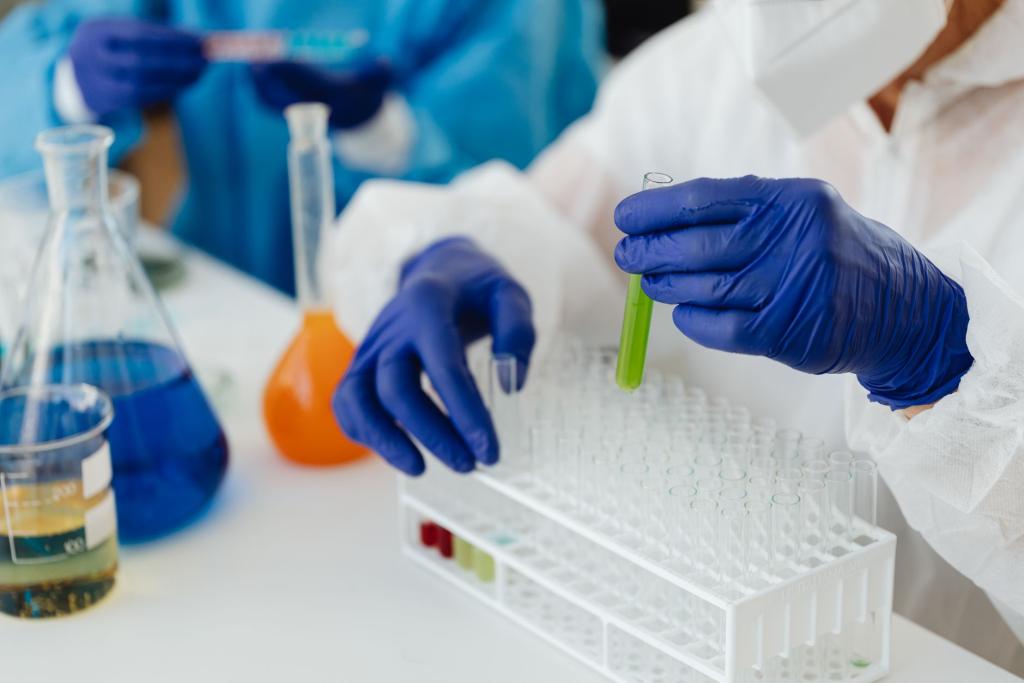
A new research project, the GUT-FEELINGS trial, will enroll more than 6,000 anxious Americans to find out whether food-derived prebiotics can ease anxiety, in what its organizers describe as the largest interventional study of the gut-brain axis ever run. Holobiome, a Boston biotechnology company, and Radicle Science, a San Diego healthtech firm, announced the launch on Oct. 8 with funding from the Advanced Research Projects Agency for Health, the federal agency inside the Department of Health and Human Services that backs high-risk medical research. Across two waves of enrollment, volunteers will be randomized to receive one of 19 proprietary prebiotic formulas or a placebo, and the teams behind the work expect initial results in the second half of 2027.
Why the gut is getting its biggest stress test yet
The idea driving the trial is straightforward even if the biology is not. Trillions of microbes live in the human digestive tract, and they produce compounds that interact with the nervous system through pathways including the vagus nerve. Small studies have linked certain gut bacteria to mood and stress responses, but the field has lacked a large, rigorous test of whether changing the microbiome through diet can actually shift how people feel. The GUT-FEELINGS trial is designed to be that test, at a scale no anxiety-and-microbiome study has reached before.
The design is deliberately sprawling. The trial runs 16 weeks per wave and is structured as a 20-arm study: nineteen arms testing a distinct prebiotic formula, and one control arm receiving placebo. Participants, all of whom report feelings of anxiety, will answer validated questionnaires on anxiety alongside measures of stress, mood, sleep, quality of life, flourishing, weight, waist size, and diet quality. The biology will be tracked just as closely. According to the companies' joint announcement, researchers plan to collect more than 24,000 fecal samples and 12,000 blood samples, paired with deep microbiome sequencing, blood proteomics, wearable data, facial scans, and continuous glucose monitoring.
Evidence first, product second
Radicle Science, which is running the trial operations, built its name on a flipped model of clinical research. Most wellness products reach shelves with little or no human testing, and trials, when they happen, come last as a final checkpoint. Radicle's patented Reflexive Trials platform instead puts human evidence at the start of the cycle, using results to decide which formulas deserve further development and which should be dropped. Since 2021 the company says it has run placebo-controlled studies involving nearly 100,000 people across all 50 states, which the firms describe as the largest dataset of its kind for food and wellness interventions. The co-founders, Pelin Thorogood and Jeff Chen, said in the announcement that the goal is to let rigorous evidence drive discovery and formulation rather than treating research as an afterthought, and they called the GUT-FEELINGS trial a blueprint for that evidence-first approach.
Holobiome brings the microbiome science. The company's platform centers on what it calls a Microbiome Vault, a large collection of human gut bacteria, plus a high-throughput gut simulator and a database mapping more than 120,000 human metagenomes to specific health states. The data from the GUT-FEELINGS trial will feed Mercator, Holobiome's developing foundation model of the human gut microbiome, which is meant to learn which microbial patterns line up with anxiety and related states and to guide future probiotic and prebiotic development. Philip Strandwitz, Holobiome's chief executive and co-founder, said the missing piece for the field has been large-scale multimodal data from interventional studies, and that this trial is built to generate exactly that. Jonathan Fielding, a distinguished professor at UCLA and former Los Angeles County health officer, noted that public health needs interventions that are both effective and practical, and that the trial could establish whether food-based approaches meaningfully improve mental wellness across a diverse population.
What the results could change
The GUT-FEELINGS trial sits inside a larger federal push. It is part of ARPA-H's EVIDENT program, short for Evidence-Based Validation and Innovation for Rapid Therapeutics in Behavioral Health, which aims to develop objective measures of mental health and well-being. The agency announced its first EVIDENT research teams last April, with funding of up to $139.4 million aimed at new behavioral health therapies. A health economist on Radicle's advisory board, Jonathan Ketcham of Arizona State University, said the project could show where food-based interventions have the greatest impact and build the evidence needed to translate better outcomes into economic value for individuals, employers, and health systems. Some caution is in order. No results will be public until late next year, and prebiotics are not approved treatments for anxiety disorders; this study tests formulas against self-reported feelings of anxiety, not clinical diagnoses. Still, if any of the formulas separate clearly from placebo, the trial will have done something unusual in the wellness world: generated the evidence before selling the product.
Comments 0
No comments yet. Be the first to share your thoughts!
Leave a comment
Share your thoughts. Your email will not be published.