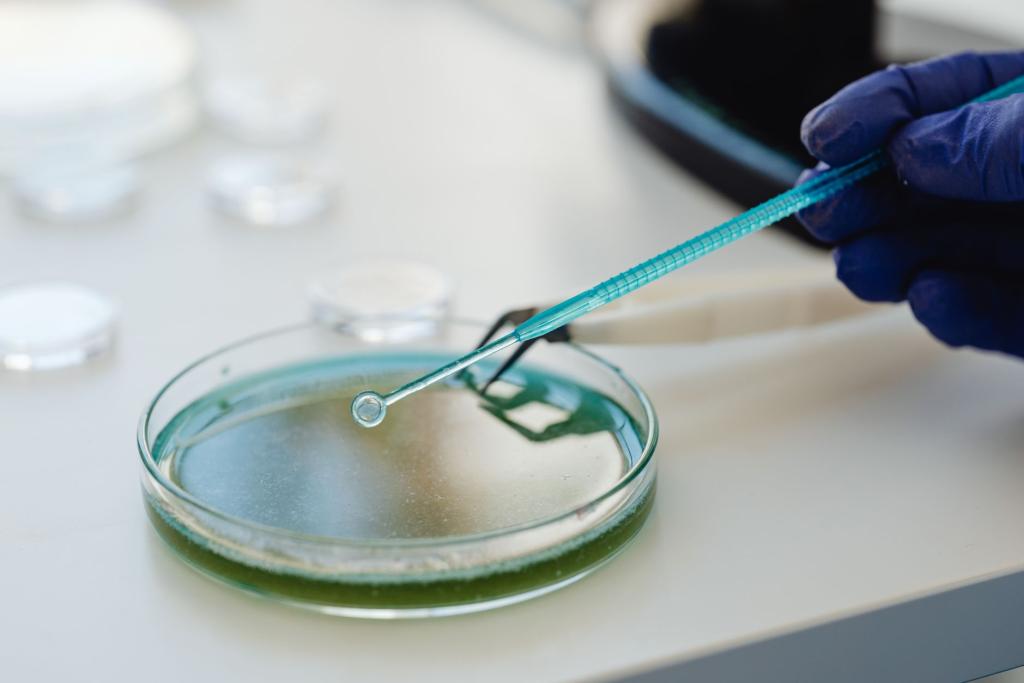
Cannabidiol, the non-intoxicating compound better known as CBD, lowered key markers of brain inflammation in laboratory-grown human brain cells, according to a new federally funded study — an early, encouraging signal that arrives with a giant asterisk. The experiment took place in cell cultures, not in living people, so nothing about the finding means CBD treats brain disease in humans. The work was published October 8, 2026 in Scientific Reports by a team led by biomedical engineer Mariah S. Hahn at Rensselaer Polytechnic Institute in Troy, New York, as reported by The Marijuana Herald. The scientists focused on microglia, the immune-monitoring cells that act as the brain's first responders, switching them on with two substances tied to neuroinflammation — interleukin-6 (IL-6) and extracellular adenosine triphosphate (eATP) — then watched what CBD did next.
The team tested three CBD concentrations — 0.1, 1 and 5 micromolar — against a 10-micromolar dose of dexamethasone, a corticosteroid used as the standard inflammation-fighting benchmark. Inflammatory proteins and oxidative-stress enzymes were measured at two time points after treatment. The middle concentration emerged as the most effective at quieting the activated microglia, and the researchers carried that dose forward into every later test.
Why start with these two triggers? Both IL-6 and extracellular ATP rise in neuroinflammatory disorders, so the combination is meant to mimic a stressed brain environment in a dish. The team also ran a parallel activation with bacterial lipopolysaccharide as a canonical comparison, which produced a different marker profile — a detail that underscores how context-dependent brain inflammation can be.
At the effective concentration, the reductions spanned several inflammatory pathways:
- After six hours: lower levels of IL-6, vascular endothelial growth factor A (VEGF-A) and NOS2, an enzyme tied to oxidative stress.
- After 24 hours: drops in interferon-gamma, interleukin-1 beta and IL-6.
That two-wave pattern — an early response and a later one — suggests CBD's anti-inflammatory action touches more than one signaling route, which is notable because brain inflammation in disease rarely runs through a single channel.
How CBD affected brain inflammation in the neuron model
Cell cultures are one thing; the researchers wanted a closer stand-in for actual brain tissue. So they grew human microglia alongside cortical neuron-like cells derived from induced pluripotent stem cells — the reprogrammed stem cells that can become nearly any cell type. Inflammatory stimulation drove up tumor necrosis factor-alpha, C1q and NOS2 in the neuron-like cells and shifted the balance of proteins involved in neuronal signaling. A full-day treatment with the effective CBD dose pushed TNF-alpha levels, NOS2 and the synaptic protein ratio back to levels statistically indistinguishable from unstimulated cultures.
But the reversal was incomplete. The complement protein C1q and soluble neuropilin-1 stayed altered, a reminder that CBD partially, not fully, undid the damage. That partial picture is arguably what makes the result believable: neuroinflammation is a tangle of pathways, and no single compound was going to untie all of them.
Why brain inflammation in a dish is not a cure
The biggest caveat belongs in bold: these were laboratory-grown cells, not patients, and nothing in the experiment shows CBD cools brain inflammation inside a living brain, according to the published study. The authors reported no competing interests, and the work received partial funding from the National Institutes of Health — public money backing basic science, which is exactly how early-stage questions like this one are supposed to get answered.
For readers, the takeaway is about research, not wellness routines. Chronic brain inflammation is a suspect in a long list of neurological conditions, and studies like this one map which pathways a candidate compound can actually move — information drug developers need long before any human trial. It is not a reason to start taking CBD for brain health: dosing, delivery and real-world effects in people are entirely separate questions. As always with early science, interesting is not the same as actionable.
There is also a timing lesson baked into the data. The fact that different markers moved at six hours versus a full day hints that CBD's influence on brain inflammation may be staged rather than instant — something future experiments, and eventually any human work, would need to account for when choosing doses and windows. Bottom line: CBD calmed brain inflammation in lab-grown human cells, across multiple pathways and two cell models — a genuinely interesting result from publicly funded science. Whether it means anything for an actual human brain is a question only future trials can answer.
For more on the science of the aging brain, see Your Gut Might Know How Old Your Brain Is, and follow the latest reporting on the Health beat.
Comments 0
No comments yet. Be the first to share your thoughts!
Leave a comment
Share your thoughts. Your email will not be published.