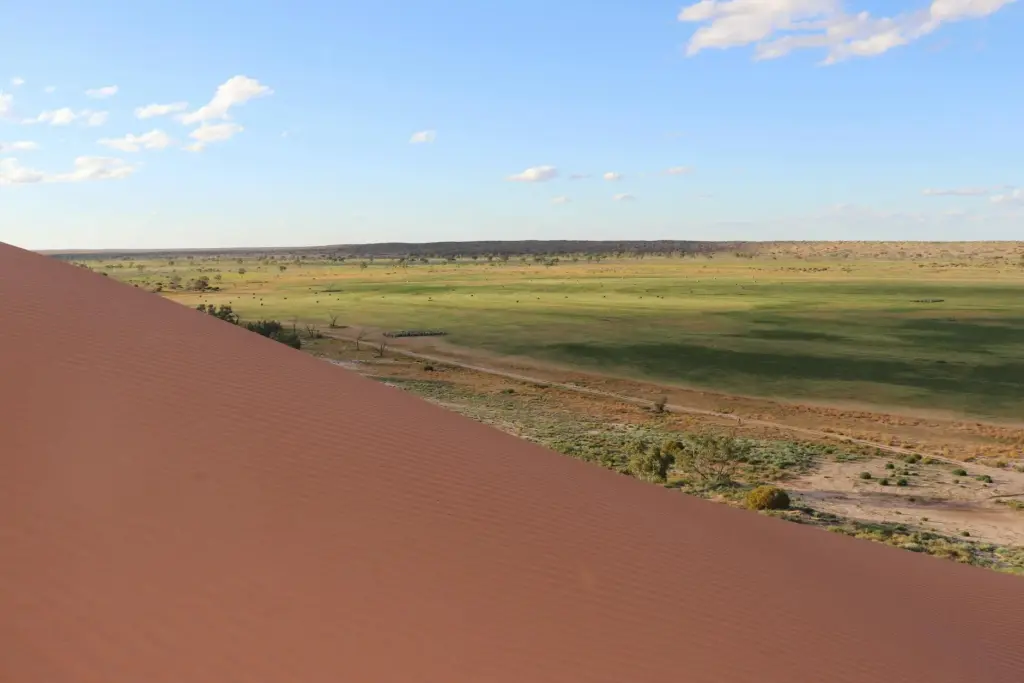
NASA scientists are absolutely amazed by what they're seeing from space – the NASA Australia green phenomenon has transformed Australia's famously arid "Red Centre" into a stunning green landscape, and NASA satellite imagery is capturing every breathtaking moment of this incredible transformation. According to NASA's Earth Observatory, abundant rainfall in February and March 2026 has completely turned the desert landscape lush and green, with vast areas of the Outback now covered in vibrant vegetation that has completely replaced the characteristic rusty red terrain that makes this region famous.
NASA Satellite Eyes the Transformation
The MODIS (Moderate Resolution Imaging Spectroradiometer) instrument aboard NASA's Terra satellite has been documenting this remarkable change, capturing spectacular images of the southern part of Australia's Northern Territory on March 10, 2026. According to NASA Earth Observatory reports, these NASA satellite images clearly show how dramatically the landscape has changed in just a few short weeks, with extensive areas of green vegetation now covering what was previously barren desert. The NASA Earth Observatory team, led by Lauren Dauphin, has been processing these images and sharing them with the public to showcase the incredible power of nature.
The greening of the Australian outback, often referred to as the NASA Australia green phenomenon by climate researchers, is directly linked to unusual weather patterns that brought massive amounts of rainfall to the typically bone-dry region. According to climate data from the Australian Bureau of Meteorology, the February and March rainfall totals broke records for the region, with some areas receiving more rain in these two months than they typically see in an entire year. This extraordinary weather event has created temporary lakes, triggered widespread flowering, and turned the desert into a lush ecosystem that looks more like tropical savanna than the Australian Outback.
Understanding the Climate Significance
Climate scientists are particularly interested in this NASA-documented event because it provides valuable data about how extreme weather events can rapidly transform ecosystems in ways that seem almost impossible. As reported by NASA's Earth Observatory, understanding these dramatic shifts helps researchers better model future climate scenarios and predict how other desert regions around the world might respond to changing precipitation patterns. You can read more about this on NASA's Earth Observatory. You can also explore related content about climate science on GenZ NewZ. The transformation of the Australian Red Centre offers scientists a unique natural laboratory to study how ecosystems respond to sudden water availability in arid environments.
The event also highlights the dynamic nature of Australia's climate, which ranges from extreme aridity to occasional periods of abundant moisture that can completely reshape the landscape. This greening event is temporary – the Red Centre will eventually return to its characteristic rusty red appearance as the moisture evaporates and plants die back – but it offers a fascinating glimpse into the ecological potential of desert regions when water becomes available in large quantities. Climate experts note that similar transformations could occur in other desert regions around the world, making this NASA Australia green event even more significant for climate research.
For anyone interested in climate science, geography, or just the incredible power of nature, these NASA satellite images are an absolute must-see. They demonstrate that our planet is far more dynamic and changeable than most people realize, with landscapes capable of dramatic transformation in remarkably short time periods. The desert regions of Australia have always had this potential, but it takes extraordinary weather events to unlock it. The NASA Australia green images prove just how beautiful our planet can be when conditions align perfectly.
The event also serves as a powerful reminder of how climate change is affecting weather patterns globally, with extreme events becoming more common in regions that traditionally don't experience them. According to scientific studies published on Phys.org, climate researchers are seeing more unusual weather events worldwide. Australia's Red Centre going green is beautiful to behold, but it's also a signal of the shifting climate patterns that scientists continue to monitor closely using tools like NASA's extensive satellite network. Read more about AI in climate monitoring and other tech trends on GenZ NewZ.
According to NASA climate researchers, events like the NASA Australia green transformation could become more frequent in the coming decades as global temperatures rise and weather patterns become more unpredictable. While the greening of the Red Centre is a temporary phenomenon, it provides important data for climate models and helps scientists understand how ecosystems around the world might respond to our changing climate.
Related coverage: Continue with the latest GenZ NewZ headlines, more science coverage, THOR AI physics: THOR AI Solves 100-Year-Old Physics Problem in Sec..., Quantum Computing Simulation Breakthrough: 7,000 GPUs Simulate Chip, and SpaceX Starship 2026: Moon Missions and V3 Updates Gen Z Needs to Know.
Comments 0
No comments yet. Be the first to share your thoughts!
Leave a comment
Share your thoughts. Your email will not be published.