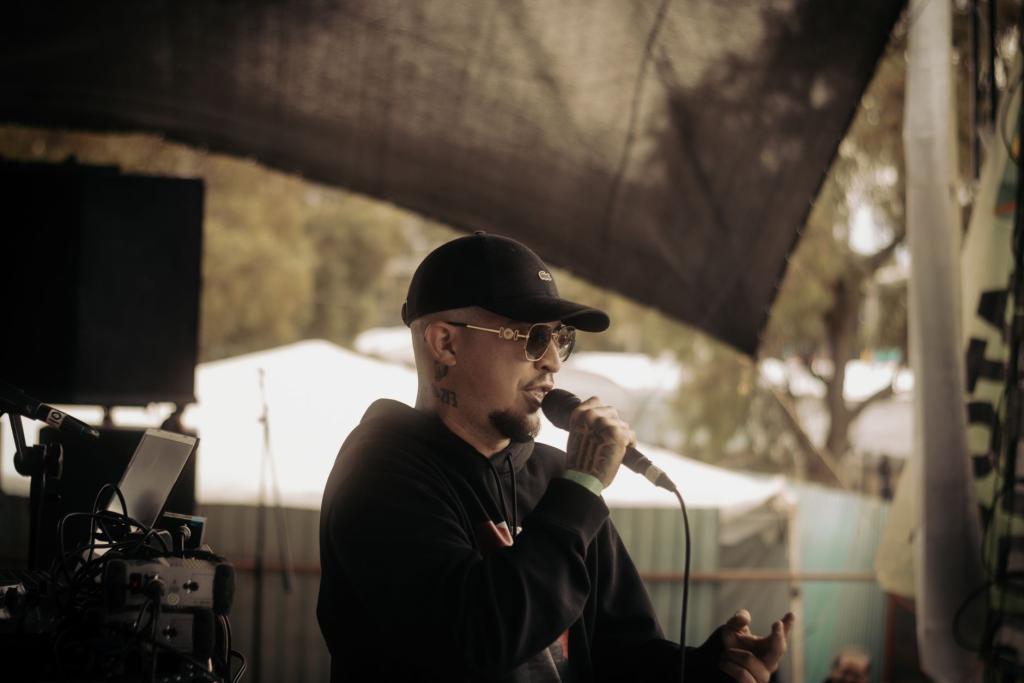
Rapper Nas turned a quiet Thursday into a culture-wide conversation with a new open letter urging artists and executives to stop chasing trends and honor the pioneers of Black music. The Nas open letter, shared on social media and reported by XXL, ends with the sign-off "Nasir Jones. BLAK MUSIC 2026," a phrase that sent fans and industry watchers scrambling for answers within hours.
The Nas open letter opens with the rapper reflecting on the long road Black music traveled, from the Mississippi Delta to New Orleans and on to New York. Nas wrote that he thinks about bluesman Robert Johnson "at the crossroads," the musician who changed music while his final resting place stayed a mystery, according to XXL's account of the letter. The image lands harder because Johnson died at twenty-seven and three separate markers in Mississippi claim to be his burial site, as DancehallMag reported.
The foundation argument
The sharpest passage in the Nas open letter targets how the industry treats its elders. Nas argued that "the music game forgets" its foundation, adding that its greats were stolen from and ripped off rather than compensated, according to The Source's transcription of the letter. It is a complaint with deep roots: the business built on Black music has a long record of paying the pioneers the least, and Nas made himself the messenger by invoking a bluesman from the nineteen thirties.
This is not a lecture from the sidelines. Nas co-founded Mass Appeal, the label behind the Legend Has It series that released new projects from veterans like Ghostface Killah, Raekwon and Slick Rick, according to DancehallMag. He is the artist behind Illmatic, the debut still held up as a blueprint for lyrical rap, and DancehallMag notes that he picked up his first Grammy for King's Disease after decades of nominations. When the Nas open letter talks about honoring the foundation, the author is also one of the people currently paying for the concrete.
No music for trends
The second half of the Nas open letter turns from history to the present. Nas urged artists to stop "creating music for the sake of a 'trend'" and to remember their purpose and their contributions instead, according to XXL. The letter asks where the love between artists went, then calls for everyone to "take a stand as one" and for "a celebration of the music," as The Source reported. The closing line carries the old-school weight: "No Knowledge of self is certain death! It's time to address it."
The letter also confirmed that Nas spent the past year watching the culture while working on new music, according to XXL, a detail that gives the message its urgency. Nobody knows what "BLAK MUSIC 2026" means yet. DancehallMag reports that some fans think it is an album title, others suspect a wider cultural campaign or a new Mass Appeal project, and Nas has not said which it is. The ambiguity is doing its own marketing, whether or not that was the plan.
Why the letter lands now
The Nas open letter arrives at a moment when its argument almost makes itself. Streaming and short-form video reward whatever survives the week, and the pressure to catch the next sound is constant for young artists trying to break through, as seen in the industry's endless chase for the next viral moment documented in pieces like the industry's scramble for Gen Z spending power. A veteran telling the next generation to slow down and study the roots sounds less like nostalgia and more like strategy.
There is also a cannier reading. This is the same rapper who once declared hip-hop dead, and the Nas open letter names no specific label, executive or rival, a point Ground Up Radio emphasized in its coverage of the statement. The criticism is aimed at the culture, not at a beef. That distinction matters, because it lets the letter function as both a genuine plea and a positioning move: Nas gets to be the elder statesman of a tradition he is actively investing in, from Mass Appeal to the Legend Has It series.
Either way, the letter's central image is hard to shake. A genre that samples its ancestors in nearly every song can still lose track of where they are buried. The Nas open letter does not ask artists to copy the past. It asks them to pay it, in every sense of the word, before the foundation forgets them back.
Comments 0
No comments yet. Be the first to share your thoughts!
Leave a comment
Share your thoughts. Your email will not be published.