Montreal Smoke Warnings barely moved the needle in a new study of how residents travelled on hazy days, even though officials urged people to stay indoors and limit outdoor exertion. Researchers tracked daily travel across the city during smoke episodes spanning several recent summers and found only small shifts away from open-air trips, a result that raises awkward questions about whether warnings alone can protect people when the sky turns orange. The work suggests that information, on its own, rarely changes routines that are already set by work, school, childcare and habit.
According to McGill University, the team examined movement on twenty-seven advisory days spread across four summers, comparing what actually happened with what a forecasting model predicted would have happened without any warning in place. That model accounted for weather, the day of the week, the season, holidays and major public events, so the gap between prediction and reality offers a cleaner read on the warnings themselves than a simple comparison of smoky and clear days. The researchers drew on daily trip counts from four movement sources, with bulletin records supplied by the federal environment department.
What the numbers showed
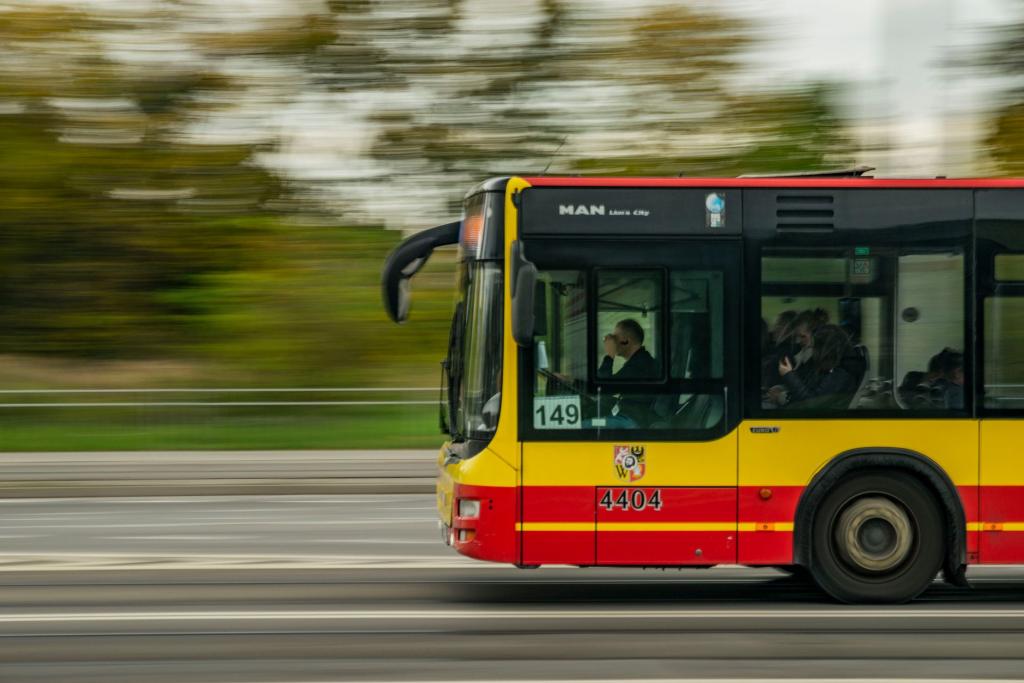
The headline pattern was a modest shuffle rather than a retreat indoors. Shared-bike trips dipped by just under six percent on advisory days, while bus boardings climbed by a little under seven percent and underground train use rose by close to five percent. In other words, many travellers did not cancel their journeys; they swapped a bike for a bus or a train, trading open air for an enclosed vehicle. That substitution matches what bulletins ask for, yet the size of the change surprised the authors, who had expected a stronger response to days when breathing the air carried a clear health risk.
One finding stood out for what did not change at all. Recreational running, the activity that health bulletins caution against most directly, showed no statistically meaningful shift on advisory days in data drawn from a popular fitness tracking app. The authors caution that the app captures a self-selected slice of runners rather than every jogger in the city, so the result should be read as a signal rather than a census. Even so, the flat line for running sits uneasily beside the image of empty trails and quiet parks that warnings seem to promise, and it hints that people who exercise outdoors may discount, miss or simply override the advice.
Geography added another layer to the story. The steepest drops in shared-bike use did not occur downtown but in outlying boroughs, while most underground stations gained riders on advisory days. One downtown station lost a little over six percent of its traffic, while a station serving a major university campus gained nearly a quarter more riders than predicted. The researchers suggest that students and staff who would normally cycle to campus switched to public transit instead, while some downtown trips were skipped altogether. Those local differences matter because a citywide warning lands very differently in a student neighbourhood, a commuter suburb and a downtown office district.
Why warnings fell short
Part of the problem may be that a warning asks people to do something costly without giving them an easier alternative. Cancelling a shift, finding childcare, rescheduling a class or abandoning a training run all carry real consequences, and a bulletin on a phone screen rarely outweighs them. The study co-author, a doctoral researcher in geography named Daniel Romm, told the university newsroom that severe health risks come with breathing wildfire haze and that smoky seasons are likely to grow more common across Canadian cities. His warning frames the issue as a communication challenge, not a failure of individual willpower.
The Montreal Smoke Warnings studied here arrived during some of the worst smoke episodes the country has experienced, when fires far away turned daylight hazy and pushed air quality into ranges that health agencies describe as dangerous for sensitive groups. Yet the travel data show a city largely carrying on, with enclosed transit absorbing some of the displaced cycling trips and little else changing. That pattern echoes a broader lesson from public health research: messages that tell people what not to do tend to work better when they are paired with concrete help, such as a safer way to travel, a place to shelter, or permission to stay home without penalty.
What could work better
The authors float practical measures that could make compliance easier rather than simply louder. Temporarily reduced transit fares during smoke episodes would lower the cost of switching from a bike to a bus, while employer support for remote work would remove the need to travel at all for office workers who can work from home. Clearer guidance about which activities are genuinely risky, and for whom, could also help, since a blanket message to limit outdoor activity may feel irrelevant to a healthy young adult and terrifying to a parent of an asthmatic child. Tailoring the message to the audience, the authors argue, beats repeating the same bulletin more forcefully.
For readers, the practical takeaway is unglamorous but useful. On a smoky day, swapping a bike ride for transit, postponing a hard outdoor workout, closing windows and running a filter indoors are small moves that add up, especially for children, older adults and anyone with asthma or heart disease. Checking the local air quality reading before heading out, rather than relying on the colour of the sky alone, gives a better sense of risk, because haze can look dramatic while readings stay moderate, and the reverse can also happen. The study does not argue that warnings are useless; it argues that they need backup.
The team plans to repeat the analysis in other cities and compare results, which should reveal whether Montrealers are unusual or typical in shrugging off smoke bulletins. If similar patterns appear elsewhere, health agencies may need to rethink how they spend their attention during fire season, shifting effort from crafting the perfect alert to building the practical supports that let people act on it. Until then, the lesson of this research is humbling: a warning that everyone hears is not the same as a warning that changes behaviour, and closing that gap will take more than a better headline. For related environment coverage, see how vanishing glaciers are reshaping the American West, how city tree choices affect the air on your block, and how diet research is linking packaged food to hidden brain changes.
Comments 0
No comments yet. Be the first to share your thoughts!
Leave a comment
Share your thoughts. Your email will not be published.