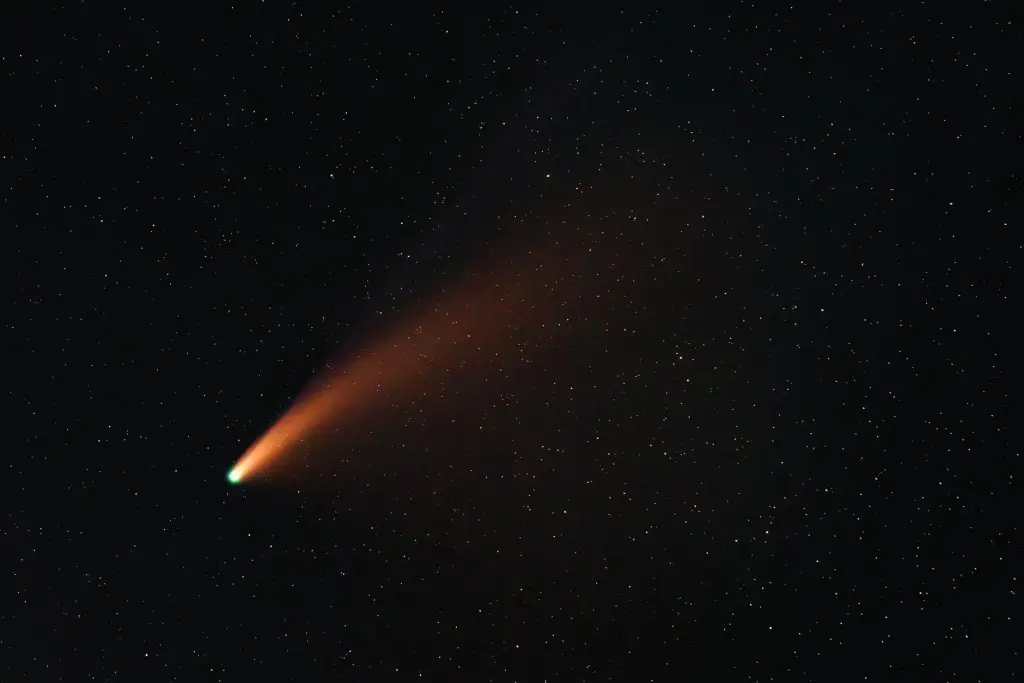
The Discovery of Comet MAPS
A newly discovered comet named C/2026 A1 (MAPS) was detected on January 13, 2026, by the AMACS1 Observatory in Chile. This remarkable celestial object is classified as a Kreutz sungrazer, a family of comets known for their extremely close approaches to the Sun during perihelion. Astronomers worldwide have been closely monitoring this cosmic visitor as it races toward its historic encounter with our star. The MAPS comet represents one of the most anticipated astronomical events of the decade and has sparked excitement across the global scientific community.
The discovery has generated significant excitement in the astronomical community and among space enthusiasts. According to Space.com, the MAPS comet is heading toward perihelion on April 4, 2026, when it will come within approximately 99,000 miles (160,000 kilometers) of the Sun's surface. This distance places it in the Sun's corona, where temperatures reach nearly 2 million degrees Fahrenheit. The comet's journey represents an extraordinary celestial event that has captured worldwide attention from both professional astronomers and amateur stargazers alike.
Will the MAPS Comet Survive?
Scientists remain uncertain about whether the MAPS comet will survive its perilous journey. Comets that approach this close to the Sun often disintegrate due to the intense heat and gravitational forces. However, if MAPS manages to endure this cosmic trial, it could put on an extraordinary display for Earth-based observers. Some projections suggest the comet might become visible during daylight hours, potentially making it the brightest comet of the 21st century. The prospect of seeing a comet in daylight has not been lost on the astronomical community.
The MAPS comet's mass of approximately one billion metric tons gives it a fighting chance of survival. This is significantly larger than typical sungrazing comets, which often break apart under the Sun's influence. Astronomers have noted that if MAPS survives, it could become a truly spectacular sight in the April 2026 skies. The scientific community is closely monitoring the comet's approach, using both ground-based telescopes and space-based observatories to track its journey. This represents a unique opportunity to study comet behavior under extreme conditions.
How to Watch the Comet
For those hoping to witness this celestial event, timing and location will be crucial. According to EarthSky, the MAPS comet will likely become bright enough to see with the naked eye several days before perihelion. During its peak brightness, the comet will be very low in the western sky and quite close to the Sun, making it challenging but potentially rewarding to spot. Skywatchers should prepare their equipment well in advance and find observing locations with clear western horizons to maximize their chances of catching a glimpse.
Observers in the Southern Hemisphere are expected to have the best views, though skywatchers in other regions may also catch a glimpse. The MAPS comet will be positioned near Venus during its closest approach, which could serve as a helpful guide for locating it. As always, viewing conditions depend heavily on local weather and light pollution levels. Many astronomy clubs are planning viewing parties for this extraordinary event, and online livestreams will make it accessible to viewers worldwide.
The Science Behind Sungrazers
The MAPS comet belongs to a family of comets called Kreutz sungrazers, named after the German astronomer Heinrich Kreutz who first studied them. These comets follow orbits that bring them extraordinarily close to the Sun, often passing within just a few solar radii of our star. Scientists believe these comets are fragments of a much larger comet that broke apart centuries ago. The study of sungrazers provides valuable insights into comet composition and behavior, helping us understand the dynamic nature of our solar system.
What makes the MAPS comet particularly interesting is its substantial size compared to typical sungrazers. With a mass estimated at one billion metric tons, it has a significantly better chance of surviving the intense solar radiation and gravitational stresses. This presents a rare opportunity for scientists to study a large comet during a close solar encounter. The scientific community is eagerly awaiting data from this historic event, which could provide new insights into the nature of these mysterious cosmic visitors.
Comments 0
No comments yet. Be the first to share your thoughts!
Leave a comment
Share your thoughts. Your email will not be published.