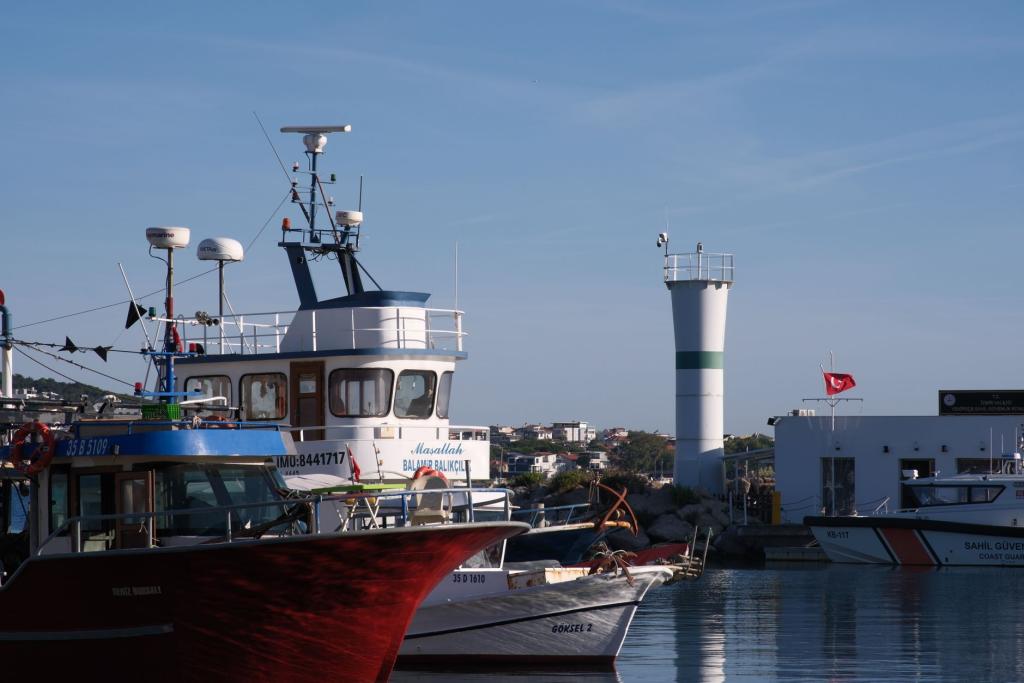
Emmanuel Macron touches down Sunday on a windswept archipelago of 5,800 people to meet Canadian Prime Minister Mark Carney on French soil, technically, for talks that carry a message aimed straight at Washington. The Macron Carney summit takes place in Saint Pierre and Miquelon, France's last foothold in North America, weeks after Donald Trump posted a map online draping the islands in the Stars and Stripes.
Reuters reported that Macron's trip, the first by a French president since François Hollande visited in 2014, will underscore French sovereignty over the territory and highlight the close Canada-France relationship. The visit comes as Ottawa searches for deeper ties with Europe amid trade tensions with the United States and a sharp deterioration in relations with Washington under Trump. French officials told reporters the choice of venue was deliberate: a tiny community off Newfoundland's coast has suddenly become a stage for questions of maritime sovereignty, Arctic strategy and alliance politics.
A 5,800-person archipelago at the centre of a geopolitical message
The symbolism is hard to miss. Saint Pierre and Miquelon sits roughly 25 kilometres off the coast of Newfoundland, and it shares a maritime border with Canada, the only frontier of its kind that France holds in North America. Weeks ago, Trump posted an image on social media depicting the United States, Canada, Greenland, Iceland, Mexico, Central America and the Caribbean draped in the American flag and labelled "United States of America." The archipelago, along with several French Caribbean territories, appeared under the flag in the image. France chose not to respond publicly at the time, according to Reuters.
Now Paris is answering with a presidential visit. A French presidency official told reporters that few places concentrate so many national priorities in so small a space: a geostrategic presence in the North Atlantic at the doorstep of the United States and the Arctic, maritime sovereignty, adaptation to climate change, and cooperation with Canada. Macron is making the stop on his way to the annual United Nations General Assembly gathering of world leaders in New York, which only sharpens the contrast between the tiny French islands and the world stage he reaches days later.
The day's schedule reflects the weight of the occasion. Carney arrives shortly after midday local time for a working lunch with Macron, followed by a wreath-laying ceremony at 2:30 p.m. and a joint statement at 2:55 p.m. before the Canadian prime minister departs for Ottawa. For the islands' residents, the day marks a rare moment in the spotlight: the last sitting French president to visit was Hollande, more than a decade ago.
Energy, minerals and a door to the EU
Behind the symbolism sits a concrete agenda. Canada's Prime Minister's Office said the two leaders will discuss deepening the partnership across aerospace, energy and critical minerals, plus advanced technologies such as quantum computing, satellites and supercomputing. The talks are expected to touch on the energy crisis and Canada's increasingly close relationship with the European Union after Brussels opened the door to Ottawa becoming the bloc's first associate member, a development covered here earlier this month.
The economics underpinning the relationship are already substantial. Two-way merchandise trade between Canada and France reached $15.2 billion in 2025, with Canadian exports at $5 billion and imports at $10.2 billion, and trade between the two countries has grown by nearly two-thirds over the past decade. France now ranks as Canada's third-largest export market inside the European Union. The two countries are also NATO allies and partners in the EU's Security Action for Europe defence procurement initiative.
Still, deeper integration faces hurdles. More than a decade after Canada and the EU concluded the Comprehensive Economic and Trade Agreement, and nine years into its provisional application, several member states have yet to ratify the deal, France among them. Sunday's meeting could add momentum, or it could simply underline how slowly European trade politics move.
For Carney, the visit caps a week of European outreach as Ottawa builds what his office calls a dense web of new partnerships. France is one of Canada's closest and longest-standing economic and security partners, tied by shared history, language and culture, and by founding membership in the Organisation internationale de la Francophonie. For Macron, the stop asserts that France's presence in the North Atlantic is not decorative, and that a map drawn in Washington does not redraw borders.
Whether the meeting produces signed deals or stays at the level of symbolism, its staging says plenty. Two leaders of mid-sized Western powers, meeting on a rock in the Atlantic that most people could not find on a map, sending a message that alliances still count, and that sovereignty is not a social media prop.
Reporting for this story drew on Reuters' coverage of the visit and the Canadian Prime Minister's Office announcement.
Comments 0
No comments yet. Be the first to share your thoughts!
Leave a comment
Share your thoughts. Your email will not be published.