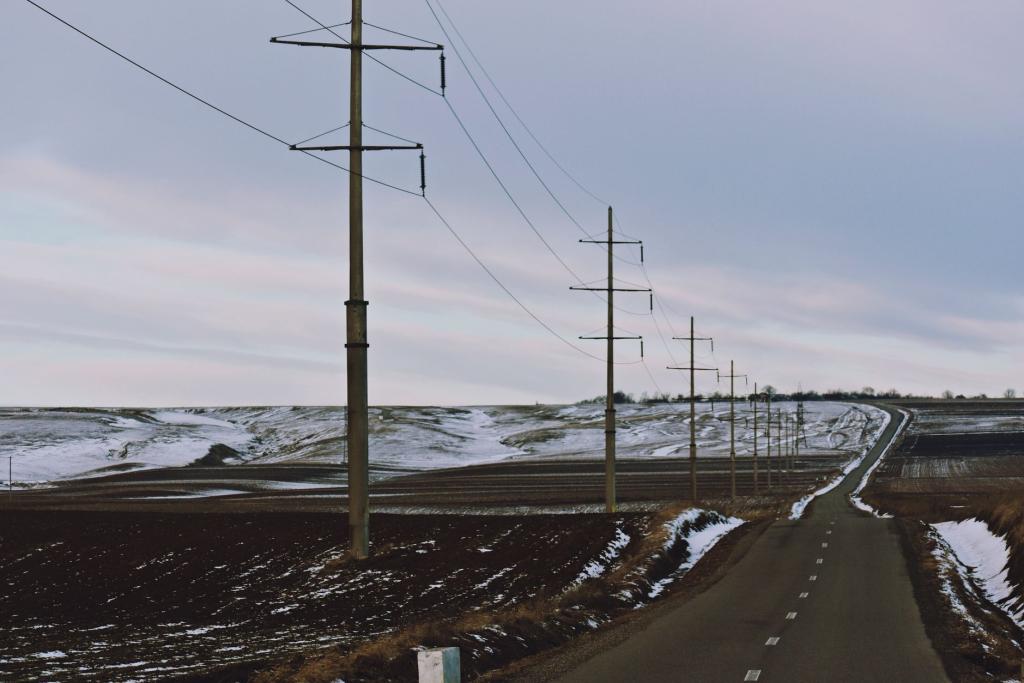
Russia has opened its Winter Energy War against Ukraine. On the night of September 29 to 30, 2026, Moscow launched what Kyiv called the largest combined strike package against the country's power grid since the last heating season ended, and the capital has been coping with emergency power cuts ever since. As the lights flicker across the city, Ukraine's government has also, for the first time, told the public what the war actually costs — and the figure is staggering.
According to a September 2026 campaign assessment from the Institute for the Study of War, the overnight assault marked the beginning of a Russian strike campaign aimed at degrading Ukraine's energy security ahead of the coming cold season and pressuring the country to capitulate. President Volodymyr Zelensky said nearly 190 strike drones, plus an unspecified number of ballistic missiles, were fired at the capital and the surrounding region in a single night.
Energy company Centrenergo said the Trypillya Thermal Power Plant in the Kyiv region was damaged in the attack, and the state grid operator Ukrenergo imposed emergency outages across the capital and three neighboring regions — the first such measure in the city since the spring, Reuters reported. Russia's defense ministry said it had hit the Kyivska electrical substation, the Kyiv hydroelectric plant, and a battery storage park, alongside a data center it claimed supported Ukraine's armed forces.
Then came a second wave. Ukraine's air force said Russian forces launched 285 drones during the day that followed, along with more ballistic missiles, and that air defenses intercepted 254 of them by early evening. Of those, 174 were high-flying, faster jet-propelled models that are harder to shoot down. The overnight assault triggered an air-raid alert that lasted more than 12 hours, officials said.
The campaign is already spilling past Ukraine's borders. Moldova's defense ministry said three Russian drones crossed into its airspace during the day, while NATO members Romania and Poland both scrambled military jets and flights at the Polish airports of Lublin and Rzeszow were suspended for a time, according to Reuters. Russia also said it struck an industrial complex in the Odesa region and port infrastructure in Izmail, on the Danube, squeezing Ukraine's shipping lanes as well as its power lines.
How the Winter Energy War began
Russia has run winter energy campaigns since the full-scale invasion began in 2022, but this one started before the heating season has even begun. Last winter brought record-low temperatures that ravaged power and heating systems, forcing Ukrainians to adapt to days or weeks of cold and darkness, and analysts say Moscow wants a head start this time. The September assault followed weeks of near-daily hits on energy sites through the summer and a barrage of drone strikes on the capital in late September, as we covered earlier this week.
The timeline of the opening salvo is tight. The overnight missile-and-drone package struck generation and transmission sites across the Kyiv region. Within hours, the grid operator announced emergency shutdowns to protect the network. By the next morning, damage assessments were underway at the hit facilities, and residents woke to a city shrouded in smoke that authorities said came from burning energy sites. Into October, Kyiv shifted from emergency cuts to scheduled rolling blackouts, with outage timetables published through DTEK's chatbot and the Kyiv Digital app so residents can plan around the planned cuts.
What life looks like under the blackouts
For millions of people in the capital, the Winter Energy War is measured in small daily disruptions. Trams and trolleybuses ground to a halt as commuters headed home. The city's water utility said pressure in the system dropped, which hits upper floors of apartment buildings first. Emergency services asked residents to keep windows closed as smoke drifted over neighborhoods. On the brighter side, repair crews worked through the night: DTEK said its teams restored supply to 8,000 households on the capital's left bank within hours.
The prime minister has instructed local authorities to check the readiness of backup power systems at critical facilities and speed up new installations, Reuters reported. But preparedness is uneven. Ukraine's human rights ombudsman Dmytro Lubinets warned of a critical shortage of urban shelters, describing the civil-defense system as having "completely failed" — a reminder that the campaign tests far more than the power grid.
Why this winter is different
The timing is the strategy behind Russia's Winter Energy War. A Washington-based think tank assesses that Vladimir Putin has likely adopted a modified theory of victory that relies on the long-range strike campaign to force Ukraine to surrender over the coming winter — and that Moscow is moving now, before Ukraine can harden its grid and develop countermeasures to ballistic missiles and jet-powered drones. Ukrainian monitoring channels describe a systematic Russian plan to disconnect the country's nuclear power plants from the unified grid, cut the capital off from outside electricity, and destroy energy infrastructure in the industrial east.
Ukraine's economy minister, Oleksandr Kravchenko, warned this could be the "hardest and the harshest winter" of the war so far. Yet the picture is not one-sided. Ukrainian repair teams have repeatedly brought the grid back within hours of major strikes, and the president has pressed allies for more interceptors, saying "every interceptor missile truly saves lives." Kyiv is also striking back at the source of the campaign: Ukrainian drones have repeatedly hit Russian oil refineries in recent weeks, raising the cost of the war for Moscow as well.
The money behind the Winter Energy War
Wars of attrition are won on spreadsheets as much as on grids, and the Winter Energy War is no exception. In a first-ever disclosure, Kyiv said the total cost of the war will reach one hundred fifty-five billion dollars in 2026, Prime Minister Sergii Koretskyi said — a figure that covers both domestic state spending and off-budget military aid from Western allies, including air-defense missiles, ammunition, and aircraft delivered as hardware rather than cash, Reuters reported. With the war in its fifth year, the conflict has become an exhausting battle of financial endurance.
The harder number is the gap. The government is working to close a twenty-seven-billion-dollar shortfall in this year's military spending, which the prime minister said is essential to keep combat operations — including long-range strikes — funded into the first quarter of 2027. The plan is to cover part of it, seven billion dollars, through postponed spending, budget reallocation, and cuts, while talks continue with partners on the remaining twenty billion dollars. "This is a critical need that must be met," he said. We broke down the funding math in detail earlier this week.
What comes next
Forecasters expect freezing night temperatures in Kyiv in the coming days, and the heating season has not even started — the Winter Energy War is only in its opening phase. The Russian bet, as analysts read it, is that months of blackouts will accomplish what more than four years of ground war has not: breaking the country's will to fight. The Ukrainian bet is that fast repairs, more interceptors, and strikes on Russia's own energy revenues can blunt that arithmetic before winter peaks.
What happens in the next few weeks will set the terms for the coldest months. Watch whether the rolling blackouts stabilize or widen, whether Western partners close the funding gap before the new year, and whether air defenses can handle the jet-powered drones that keep slipping through. For more on the conflict, see our War coverage.
Comments 0
No comments yet. Be the first to share your thoughts!
Leave a comment
Share your thoughts. Your email will not be published.