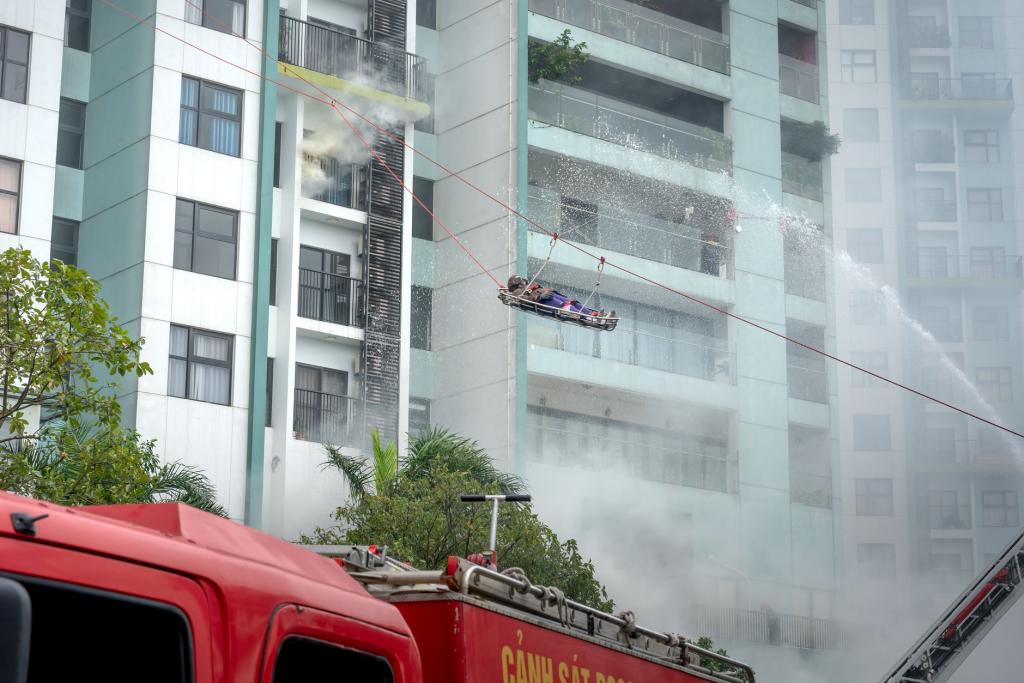
Kyiv spent Monday under fire and woke up Tuesday to more explosions. Russian drones slammed into apartment buildings, offices and the National Academy of Sciences of Ukraine, killing at least seven people and wounding more than 50 across the country, officials said. A day later, a Reuters witness heard fresh blasts in the capital as missile debris fell into a residential courtyard. The Kyiv drone strikes are no longer sporadic terror raids — they are the centerpiece of a deliberate Russian campaign to break Ukraine before winter.
The damage on Monday was concentrated and symbolic. In the capital's Shevchenkivskyi district, a drone strike set the National Academy of Sciences building on fire, killing a woman and injuring four people, according to city officials. Kyiv's mayor said search and rescue operations continued at the scene. A former top national security official, Volodymyr Horbulin, was hurt in the same attack while his assistant, standing nearby, was killed. Elsewhere in the city, a seven-story administrative building housing a medical center was hit, injuring seven people, most of them staff.
The strikes reached beyond the capital. A drone hit an office building in central Dnipro during working hours, killing three people and wounding 12. In the northern city of Sumy, teachers and students evacuated a school moments before four glide bombs struck during classes; two people died in a nearby residential area. In southern Odesa, the overnight barrage wounded eight people and damaged homes, a school, an animal shelter and port infrastructure. President Volodymyr Zelenskyy said nine people were killed and more than 80 injured nationwide in a single day of strikes.
Moscow is not hiding its intent. Kremlin spokesman Dmitry Peskov said the assault was retaliation for Ukraine's strikes on Moscow and Russian oil facilities, warning that Ukraine "will have to pay a price for the actions that have taken place in recent months." Russia's defense ministry said it struck data centers in Kyiv that it claims the Ukrainian military uses for battlefield artificial intelligence, along with drone storage sites and an electrical substation. That framing — punishment dressed as military targeting — is exactly what Kyiv calls a war on civilians.
A winter strategy takes shape
The Kyiv drone strikes fit a pattern that analysts say amounts to a new Russian theory of victory. The Institute for the Study of War reported that a prominent Kremlin-linked commentator is now openly backing a strategy of expansive long-range strikes with ballistic missiles and cheap jet-powered Geran-type drones, aimed at forcing Ukraine to capitulate over the coming winter. The think tank assesses that Moscow is betting it can launch the drones at scale with high penetration rates — and that it wants the war decided before spring 2027.
The scale is already enormous. Russia launched 170 drones against Ukraine in a single night, according to Reuters, and the campaign is spilling past Ukraine's borders. A likely Russian drone entered Romanian airspace overnight, the latest in a series of violations European officials say Moscow is normalizing. European security agencies are also investigating sabotage incidents, some already attributed to Russia, against defense and logistics infrastructure on the continent.
The manpower math
Drones are only half of the escalation. Vladimir Putin signed a decree expanding Russia's active military by 15,500 troops to 1.55 million, the second such increase in as many months, bringing total armed forces to roughly 2.44 million. Zelenskyy, meanwhile, said North Korean deployments to Russia have grown to more than 8,000 soldiers already on Russian territory, with preparations underway for another 10,000. Ukrainian and South Korean estimates put the total North Korean contingent sent since 2024 at between 14,000 and 15,000, most of them concentrated in the Kursk region.
That is the winter Moscow is building toward: mass-produced drones hammering Ukrainian cities while fresh manpower — including foreign troops — feeds a grinding front line. Kyiv's answer so far has been to hit back at the source. Ukrainian long-range drones have targeted Russian missile and drone factories and launch sites, and strikes on oil refineries have squeezed Russia's fuel supplies.
Ukraine is still pushing back
The front line is not moving in only one direction. Ukraine's Third Army Corps recaptured 51 square kilometers in the north of the Donetsk region in an operation its commander, Brigadier-General Andrii Biletskyi, says has now retaken 176 square kilometers in total and freed several villages. The Institute for the Study of War called the gains operationally significant, saying they disrupted Moscow's effort to encircle Ukraine's eastern stronghold cities. Ukraine still holds about a fifth of Donetsk, the region Moscow most wants to seize outright at negotiations the United States is trying to restart.
But the two armies remain largely deadlocked along a long eastern and southern front, and the casualty math favors no one. The war has lasted more than four and a half years, and Russia's overall advances have slowed this year even as its strike campaign on cities intensifies.
What happens next
Winter is the deadline both sides are racing toward. Russia's bet is that months of Kyiv drone strikes and blackouts will do what four years of ground war could not: force a capitulation. Ukraine's bet is that its interceptor program — aimed squarely at the cheap jet-powered drones Moscow is mass-producing — can blunt the campaign, and that continued strikes on Russian oil infrastructure will raise the cost of continuing it.
For the people of Kyiv, the strategy is already personal. When drones hit an apartment block, a medical center and the country's leading scientific institution in a single day, the message is that nowhere is civilian. Whether the winter breaks Ukraine's will or Russia's arsenal is the question the next few months will answer.
Read more from our War coverage, including Italy's withdrawal from Iraq after a 12-year military mission.
Comments 0
No comments yet. Be the first to share your thoughts!
Leave a comment
Share your thoughts. Your email will not be published.