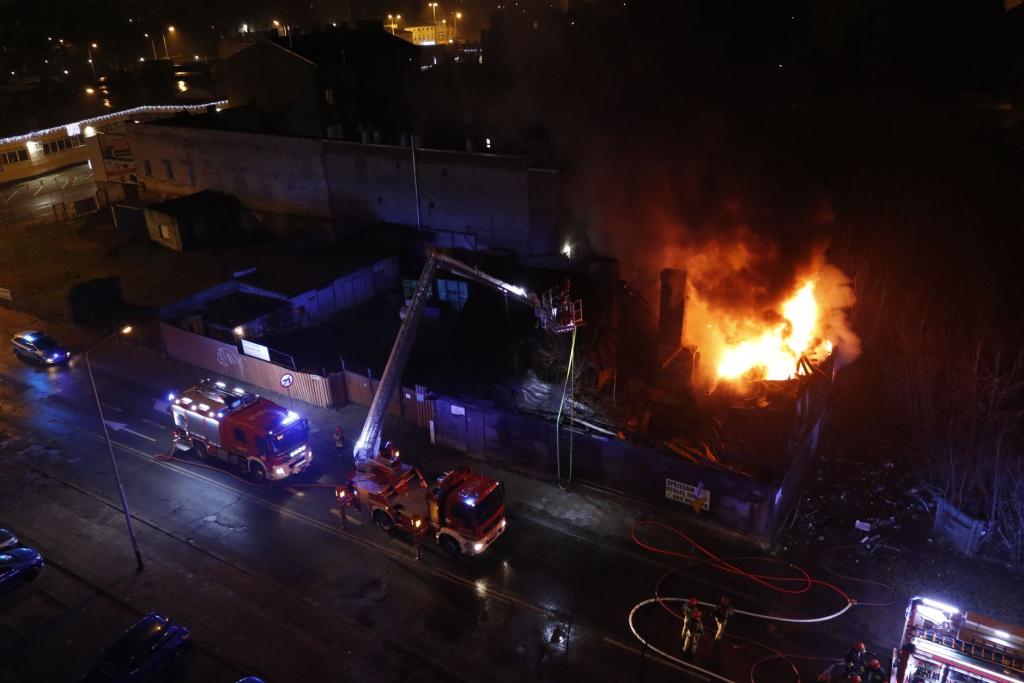
Kyiv woke up to a new wave of drone strikes
On Monday, September 28, 2026, a Russian drone slammed into the National Academy of Sciences building in central Kyiv's historic Shevchenkivskyi district. The building caught fire, and a body was later recovered from the rubble. Kyiv Mayor Vitali Klitschko said the capital suffered 24 to 26 injuries that day, including three children, with eight people hospitalized and one in serious condition, according to Reuters reporting.
The Kyiv attack was part of a wider barrage. President Volodymyr Zelenskyy said nine people were killed and more than 80 injured in Russian drone strikes across Ukraine on September 28, with explosions and a fresh ballistic-missile alert hitting Kyiv again early Tuesday, September 29. Former Ukrainian security chief Volodymyr Horbulin happened to be at the academy when it was struck — he told broadcaster Suspilne he was slightly wounded, while his assistant, who was near the building, was killed.
Ukraine's Foreign Minister Andrii Sybiha said Russia is "deliberately expanding the boundaries of what it believes the world will tolerate," accusing Moscow of cynicism for hitting a scientific institution during the workday and urging allies to send more air defenses. The academy itself called the attack an act of "Russian terror" and "barbarity" aimed at peaceful people who were simply at their workplaces.
What makes this strike cycle different is the technology. Russia has begun using faster, high-flying jet-powered drones against Kyiv — Zelenskyy said 90 of the 120 drones fired were jet-propelled, and Ukraine managed to intercept only 57 percent of them. "For jet-powered shaheds, unfortunately, the rate is much lower than it needs to be — 57 percent for now," Zelenskyy said in his September 28 nightly address, adding that new interceptors are being actively tested but still need refinement "to achieve enough effectiveness and scale."
Why the falling interception rate is the number that matters
Ukraine has spent three and a half years getting very good at shooting down Iranian-designed Shahed drones — the slow, buzzing propeller aircraft that became the signature of Russia's air war. Interception rates against the older models have often been excellent. But a jet-propelled Shahed flies much faster and higher, leaving air defenses with a smaller window to react. When only about half of incoming drones get stopped, the math of air war changes: more get through, more buildings burn, and defending a city like Kyiv gets dramatically more expensive.
For everyday life in Kyiv, that number translates into air-raid sirens through the day, debris from the drone strikes raining into residential courtyards, and clinics treating children wounded in attacks they had nothing to do with. It also changes the argument around Western military aid — the conversation is shifting from whether to supply Ukraine with interceptors to whether the interceptors being "actively tested" can arrive and scale fast enough to matter.
The manpower side: a new mobilization, more North Korean troops
The drones are only half the escalation story. Citing a report from Ukraine's military intelligence agency HUR, Zelenskyy said Russia has launched a new wave of mobilization, recruiting more people "through various methods," and urged other governments to act against Russia's recruitment of foreign nationals. In a decree signed the same day, September 28, President Vladimir Putin ordered Russia's army expanded to 1.55 million active servicemen, with total armed-forces strength set at more than 2.44 million.
Zelenskyy also said over 8,000 North Korean troops are currently on Russian territory, with another 10,000 being selected for training and deployment — and he warned in August that as many as 50,000 could eventually be sent. North Korea has already sent an estimated 14,000 to 15,000 troops since 2024, mostly deployed to Russia's Kursk region, plus millions of artillery and mortar rounds, ballistic missiles, and long-range artillery, according to Ukrainian and South Korean estimates reported by Reuters.
Ukraine's answer: an offensive in Donetsk
The news isn't all one-directional. Ukraine's Third Army Corps has recaptured 51 square kilometers in northern Donetsk in an operation codenamed "Vivaldi," bringing the total recaptured to 176 square kilometers, freeing three villages and restoring control over two more, according to Brig.-Gen. Andrii Biletskyi. The Institute for the Study of War described the gains as operationally significant.
Both sides are claiming momentum, which is itself the story: Russia says its strikes hit fuel and telecommunications infrastructure plus cargo vessels in the Odesa and Chornomorsk ports, per Reuters, while Ukraine points to reclaimed territory and the recapture of more than 700 square kilometers earlier this year in the southeast. Ukraine still holds roughly a fifth of Donetsk, and the ground war grinds on alongside the drone war.
Meanwhile the diplomacy continues in parallel. Pope Leo urged Russia and Ukraine to dialogue toward ending the war, and NATO's top military commander Gen. Alexus Grynkewich told EU lawmakers that Russia's sabotage campaign across Europe isn't deterring support for Ukraine. The weapons, the soldiers, and the drones will keep moving regardless — which is why the plunging interception rate, the jet drones, and the fresh mobilization wave matter more than any single strike. For background, read Reuters on the North Korean troop buildup and Reuters on Ukraine's Donetsk advances, and follow our war coverage for updates.
Comments 0
No comments yet. Be the first to share your thoughts!
Leave a comment
Share your thoughts. Your email will not be published.