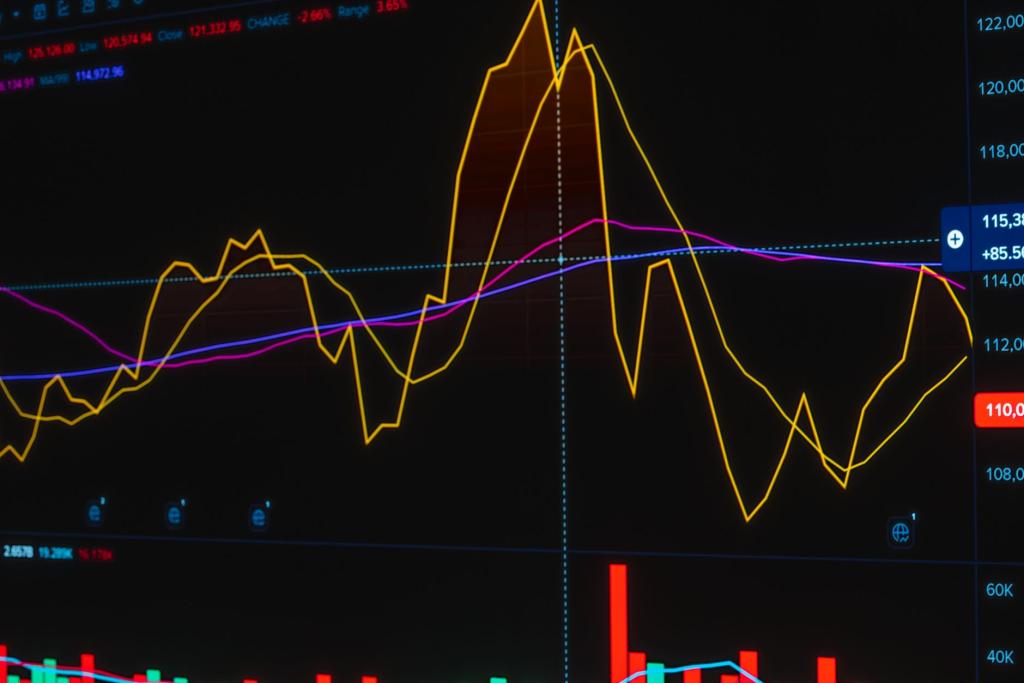
Korean chip stocks suffered their worst day in months on Tuesday as two shocks hit at once: a Chinese rival announced progress on a memory technology that Seoul's giants are still chasing, and two American chip chiefs warned that money, not chips, could choke the artificial intelligence boom. The combined blow sent Samsung Electronics and SK Hynix tumbling and dragged the Kospi down sharply.
The damage was concentrated and ugly. According to the Korea JoongAng Daily, the Kospi closed down 5.46 percent at 6,035.35, triggering the exchange's sell-side sidecar, which briefly paused algorithmic trading during the morning session. Samsung fell 7.39 percent and SK Hynix plunged 10.09 percent. The two Korean chip stocks move together because together they account for more than half of the index's market value, so a chip selloff is a market selloff in Seoul. Foreign investors sold a net 4.51 trillion won of shares while local institutions and individuals bought.
The Chinese breakthrough that spooked Seoul
Over the weekend, ChangXin Memory Technologies president Cao Kanyu told an industry conference in Shanghai that the company had made key progress on a denser DRAM cell architecture built around a vertical transistor design, and plans to ship a server-memory product using it by the end of 2026. The announcement matters because server memory is a higher-value market long dominated by Samsung, SK Hynix and Micron, and Bloomberg reported that the technology could let CXMT beat its Korean rivals to a design they have been pursuing for years.
CXMT now holds about 9.5 percent of global DRAM revenue, according to market research firm TrendForce, up sharply from a year earlier. Samsung, by contrast, is not expected to commercialize a comparable design until 2028, Korean outlet The Elec reported earlier this year. The gap between those two timelines, proven or not, is what moved two giant stocks by double digits in a single session.
The company has been closing the gap fast. In July it raised about $10 billion in a Shanghai listing, and in recent months it moved its fifth-generation DRAM process and a next-generation mobile memory into mass production, according to industry coverage. The server push signals that CXMT is moving beyond the smartphone and consumer memory segments where it started and into the data-center market, where AI demand has made memory one of the most contested components in the world.
The money problem behind the AI boom
The second shock came from Singapore, where Broadcom chief executive Hock Tan told the DBS Asia Future Forward Conference on Monday that capital could become the biggest brake on artificial intelligence expansion. The biggest constraint is capital, Tan said, according to conference reports carried by CNBC. Tan argued that chip and power shortages have all been solved before and will be again, while Intel chief executive Lip-Bu Tan echoed the warning, pointing to rising borrowing costs and open questions about returns on AI investment.
The comments landed hard for Korean chip stocks. The Philadelphia Semiconductor Index fell 2.7 percent for a fourth straight session, and Micron dropped 3.9 percent in overnight trading in the United States. Bloomberg reported that Tan compared some AI investors to gamblers placing bets they do not understand, a remark that captured the market's growing unease about whether the industry's enormous spending commitments can keep generating the revenue to justify them.
For young investors, Tuesday was a lesson in concentration risk. Korean chip stocks have been among the best performers of the year on AI optimism, which is exactly why a single weekend announcement in Shanghai could erase that much value in one session. Owning an index or a handful of famous names can feel like diversification when prices are rising; it stops feeling that way when the two biggest names in the index fall together. The sensible read is that the market is repricing who gets to profit from AI demand, and at what price.
Attention now turns to Wednesday's United States consumer price report, which the Korea JoongAng Daily noted could shape expectations for the Federal Reserve's October policy meeting. Analysts quoted by Korean outlets said uncertainty over how long the semiconductor upcycle can last will keep pressuring valuations. Tuesday showed how quickly a technology lead can be questioned, and how fast Korean chip stocks can move when it is. Startup Fortune reported on the CXMT announcement and its market fallout, and TheStreet covered the financing warnings from chip executives.
Comments 0
No comments yet. Be the first to share your thoughts!
Leave a comment
Share your thoughts. Your email will not be published.