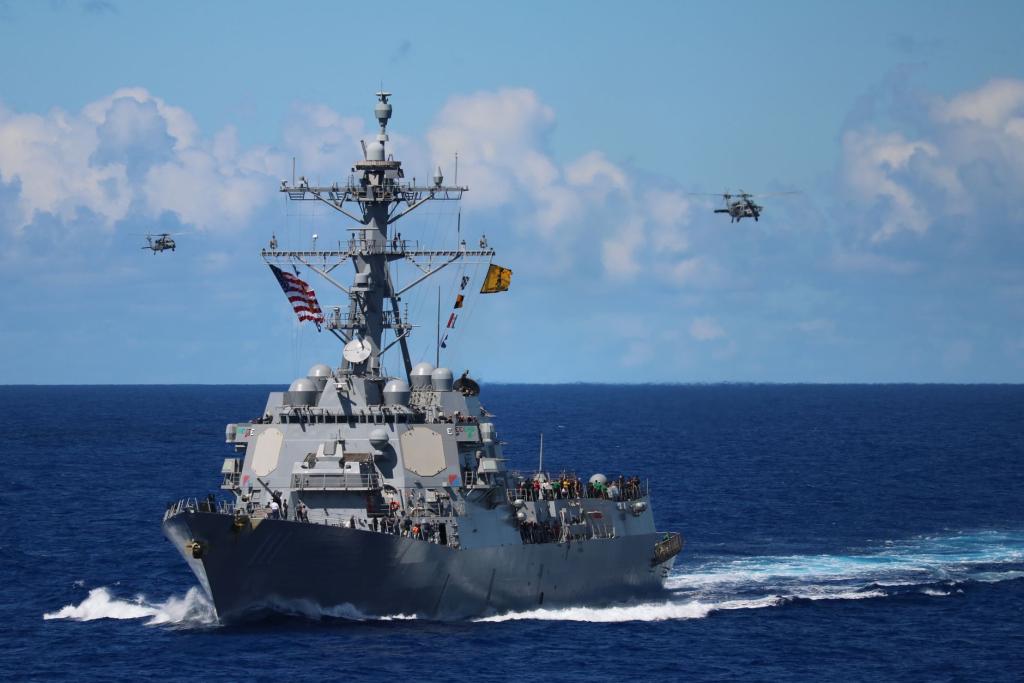
On the night of September 15, 2026, an India Pakistan naval collision in the North Arabian Sea turned two routine patrols into a full-blown diplomatic row. The Pakistani offshore patrol vessel PNS Hunain and the Indian guided-missile destroyer INS Kolkata scraped hulls while operating at close range, and within hours both governments had summoned each other's diplomats to trade protests. No one was hurt and neither ship was seriously damaged, but the argument over whose fault it was has already outlasted the collision itself. According to Asian Military Review, the incident is the first publicly reported physical contact between the two militaries since their armed confrontation in May 2025, which makes a dented hull feel a lot bigger than it sounds.
India's version of events is blunt. The Ministry of External Affairs said INS Kolkata was on a routine surveillance deployment in international waters when PNS Hunain approached at high speed and pulled off what New Delhi called a dangerous overtaking manoeuvre. The two ships made what Marine Insight described as a side-grazing contact after the Pakistani vessel tried to cross the Indian destroyer's bow. India lodged a formal protest on September 16, summoning Pakistan's charge d'affaires in New Delhi and calling the conduct of the Pakistani naval units "unacceptable and unprofessional," according to reporting from IRIA News.
Two governments, two stories
Pakistan tells it the other way around. Islamabad said the contact happened inside Pakistan's exclusive economic zone, where its navy was running the biennial SEASPARK-26 exercise, and accused the Indian warship of aggressive manoeuvres at dangerously close range. Pakistan's Foreign Ministry described the incident as "highly provocative and unacceptable" and summoned India's charge d'affaires in Islamabad with a protest of its own, according to AnewZ. So the basic facts are not in dispute: two warships touched. Everything else, location, blame, and which set of rules got broken, is being fought over through press releases.
The legal fight centres on a thirty-five-year-old agreement. India's MEA spokesperson Randhir Jaiswal said at a briefing in New Delhi that PNS Hunain's manoeuvre violated Article 10 of the Agreement Between India and Pakistan on Advance Notice on Military Exercises, Manoeuvres and Troop Movements of April 1991, which keeps naval units at least three nautical miles apart, as reported by Nation Press. Jaiswal put it this way: "We have seen Pakistan's response to the protest we have lodged. It is the usual prevarication that we expected. We reject the allegations and insinuations contained therein." Pakistan, for its part, said the same 1991 agreement was breached by the Indian side, along with what it called a serious violation of international law.
Why a dented hull matters
The ships themselves tell you how lopsided this encounter was. INS Kolkata is a Kolkata-class guided-missile destroyer, roughly one hundred sixty-four metres long with a full-load displacement of about seven thousand four hundred tons, commissioned in August 2014 and built by Mazagon Dock Shipbuilders in Mumbai. She carries the BrahMos supersonic cruise missile and can push past thirty knots. PNS Hunain, hull number F-273, is a far smaller offshore patrol vessel, about ninety-eight metres long and roughly two thousand six hundred tons, built by Damen Shipyards and commissioned in July 2024 as part of Pakistan's OPV 2600 series. Asian Military Review reported that the Pakistani corvette took the worse of it, returning to port with a hull dent and a crack for repairs, while INS Kolkata stayed operational.
What makes this more than a maritime fender-bender is the context. The collision happened about two hundred twenty kilometres east of Oman, in one of the busiest and most politically charged waterways on the planet. The North Arabian Sea sits between the Gulf of Oman and some of the world's most important energy shipping lanes, and it has seen repeated close encounters between rival navies in recent years. A year ago, almost nobody would have noticed two ships brushing past each other. After the armed confrontation between India and Pakistan the previous spring, every near-miss gets read as a signal, which is exactly why both sides rushed to get their version of the story out first.
For Gen Z readers in South Asia and the diaspora, the practical question is whether this escalates. The honest answer is that it probably does not, at least not on its own. Neither government reported injuries or serious damage, and the machinery of protest diplomacy, summoning envoys, lodging demarches, citing violated agreements, is designed to let both sides look tough without firing anything. The pattern is familiar from earlier flashpoints: a sharp exchange of accusations, a few days of heated headlines, then a return to the usual uneasy quiet. Still, the fact that the two navies are operating close enough to touch in contested waters means the next incident is a matter of time, not imagination.
There is also a lesson here about how fast narratives harden. India said the event happened in international waters during a routine mission. Pakistan said it happened in its exclusive economic zone during a scheduled exercise. Both cannot be fully true, and there is no independent account of what the crews saw from their bridges. What gets remembered will depend on which version spreads further, which is why the three-nautical-mile rule matters less as a legal technicality and more as a reminder that rules only work when both sides want them to. The agreement survived decades of hostility, and whether it survives this decade may hinge on incidents exactly like this one.
The collision also lands in a busier geopolitical season. With the politics desk tracking summits and state visits across the region, naval incidents like this one tend to get pulled into bigger stories about deterrence, trade routes, and who controls the Indian Ocean. Readers following world-society coverage will recognize the shape of it: a small event, two loud governments, and a lot of sea in between. For now the sea is quiet again, but the diplomatic fog has not lifted, and both navies are still out there.
The fullest accounts of this India Pakistan naval collision come from Asian Military Review and IRIA News, with additional reporting on the diplomatic fallout from Marine Insight. Anyone tracking war and maritime security stories should expect more of these encounters as both navies expand their presence in the Arabian Sea.
Comments 0
No comments yet. Be the first to share your thoughts!
Leave a comment
Share your thoughts. Your email will not be published.