Mohsen Rezaei, the secretary of Iran's Supreme National Security Council, said Tehran has conveyed a set of terms for ending its war with the United States through Qatari mediators and is now waiting for a response from President Donald Trump. Rezaei disclosed the package in an interview with Al Jazeera on Saturday, putting a public price on any ceasefire at a moment when fighting stretches across the Persian Gulf, Lebanon and the Red Sea corridor. The list of Iran seven conditions includes an end to the war on all fronts, the release of Iranian assets frozen abroad and an end to the naval blockade on Iranian ports, according to Al Jazeera's account of the interview. Rezaei warned that Tehran is prepared for a decisive war if Washington rejects the terms, adding that threats from Trump would not change Iran's position.
Tehran has publicly identified three core demands. The first is a halt to the fighting everywhere it is taking place, the second is the release of Iranian funds frozen overseas and the third is the lifting of the American naval blockade on Iranian ports. In a post on X, Rezaei wrote that the message was clear and unambiguous: if Washington wants to escape the quagmire it created, it has to accept Iran's rights and conditions. Additional reports on the interview listed further demands beyond the three public ones, including a halt to strikes on Iranian soil, an end to interference in Iran's internal affairs and stopping American cooperation with groups Tehran describes as opponents of the revolution. No full text of the seven points has been published, so the record rests on what Rezaei said on camera.
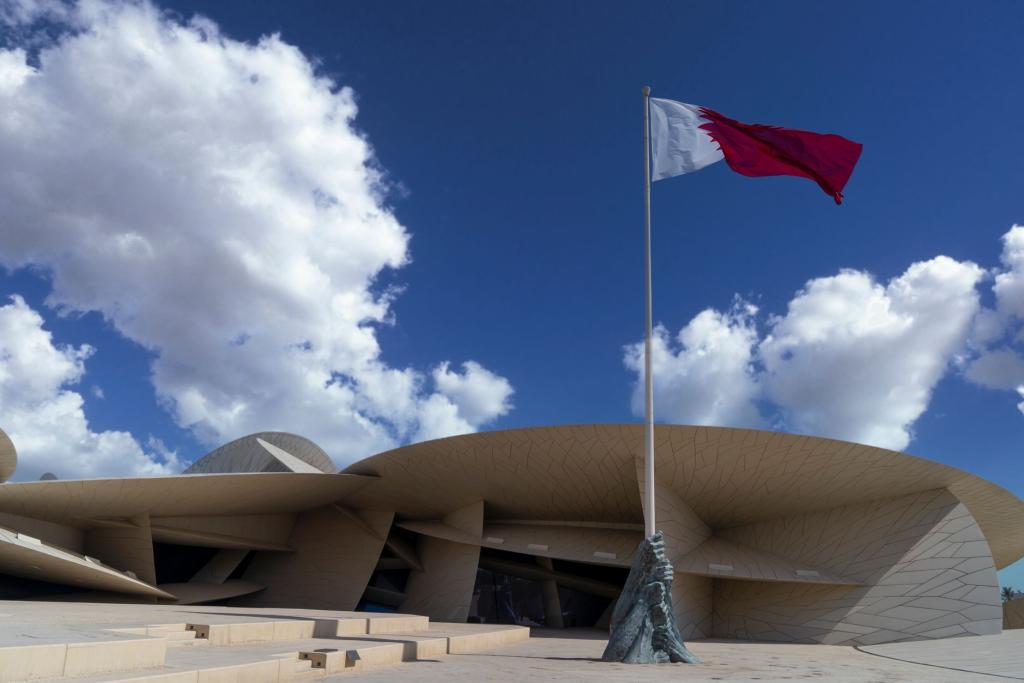
Qatar is carrying the messages. Doha relayed the conditions to Washington and is in ongoing contact with Tehran, while Pakistan has also hosted contacts between the two sides. Both countries stepped into the mediator role after a sixty-day memorandum of understanding between the United States and Iran lapsed in August, and Qatar has kept working to re-establish talks since. The route gives Tehran and Washington a channel without direct travel between them, and it concentrates the diplomacy in a Gulf state that hosts American forces while maintaining ties with Iran, as detailed in reporting on the Qatari relay. Doha has published no readout of the package, and the White House had issued no response as of Saturday evening in Washington.
The interview mixed diplomacy with hard military warnings. Rezaei did not rule out another American strike, saying it was very much on the cards based on Iranian military assessments, and said Iran's planning had changed after two earlier rounds of fighting. He said Tehran's planning now focuses on American naval assets stretching from the Persian Gulf through the Gulf of Oman and into the Arabian Sea. Rezaei also claimed Iran recently test-fired a multi-warhead anti-ship missile near a US vessel, a claim that has not been independently verified. He warned that any future Iranian response could be extensive, targeting American bases in the region as well as commercial interests and companies operating locally.
Rezaei tied any deal with Washington to the wider regional fighting, naming Lebanon in particular and pointing at the latest flare-up between Saudi Arabia and the Houthis. Thick smoke was seen near Riyadh's airport late Saturday as the Houthis claimed strikes on sensitive sites, a dangerous backdrop while Washington weighs a new round of strikes against the Houthis after talks at Camp David were cut short. He said Iran wants the Saudi-Houthi fighting to end and suggested the Houthis are interested in a deal with Riyadh, while insisting the group makes its own decisions. The linkage shows how a truce with Iran alone would not settle the shipping lanes or the Gulf skies.
The Strait of Hormuz question
On the Strait of Hormuz, Rezaei said Iran and Oman had come close to announcing an agreement before it was shelved, and that the framework remained ready but could need regional endorsement before going public. Parliament Speaker Mohammad Bagher Ghalibaf has separately said the strait will stay closed until the United States fulfils its commitments. The waterway is central to the dispute: tanker traffic remains well below pre-war levels, and American monitoring shows shippers are still avoiding the route. Rezaei rejected speculation that Iran could close the Bab al-Mandeb Strait, saying that waterway was a Yemeni matter linked to the Houthi movement.
The nuclear warning
Rezaei also raised the nuclear question. He said Iran's nuclear doctrine remained unchanged and that the country continues to honour the religious decree prohibiting nuclear weapons, and no decision has been taken to leave the Nuclear Non-Proliferation Treaty. But he warned that American and Israeli actions could eventually justify such a step, according to the interview, which several outlets described as a pressure line meant to move enrichment or inspections only when concrete steps follow. The warning lands at a delicate moment: according to Anadolu News Agency, the State Department issued visas for Iran's delegation to attend UN General Assembly high-level week in New York, keeping a possible direct channel alive.
What Washington must weigh
The State Department separately warned American citizens in Iraq, Bahrain, Oman, Saudi Arabia, Iran, Qatar, Lebanon, Kuwait and Jordan to exercise heightened vigilance, citing the potential for unforeseen escalation. The notice does not reference the Qatari relay, but it covers the same map Rezaei described. Trump told Axios last week that he was approaching a major decision on whether to restart large-scale attacks, asking whether he wanted to escalate further against the Iranian regime, while saying he remained open to diplomacy. Tehran has disputed that negotiations have resumed and insists there will be no talks until its conditions are met.
Until Trump or his envoys answer, the knowable record is thin. Iran says the Iran seven conditions reached the White House through Qatar, Rezaei named security and economic demands on air and the State Department issued a regional vigilance warning without a negotiating reply. The public relay forces Washington to accept, reject or counter without a quiet channel. Rezaei summed up the stakes in Al Jazeera's interview: in practical terms the war is still going on, but Tehran says it is pursuing a strategy aimed at ending the conflict as soon as possible, as reported by ANI and the Daily Jagran.
Comments 0
No comments yet. Be the first to share your thoughts!
Leave a comment
Share your thoughts. Your email will not be published.