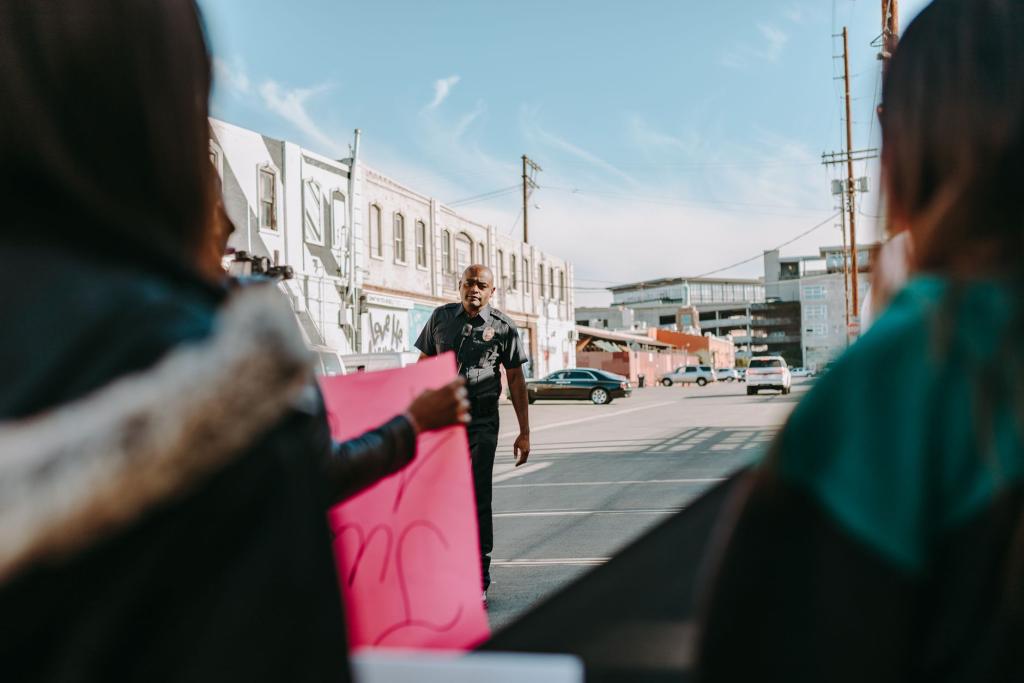
The ICE shooting in Austin happened Sunday afternoon, when a federal immigration officer shot a 28-year-old Venezuelan delivery driver in the northern part of the city. The incident brought protesters to the scene within minutes and set off a dispute between city officials and federal authorities over who should investigate it.
Wilber Rafael Garces Perez was working as a DoorDash driver when an Immigration and Customs Enforcement agent shot him once in the torso around 1 p.m. in the 8000 block of Anderson Square, near U.S. 183, according to city officials. DoorDash confirmed to CNN that Garces Perez was working as a dasher at the time. Austin-Travis County EMS was notified at 12:56 p.m. and took him to Dell Seton Medical Center, where he was listed in serious but stable condition.
What happened in north Austin
Austin Police Chief Lisa Davis said preliminary information indicated the shooting followed what she called a "small foot pursuit." She cautioned that everything the city knew was preliminary and subject to change. Austin police officers were not involved in the operation or the shooting; the department handled traffic control only.
The Texas Department of Public Safety said ICE had asked for help with a vehicle pursuit around 12:50 p.m. By the time troopers arrived, the ICE shooting in Austin had already happened. Federal officers shut down part of the roadway while investigators from Homeland Security Investigations documented the scene. Local television coverage showed protesters gathered across the street from a blue Toyota Corolla with damage to the passenger-side door, with ICE agents standing nearby.
The Department of Homeland Security said in a statement that Garces Perez had a final order of removal, had entered the country during the Biden administration, and was now "in federal custody pending removal" after being treated. Homeland Security Investigations is leading the inquiry with help from the FBI.
The man's immigration attorney, Kate Lincoln-Goldfinch, gave a different account. She said that, based on the information available to her, Garces Perez previously held a valid work permit and entered the United States lawfully, and that she knew of no criminal history. She told reporters that Garces Perez called his wife from the car while he was "yelling in pain," and that his wife, Elizdar, got the call as the shooting was happening. Lincoln-Goldfinch said the family was blocked from seeing him for at least six hours and did not know whether he was still at the hospital or had been moved into ICE custody. She later told the Associated Press she did not know his current immigration status.
Austin leaders demand a role in the investigation
Mayor Kirk Watson said he wants the Austin Police Department to take part in the investigation so the public gets what he called "clear, third-party eyes" on what happened. He said he did not think it would be appropriate for ICE to investigate the shooting on its own. "Austinites have a right to know what happened. It's their city," Watson said.
Chief Davis agreed. "The city of Austin deserves answers," she said at a news conference alongside the mayor and other officials.
U.S. Rep. Greg Casar, whose district includes part of Austin, connected the shooting to a wider trend. "This is a pattern — it's a disturbing pattern — and it's got to stop," he said, calling for an independent investigation.
According to CNN, the Austin shooting is at least the third involving immigration agents in Texas since the start of President Trump's second term. Two months ago, ICE agents fatally shot a Mexican man during a traffic stop in Houston. Earlier this month, two teenagers in Alamo, Texas, both U.S. citizens, said ICE agents attacked them after they recorded an immigration stop, with video showing one of them being repeatedly punched in the head while pinned to the pavement. Last month, an ICE officer in Minnesota was charged with lying about his shooting of a Venezuelan man and is free on bond after pleading not guilty.
Critics of the administration's immigration enforcement argue the tactics have become too aggressive, and polls cited by CNN show most Americans now oppose the president's immigration policies. The Austin Police Department's Special Investigations Unit and the Texas Rangers are also looking at the case, though the federal investigation is expected to take the lead.
Why this story matters
The ICE shooting in Austin is already drawing national attention because it sits at the intersection of immigration enforcement and protest rights, two issues that have mobilized Gen Z all year. Readers following other protest movements this month, from the anti-oil activists freed on bail in Uganda to the civil rights legends urging young activists to act, will recognize the pattern: a confrontation in the streets, followed by a fight over who gets to tell the story of what happened.
Immigration enforcement is one of the most contested issues of Trump's second term, and confrontations like the one in Austin keep forcing the question of how much force federal agents should use and who holds them accountable for it. City officials say they want a seat at the table when that question is answered. Federal authorities have not said whether they will give them one.
CNN reported the shooting with confirmation from city officials; the Associated Press and USA Today also covered the case on Sunday.
Comments 0
No comments yet. Be the first to share your thoughts!
Leave a comment
Share your thoughts. Your email will not be published.