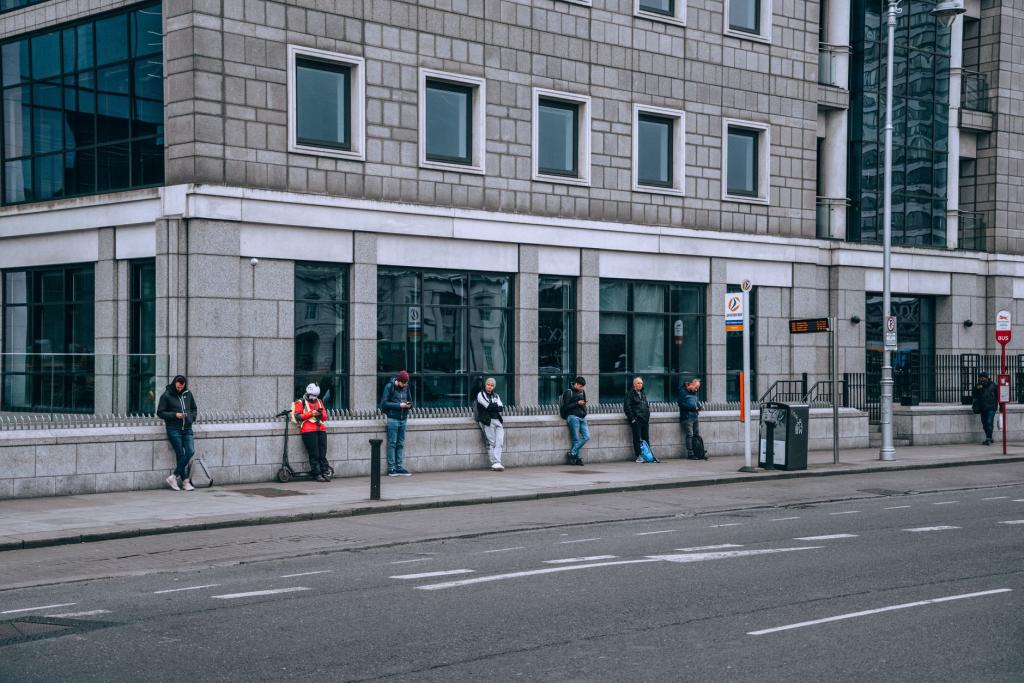
Picture this: you graduate, you send out applications, you do everything the adults told you to do — and there is simply no job waiting for you, or for most of your friends either. That is the future about eight hundred million young workers could face over the next fifteen years, unless governments in developing economies change course. It is a staggering projection, and it landed this week from the head of the United Nations Development Programme, the UN agency focused on fighting poverty.
UNDP Administrator Alexander De Croo delivered the warning in a press briefing held from Bangkok, where he was attending the 2026 annual meetings of the World Bank Group and the IMF, according to UN News. The headline numbers are stark: about 1.2 billion young people will leave school and enter the labour market in developing economies over the next decade and a half, but on current projections only 400 million jobs will exist for them. The rest face a jobless future.
De Croo told reporters the shortfall is driven by demographics — in many developing countries the median age sits between eighteen and twenty-five, meaning the crunch lands hardest on young workers — and that the job projections assume the current state of technology. The gap, in other words, is not fate. "This is the result of policy," he said, which means different policy choices can still close it. When asked whether artificial intelligence was to blame, the UNDP chief pushed back: active labour policies could shift the trajectory, and sectors such as care, agriculture and tourism would keep creating work even as AI spreads through the economy.
Why the money is not there
Governments do not just need ideas; they need cash, and developing economies are being squeezed on all sides. De Croo described a "triple shock" of high energy costs, one of the most pronounced El Niño weather patterns since 1950, and very high borrowing costs. The squeeze shows up in budgets. A new UNDP report found the median developing country now spends nine and a half percent of government revenue on interest payments alone. For the first time since 2010, the number of people living in multidimensional poverty — measured not only by income but by access to electricity, water, health care and education — has risen. Those numbers, the UNDP chief said, should be a wake-up call for everyone. For young workers watching from the sidelines, the squeeze is personal: many are already burned out and one bill away from broke, with little cushion if hiring stalls.
Two plans to turn investment into jobs
UNDP paired the warning with two new initiatives. The first, the Investment Accelerator, will help governments improve investment policies and legal frameworks, build pipelines of investment-ready projects and carry them from preparation to implementation. The second, the Jobs for Prosperity Facility, will help countries identify sectors with strong hiring potential, match workers' skills to what employers need and clear the obstacles that keep businesses from investing and recruiting. "Job creation is actually the only real sustainable way for people to grow out of poverty," De Croo said, as Channel Africa reported.
The initiatives are backed by expanded partnerships with multilateral lenders, including the European Investment Bank and the European Bank for Reconstruction and Development, with pilot programmes already running in Nepal, Yemen, Haiti, Lebanon and Ghana. If the pilots scale, they could open real doors for young workers in some of the world's toughest labour markets. And the accelerator and the facility will not operate in a vacuum: the sectors UNDP points to as still able to create large numbers of jobs — care services, agriculture and tourism — are exactly the kinds of work that need people on the ground, not just algorithms.
What this means if you are young
Here is why this story belongs in a space for young voices: the labour-market crunch lands directly on young workers. With median ages that low across much of the developing world, the young workers most affected are the ones still choosing what to study and where to live. The competition for formal jobs will be fierce, and fields like care, food systems and tourism may turn out more future-proof for young workers than they look from a classroom. Even in richer economies the mood is defensive — nearly half of workers say they are clinging to the jobs they have rather than hunting for better ones.
There is also a less bleak reading for young workers, and it comes from De Croo himself. That headline figure is not a prophecy — it rests on the current state of technology and assumes no change in policy. Active labour policies can move the number, and the two initiatives launched in Bangkok are designed to do exactly that. Your generation's choices, from the careers you pick to the candidates you support, sit inside the policy story he says created the problem.
The warning also resets a promise young people have heard for years: that a degree guarantees a job. UNDP's message is blunter — degrees alone will not be enough if the economy is not built to absorb the graduates. What comes next depends on whether the investment plans announced this month turn into real hiring, and on whether young people keep this issue impossible to ignore. And according to the UN's reporting, the global economy has proved more resilient than expected — but that resilience is not shared equally. The young workers entering the market now are the ones who will feel the imbalance first.
Comments 0
No comments yet. Be the first to share your thoughts!
Leave a comment
Share your thoughts. Your email will not be published.