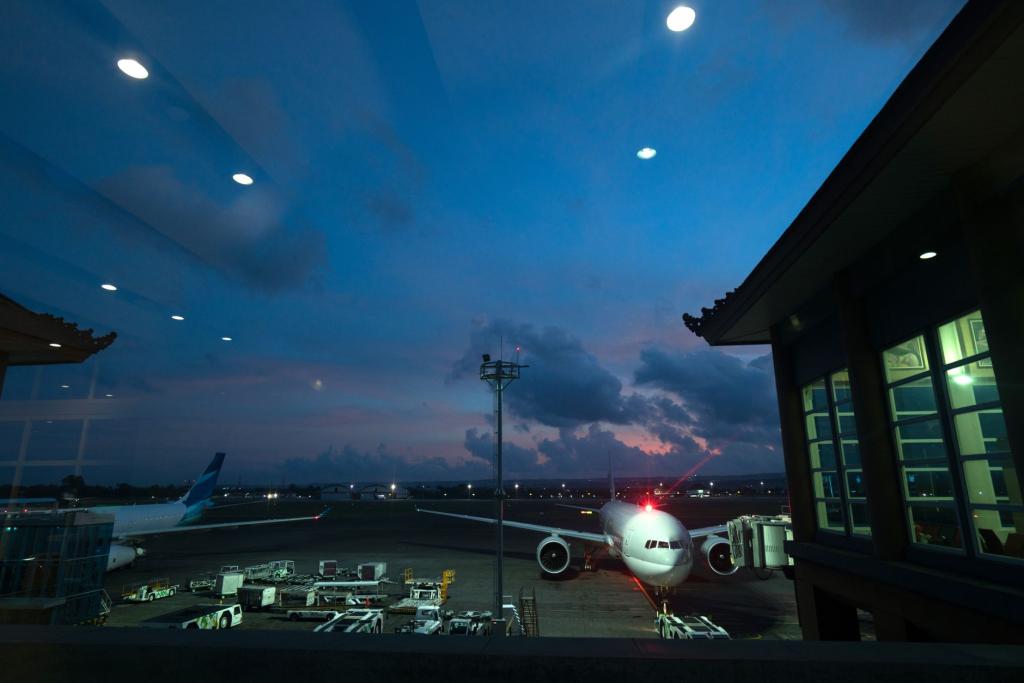
A missile fired by Yemen's Houthi movement struck King Khalid International Airport in Riyadh on Saturday afternoon, killing 12 people and injuring 309, according to the Saudi General Authority of Civil Aviation. The weapon hit the busy complex housing Terminal 3 and Terminal 4, and airport authorities suspended flight operations while damage was assessed and runways were checked.
Among the dead were four Saudi citizens. The rest were foreign residents: two Bangladeshi nationals and one national each from the United States, Egypt, Jordan, Syria, Palestine and Sudan, according to the aviation authority. The injured are being treated at hospitals across Riyadh, with some reported to be in critical condition. The Indian embassy in Riyadh said it was coordinating with Saudi authorities and hospital officials to assist Indian nationals affected by the attack and to confirm the condition of the wounded.
The strike was the third against King Khalid within a single week. A previous attack on October 7 killed a person and wounded eight others at the facility, the authority said in an earlier statement. Saturday's blast brought flights to a halt and forced the temporary evacuation of parts of the terminal, with images of smoke-filled concourses circulating through the afternoon.
Retaliation and the Saudi response
A senior Houthi official, Mohammed al-Bukhaiti, claimed responsibility for the King Khalid strike and described it as retaliation for Saudi airstrikes in Yemen, including attacks on civilian infrastructure. In comments carried by The New York Times, he said "airports, seaports, wedding and mourning halls, hospitals, and markets in Yemen are civilian facilities that must not be targeted or harmed." The Houthis have fired ballistic missiles and drones at targets inside Saudi Arabia for years, in a conflict that pits the movement against a Saudi-led coalition backing Yemen's internationally recognized government.
The Saudi-led coalition answered within hours. Coalition spokesman Turki Al-Malki said in a statement that the strike was "a heinous act that violates humanitarian principles, values and morals," and that it amounted to a war crime under international humanitarian law. He said the coalition's Joint Forces Command would respond firmly to what he characterised as a terrorist attack on King Khalid, in full accordance with international law. It was one of the coalition's sharpest public warnings in months.
The attack also drew Washington into the exchange. President Donald Trump said earlier on Saturday that the United States may join Saudi strikes against the Houthis, after Washington had repeatedly declined Riyadh's requests for direct military action. It was his second dramatic foreign-policy announcement in days, after his announcement of a Russia-Ukraine energy ceasefire that caught Kyiv off guard. The American mission in Riyadh issued an advisory urging United States citizens to stay away from King Khalid International Airport and nearby areas until further notice, reported by Anadolu. Canada's embassy in Riyadh issued a similar advisory for Canadian nationals, citing active military activity in the area.
Condemnation and a wider escalation
Governments in the region and beyond condemned the strike on Sunday. India's Ministry of External Affairs said the repeated attacks on civilians and civilian infrastructure were "completely unacceptable" and must cease immediately, expressing solidarity with Saudi Arabia in defense of its sovereignty. Nigeria's Foreign Ministry described the attack as a dangerous escalation and a threat to regional peace, commending the Saudi government's emergency response. Both countries urged respect for international law and the protection of civilians and critical infrastructure.
The violence runs in both directions. A spokesman for the Houthi-affiliated health ministry said Saudi airstrikes have killed 91 people in Yemen since early September, most of them women and children. That figure has not been independently verified. Saturday's airport strike was the deadliest attack on a Gulf Arab country since the United States-Israeli war with Iran began in February, a reminder that a conflict long centered in Yemen has become a direct threat to one of the world's busiest aviation hubs.
Saudi warplanes have intensified their campaign in Yemen at the same time, while flight operations at King Khalid International remain suspended until the civil aviation authority completes its damage assessments and safety checks. The escalation lands as finance officials gather in Bangkok for the IMF–World Bank annual meetings, with energy costs high on the agenda. For the latest verified account of the casualties, see the reporting on the Houthi attack on Riyadh airport.
Comments 0
No comments yet. Be the first to share your thoughts!
Leave a comment
Share your thoughts. Your email will not be published.