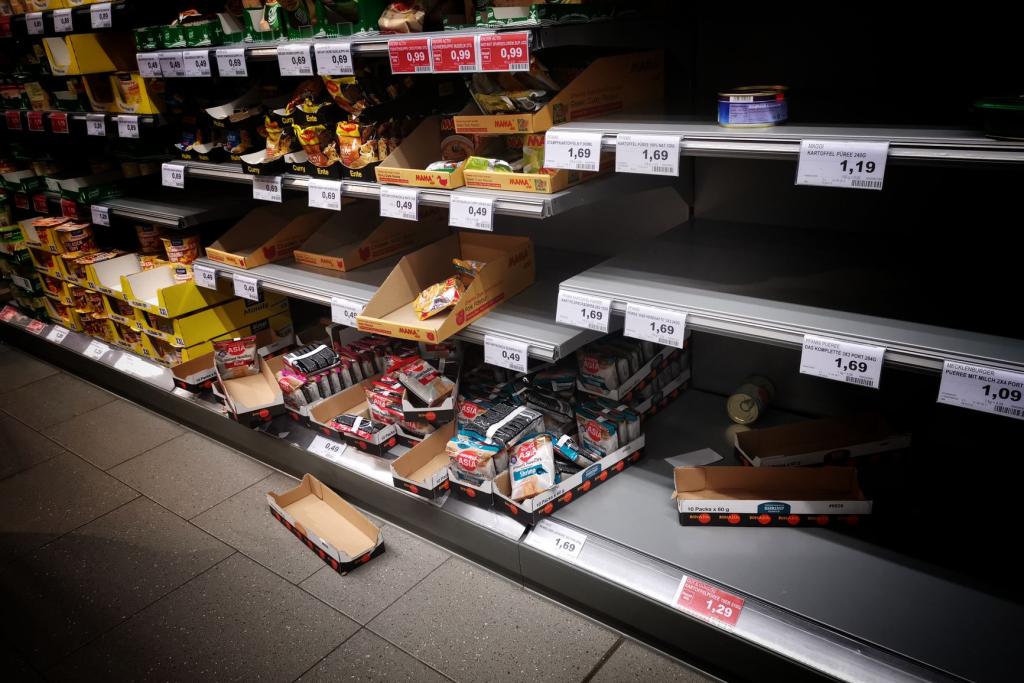
Hundreds of French supermarket fridges and freezers were turned into ovens overnight into Monday, after attackers seized their refrigeration controls remotely and pushed temperatures toward fifty degrees Celsius for roughly six hours. The French supermarket hack hit several major chains at once: around one hundred fifty Intermarché stores, more than a hundred Coopérative U outlets, and shops belonging to Leclerc, Carrefour Market and Monoprix have all been named in reporting, as reported by Newsbeep.
By Monday morning, staff opening freezer doors were met with waves of hot air, and millions of euros worth of fresh and frozen food had to be destroyed. Intermarché said all affected food was discarded, and in two stores in Alsace alone the losses reached hundreds of thousands of euros. Photos from the scene showed freezer thermometers reading well above freezing in the ice-cream aisle.
How the French supermarket freezer attack worked
The attackers hijacked the defrost function — a normal, brief cycle that melts frost off refrigeration coils — and ran it continuously at heating temperatures instead, as reported by Help Net Security.
The controllers that were targeted come from Danfoss, which said the affected units were older models whose security software could no longer be updated. The hijack began on Sunday night, and the warming ran through the night before staff noticed. Refrigeration specialists were called in, and companies including Danfoss and Axima held a crisis meeting on Monday morning, according to an internal Intermarché communication described in reporting.
The French supermarket chains hit hardest
Intermarché bore the brunt of the French supermarket cyberattack. The parent group behind Intermarché, Groupement Mousquetaires, confirmed to Bloomberg that around one hundred fifty stores were affected, as reported by Newscord.
Coopérative U said more than a hundred of its stores were hit. Its chief executive, Dominique Schelcher, called the attack “extremely serious and unprecedented” and said staff were “fully mobilised, in co-ordination with refrigeration specialists”, as reported by Newsbeep.
Other chains named in reporting include Leclerc, Carrefour Market and Monoprix, though Carrefour said the vast majority of its thousands of stores were unaffected. Some locations also reported small fires started by the overheated equipment, a reminder that this was not just a food-safety incident.
What investigators are doing
The Paris prosecutor’s office has opened a cyber-crime investigation, describing the incident as a large-scale cyberattack on the refrigeration systems of several major food retailers across France, according to Help Net Security.
Prime Minister Sébastien Lecornu ordered the national cybersecurity agency ANSSI to investigate, and France is coordinating with European counterparts. European Food Commissioner Christophe Hansen said the “weaponisation of food has become a reality”, as reported by Newsbeep.
Why your French supermarket trip could get more expensive
For shoppers, the fallout is practical: destroyed stock can mean empty shelves and higher prices, at a moment when French fresh-produce prices had already risen by just under six percent year on year in August. Food that warmed for hours cannot simply be re-chilled and sold — once the cold chain breaks, safety rules require it to be thrown away.
The deeper lesson is about the connected systems behind everyday life. A French supermarket freezer is now an internet-connected computer, and in this case the computers were too old to receive security updates. Danfoss said it had long advised customers to upgrade — the same advice security experts give about any smart device, as reported by Newscord.
It is also the second security scare for Intermarché this summer: in August the chain disclosed a data breach that exposed the personal data of around three hundred thousand customers.
What is still unknown
No group has claimed the attack, and investigators have not publicly attributed it. Analysts note the incident fits a pattern of hybrid pressure campaigns, whose described aim — according to Danish intelligence assessments cited in reporting — is to create public insecurity. That context is reported analysis, not a finding about who did this.
A parallel incident is under scrutiny in the Netherlands, where Ahold Delhaize — owner of Delhaize and Albert Heijn — reported its own security issue that took systems offline, alongside earlier trouble at its Bol.com marketplace, as reported by The Flying Penguin.
For now, the French supermarket sector is counting the cost and checking its freezers. The attack showed how a few lines of malicious code, aimed at an unglamorous box of refrigeration controls, can empty the shelves of hundreds of stores overnight — and why keeping firmware up to date matters far beyond the gadgets in your pocket. More tech and games coverage, including the Ledger hardware wallet hack, another recent cyberattack story.
Comments 0
No comments yet. Be the first to share your thoughts!
Leave a comment
Share your thoughts. Your email will not be published.