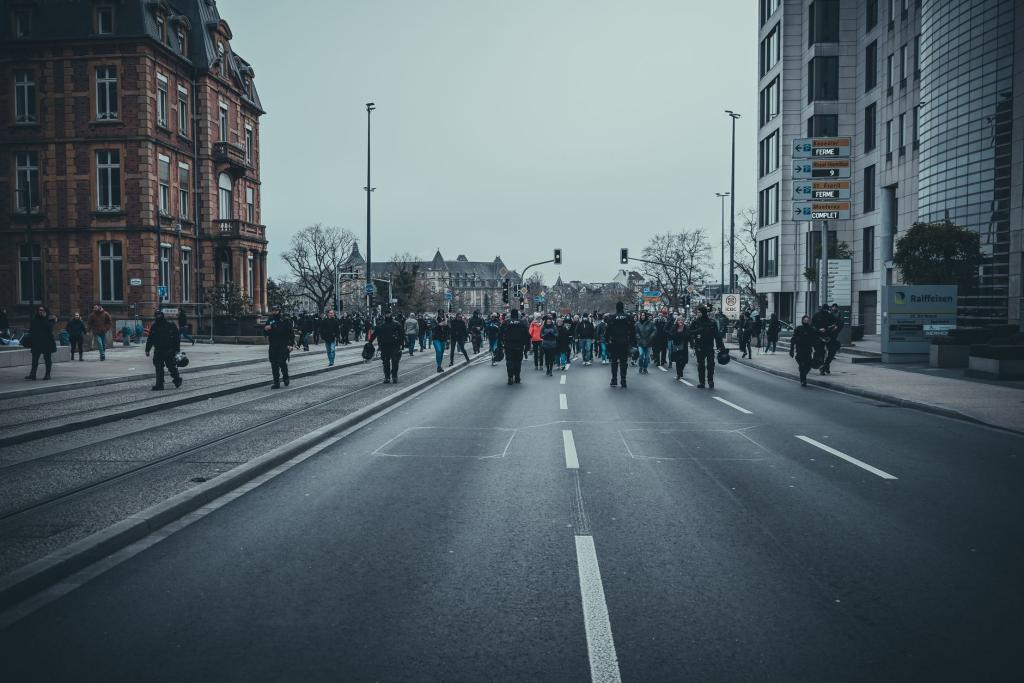
On a Friday morning in late September, classrooms across Germany sat empty. Students in Berlin, Munich, Hamburg and dozens of other cities traded lessons for the streets, marching against what they call a slow-motion return of military conscription. According to organizers, more than forty-five thousand students joined coordinated school strikes in around one hundred cities and towns on September 25, making it the fourth German student strike since the end of last year.
The demonstration was billed by organizers as a "Schulstreik," a school strike, and this German student strike drew far bigger crowds than the three waves before it. In Berlin's Wedding district, police reported about two thousand four hundred participants; in Munich, around seven hundred, with hundreds more turning out in Stuttgart, Nuremberg, Hamburg and Frankfurt, according to the BBC. The marches were largely peaceful, with police escorting demonstrators and causing only localized traffic disruption, though officers detained several demonstrators in Berlin after tensions flared briefly.
The signs said most of it. Protesters carried placards reading "We won't go to your wars," "We want our brothers alive," and, in German, "Wir sind KEIN Kanonenfutter," meaning we are not cannon fodder. In Berlin, some students fed military recruitment letters into a paper shredder as cameras rolled, a symbolic rejection of the paperwork now landing in the mailboxes of eighteen-year-old men across the country. Others aimed their anger at Chancellor Friedrich Merz, with banners reading "No Merz, no war, no billionaires" and "The rich want war, the young want a future."
A hundred cities, one message
The German student strike has three demands: drop the plans to reintroduce compulsory service, create a formal legal right for pupils to strike, and reverse the cuts to school budgets. Student groups argue the government is pouring money into rearmament while school buildings age and youth services get squeezed. One student told reporters she was protesting against conscription, militarization and rearmament alike, pointing to crumbling classrooms and cuts to social services as proof the priorities are wrong.
Many German student strike protesters described the reform as preparation for war. One student called the new military service law a form of war preparation and said young people could end up fighting for interests that are not theirs. Another said many young people simply did not want to fight in a war and that their generation wanted a future rather than a front line. A parent at the march told reporters she did not want to see her child sent off to war by the politicians currently running Germany.
Organizers say they have met resistance from above as well. Strike committees reported that some schools scheduled exams on strike days and that students were held inside school grounds on the day of action. Legal experts cited in German media coverage warned that pupils have no formal right to strike, and that unexcused absences can bring measures ranging from detention to fines under state school laws. Getting a legal right to pupil strikes is now one of the German student strike movement's core demands. Learn more about the protest demands in SFG Media's report on the nationwide school strikes.
What the new law actually says
The trigger for this German student strike is the Military Service Modernization Act, which took effect at the start of this year after Chancellor Merz made a military buildup one of his government's key policies. The law does not restore full conscription, but it lets parliament activate compulsory military service if voluntary recruitment falls short of targets or the security situation deteriorates. For now, the system requires eighteen-year-old men to complete a questionnaire about their willingness and fitness to serve. Answering is mandatory for men and voluntary for women.
The medical examination is what has alarmed students most. Under the new rules, eighteen-year-old men must undergo a military medical exam whether or not they intend to serve. These mandatory exams were originally scheduled to begin next year, but the Defense Ministry has already started sending invitations since the summer. According to German media reporting, close to one thousand young men who marked on their questionnaires that they were not interested in serving have already been screened, the Seoul Economic Daily reported, citing BBC coverage of the protests. For the German student strike organizers, that is proof the shift from voluntary to compulsory has already begun.
The backdrop reaches back to twenty eleven, when Chancellor Angela Merkel's government suspended conscription and ended decades of mandatory service. Since Russia's full-scale invasion of Ukraine, Germany has moved to rebuild its armed forces, and Merz has talked about making the Bundeswehr the strongest conventional army in Europe. The government has spent heavily promoting the army, but German media reports suggest the campaign has fallen flat: tens of thousands of students have reportedly marked on their questionnaires that they have no interest in serving, while more questionnaires keep going out.
The student declaration that launched the strike wave put it simply: we don't want to be forced into military service, and we don't want to go to war. What sets this movement apart is who is marching. Unlike the peace marches of earlier generations, the people on the street this time are the exact young men and women the state is registering, examining and potentially drafting. The target population is marching against the targeting mechanism itself.
The government insists recruitment stays voluntary and has shown no sign of scrapping the law. But the strike committees say they will keep protesting until conscription is taken off the table for good. With the next round of medical invitations already in the mail and exam season approaching, the German student strike movement has no shortage of deadlines to rally around, much like the youth marchers in France this month. For now, Germany's classrooms have found their voice, and it is getting louder.
Comments 0
No comments yet. Be the first to share your thoughts!
Leave a comment
Share your thoughts. Your email will not be published.