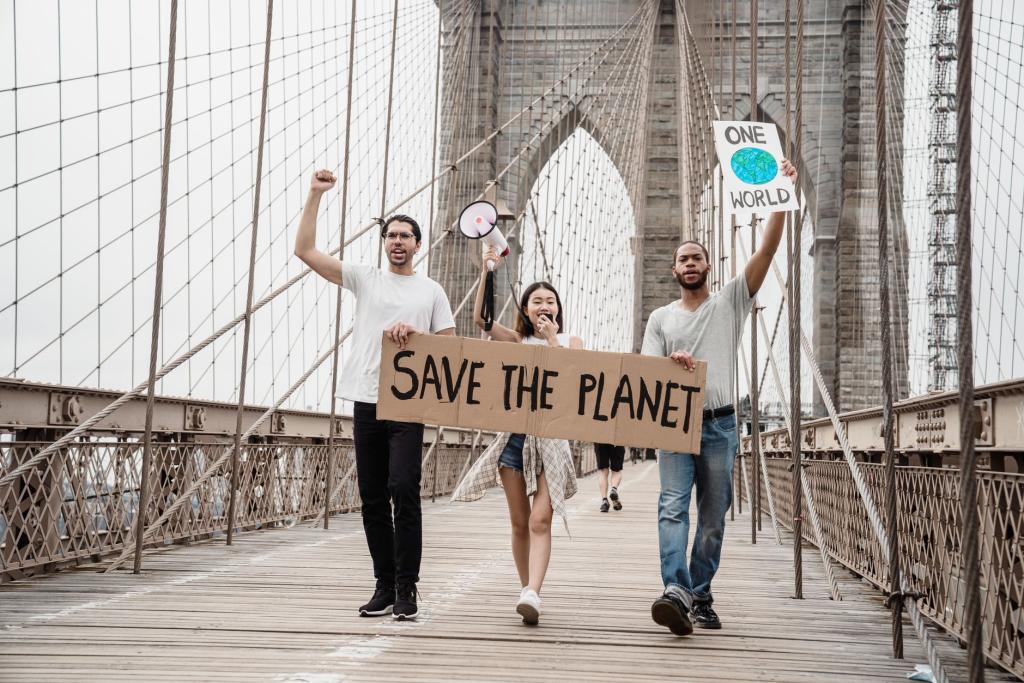
By Saturday evening, the map on the organizers' website told the story: roughly 260 towns and cities across France had filled with marchers, from Brittany in the west to Lille in the north and Clermont-Ferrand in the center. The provisional count stood at nearly one hundred thousand participants. The call had come from a small environmental nonprofit, Bio Consom'acteurs, weeks earlier, after a summer in which record heat killed thousands across the country. What began as grief has become the biggest France youth climate march in years, and young people are at its front.
A summer that did the organizing
France endured a season that broke the charts. The year's first heatwave, from June 17 to 30, was the most intense and the earliest since 1947. A third one ran twenty-three days, matching the longest ever recorded in 1983 and surpassing it in intensity. Wildfires tore through the south and drought scorched harvests.
Between late May and late August more than eight thousand people died of heat-related causes, according to figures reported by Le Monde. The pressure is being felt beyond France too: the UK pledged £331M for climate security the same week. For Anne Bringault, program director at Réseau Action Climat, an umbrella group for climate advocacy, the shock was plain: "At the end of August, seeing so many local people wanting to take part, I realized just how shocking and painful this summer was for many people in France."
One of the people behind the September 26 call was Benjamin Ball, 42, of Bio Consom'acteurs. "My director lost his father because of the heat, two homeless people died in my city of Argenteuil, and two-thirds of the trees in my sister's orchard died," he told Le Monde. "I was scared, and I couldn't just sit and do nothing." The protests were planned as a mass public action, with a broad slogan: march everywhere in France for the climate, for life, for peace and for social justice.
The demands on the table
In an open letter to President Emmanuel Macron, the organizers demanded an emergency plan combining cuts to CO2 emissions with serious adaptation measures. The funding mechanism is deliberately confrontational: pay for it through a climate tax on the wealth of the richest, or a tax on the superprofits of the fossil fuel industry. The letter notes that TotalEnergies announced at the end of July that it had doubled its net profit in the second quarter, to $5.4 billion. That contrast, between record industry profits and record heat deaths, is the argument the movement keeps returning to.
The backing grew far beyond the small team that started it. The call to action was signed by more than fifty-five thousand people, including representatives of twelve hundred organizations, from local groups to national networks including 350.org, according to a statement published by the organization. In Paris, where the pope's visit forced the march to become a static gathering at Place de la République, several thousand people held up emergency blankets. Designed to keep people warm in a crisis, the foil sheets were taped to windows across the country all summer in a desperate attempt to keep the heat out, and they have become the symbol of France's record-breaking summer.
Young people at the front of a revived movement
This is a revival of something France has not seen since 2020, and students across Europe are finding their voice this month: forty-five thousand German students staged a school strike against conscription the same week.
After the Paris Agreement, the climate movement had broad support with young people at the forefront, but the Covid-19 pandemic brought it to a halt before an environmental backlash pushed the issue into the background. "People do not want the emotion experienced this summer to fade away like a soufflé," Jean-François Julliard, director general of France Nature Environnement, told Le Monde. Two days before the marches, Greta Thunberg posted a video urging people to join, saying the planet could no longer wait and inaction was not an option. She was joined in spirit by Greenpeace France, several of the country's major trade unions and left-wing political parties, all of which urged their supporters to join the France youth climate march.
The day was not without incident. In Clermont-Ferrand, a car forced its way into a march procession, lightly injuring four people. Prosecutors said tests showed the thirty-seven-year-old driver was under the influence of drugs. Elsewhere the rallies stayed peaceful, and counts varied by city between police and organizer figures, as they usually do.
What the marches buy the movement is pressure, and the calendar gives it a target. France's environment ministry is due to deliver a national adaptation plan to the prime minister on 30 September, and the organizers want climate action front and center in the next national budget and the presidential campaign. Ball, who started the summer grieving, told Le Monde he could already feel the difference at the local organizing meetings. "Citizens and those most directly concerned have managed to both unite and organize, taking the best of what already existed and bringing their own energy, hopes, and fears." For a generation that has watched climate politics stall, the France youth climate march looks like a beginning.
For more on how the mobilization came together, see Le Monde's reporting on the rallies and the 350.org statement on the nationwide turnout.
Comments 0
No comments yet. Be the first to share your thoughts!
Leave a comment
Share your thoughts. Your email will not be published.