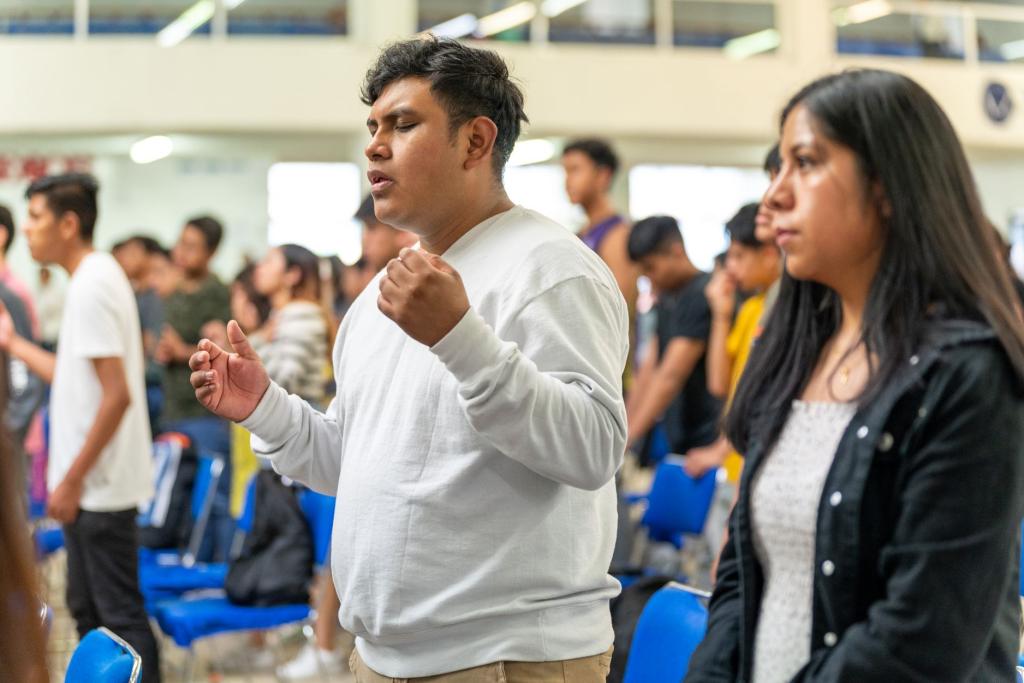
For years the story about Generation Z and religion wrote itself. They were supposed to be the most secular generation in American history, raised on smartphones, destined to finish the long decline of organized religion. A new Harris Poll released Thursday points the other way. Gen Z adults are now the most likely of any generation to call themselves religious, and according to the poll's numbers, they back the label up with practice. The survey reached 2,136 U.S. adults and was conducted from July 1 to 4.
The breakdown is stark. Fully 33% of Gen Z respondents described themselves as religious, nearly double the 18% of baby boomers. Gen X landed at 22% and millennials at nineteen percent. Put plainly, the poll found Gen Z most religious generation in America, and not by a little.
Identity is one thing, but habits tell the rest. Nearly nine in ten Gen Z adults said they regularly practice at least one religious or spiritual activity, the highest of any generation. More than half read scripture or religious texts regularly, and 49% attend religious services, ahead of every older cohort. Private prayer runs the other direction: 67% of Gen Z pray on their own, behind 75% of boomers and 72% of Gen X.
The stacking effect
What startled the researchers behind the Gen Z most religious generation finding was how this generation combines its beliefs. Libby Rodney, the chief strategy officer at The Harris Poll, put it this way in a statement: "Gen Z self-identifies as the most religious generation in America, with the practices to back it up. But that doesn't show you the whole story, because they aren't choosing religion instead of everything else. They're stacking it. Church on Sunday, manifestation on Wednesday, tarot on Friday. The old assumption was that each generation picks faith less than the last. Gen Z picked more of everything." More than half of Gen Z respondents said they had turned to manifestation or spirituality to feel greater control over their future.
Rodney described the shift as a generational awakening. Young people, she said, are coping with a tight job market, unreachable housing and a general sense that the old promises no longer hold by gathering every tool that works. Prayer sits next to meditation; scripture next to astrology. The same search for control is pushing them toward each other in person. About six in ten Gen Z adults said they belong to more real-world communities than they used to, and seven in ten said they want to join more, the highest shares of any generation measured.
Social media, the unlikely preacher
Social media is helping the trend along. Rodney pointed to Pizza to Pews, a viral Sunday routine in which young people meet at pizzerias before heading to Mass, and to the Holy Girl Walk in New York City, where young Catholic women pray the rosary while strolling through Central Park. The pattern extends to figures like Guilherme Peixoto, a Portuguese Catholic priest and DJ known as Padre Guilherme who mixes religion with electronic dance sets. Angie Bosio, a youth ministry director at St. Stephen Catholic Community in suburban Nashville who just marked 25 years in the role, told USA Today that today's teenagers strike her as "extremely curious, very positive and already very faith-filled by the time I see them in high school."
Jordan Booker offers a ground-level view. The 2023 University of Houston graduate founded Smoove Blendz, a pop-up wellness and community gathering in Houston built around meditation, yoga and matcha. Earlier this month he attended Motion Night, a faith-based event at Houston's Grace Church aimed at adults 30 and under, complete with food trucks afterward. "It was amazing to see so many people worshipping the Lord and praising him," he said. Events like that, he added, are making religion feel current.
Reason for doubt
None of this settles the question, and other surveys argue the opposite. A 2022 survey by the American Survey Center found Gen Z was the least religious cohort in the country, with 34% describing themselves as neither spiritual nor religious. Barna research released last year found that nearly four in ten Gen Z women identify as atheist, agnostic or having no faith. But Barna's 2026 State of the Church initiative found Gen Z was the most likely generation to say a spiritual revival would occur in the next 12 months, and its 2025 research called Gen Z the most frequent churchgoers. The numbers fight each other, which may be the point: one survey can name Gen Z most religious generation in America while another calls it the least faithful cohort on record, and a generation comfortable holding contradictions will not be pinned down by a single label.
Comments 0
No comments yet. Be the first to share your thoughts!
Leave a comment
Share your thoughts. Your email will not be published.