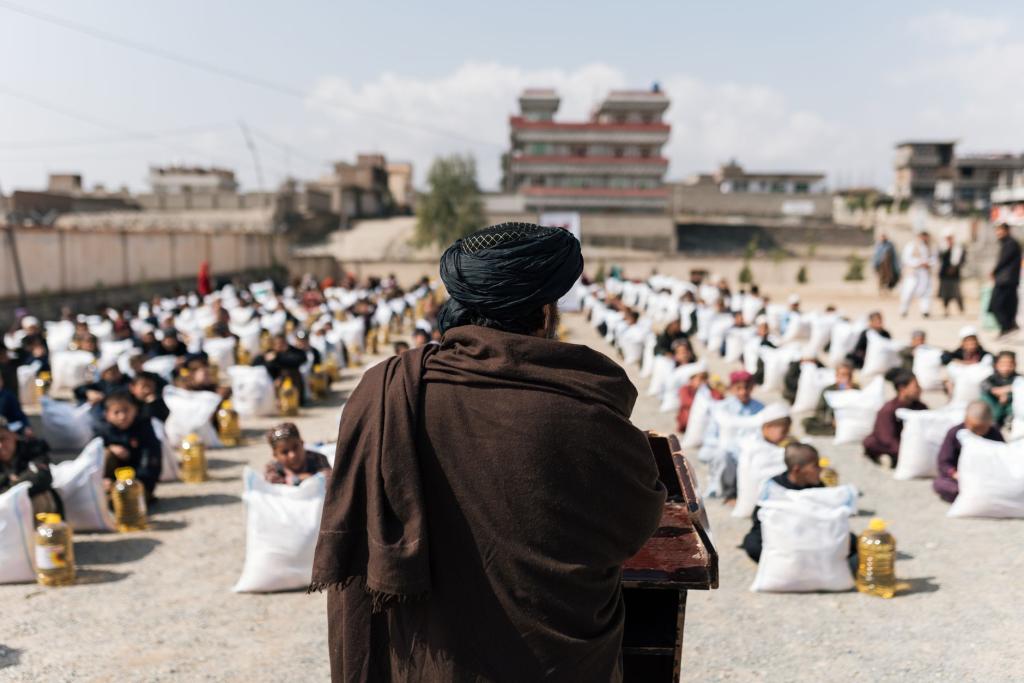
The Gaza Food Aid Cuts announced on Monday will strip monthly food support from around half a million Palestinians, the United Nations World Food Programme said, blaming a funding shortfall that is draining its budget just as Gaza heads into another brutal winter. According to Reuters, which reported the agency's announcement from Gaza, the program will shrink its monthly roster from about one point six million people to one point one million, while the size of individual food rations is being cut in half.
Cash assistance for seventy-five thousand families is also being scaled back, and the number of daily hot meals served to people who cannot cook is falling from a quarter of a million to one hundred fifty thousand. In the hardest-to-reach areas, some families will now receive a hot meal only every other day. The agency said two-thirds of Gaza's population still struggle to get enough to eat — a staggering measure of need more than two years into a crisis that has destroyed homes, markets and farmland across the territory.
The numbers behind the announcement explain why the cuts sting. The agency estimates that nearly one and a half million people in Gaza face crisis-level food insecurity or worse, including some two hundred thousand people in emergency conditions — the most severe category its analysts track. It told Reuters it urgently needs four hundred and fifty million dollars over the next six months to maintain its operations in Gaza and the Israeli-occupied West Bank, a figure that shows how far current donor funding falls short of the need.
A fourth winter with no safety net
"It's a year into the agreement of this ceasefire. Well, life is still brutal here. There is no proper shelter. There is no basic services. There is no safety, no security," the agency's acting executive director, Carl Skau, told Reuters from Gaza. "These cuts are happening just as we are facing the fourth winter. You know, I've been through the winters here, absolutely brutal," he added.
Winter is Gaza's cruelest season. Rains flood the displacement camps where most of the territory's roughly two million residents now shelter, cold seeps through tents and damaged buildings, and respiratory illness spreads through crowded quarters. Last winter, families burned scrap wood and plastic for warmth; this winter, many will face the cold with thinner rations on top of it. For readers far from the conflict, the figures describe a population living almost entirely on outside help: the Gaza death toll has passed seventy-four thousand, homes lie in rubble, and the Gaza Food Aid Cuts now mean less food, less cash and fewer hot meals arriving at exactly the wrong moment.
The peace deal that was supposed to change this
The cuts land about a year after a United States-brokered ceasefire agreement was signed in Sharm el-Sheikh, Egypt, in October 2025. The deal was meant to open the door to reconstruction and a permanent end to the fighting that began in October 2023. But Reuters reported that little progress has been made toward the agreement's bigger promises: Hamas disarming, Israeli troops withdrawing, and large-scale rebuilding getting underway. One year into the ceasefire, satellite-image analysis showed new military construction hardening the territory's temporary divide rather than softening it.
The stalled diplomacy and the shrinking aid budget are feeding each other. Without reconstruction, Gaza cannot feed itself; without a political settlement, donors hesitate to fund the rebuilding that would make aid less necessary. Humanitarian agencies have warned for months that they are being asked to manage an emergency with the resources of a fading news cycle, even as the underlying crisis deepens.
The agency's plea to donors
The agency is framing the shortfall as a choice the world is making, not a logistics problem it can solve on its own. "We tell the world now is this is not the time to look away. This is the time to step up to sustain this support, to protect the progress that has been made, but also to push for early recovery," Skau told Reuters. Whether donors answer is the open question: the Gaza Food Aid Cuts are happening because the money is not there, and no replacement funder has stepped forward to fill the gap.
For the families losing their monthly support, the consequences are immediate and personal: smaller portions, skipped meals, and children going to sleep hungry in tents that will soon be cold and wet. The next test is the weather. Winter rains flood the camps every year, and aid workers say this season could be the hardest yet for a population already eating less. The agency's message to donors is simple: look away now, and the crisis deepens exactly when it can least afford to.
Comments 0
No comments yet. Be the first to share your thoughts!
Leave a comment
Share your thoughts. Your email will not be published.