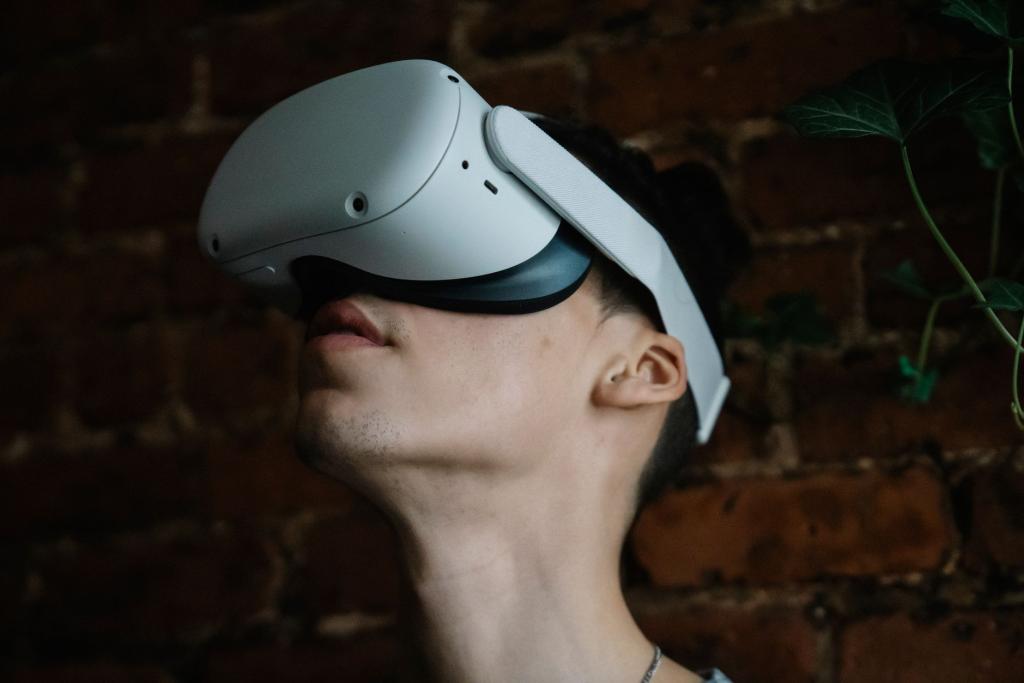
Greater Manchester's mental health services are starting to look different. The region's NHS trust has begun delivering an automated therapy program that runs inside a virtual reality headset, shifting it from a research project into everyday clinical care. The treatment, called gameChange VR therapy, is being rolled out as a pilot across five mental health teams, according to Greater Manchester Mental Health NHS Foundation Trust (GMMH). The goal is to find out whether the program can hold up as part of routine services instead of a tightly controlled trial.
A virtual coach for the fear of going outside
gameChange VR therapy was built for a problem that traps many people diagnosed with psychosis: an intense fear of being outside in ordinary situations. Left unchecked, that fear hardens into severe agoraphobia. People stop leaving the house, and the isolation eats into relationships, education and work.
Inside the headset, patients walk through simulations of places most people take for granted: a café, a shop, a doctor's surgery, a shopping centre. A virtual therapist talks them through the experience, prompting them to notice their thoughts, feelings and defensive habits, then replace those with steadier beliefs and behaviours. Afterward, a member of staff helps the patient carry the learning into real situations outside the headset. Dr Felicity Waite, a clinical psychologist in Oxford's psychiatry department, described the approach as learning by doing, with patients practising things like buying a coffee or getting on a bus until they trust themselves to try it for real.
That rollout follows a randomised controlled trial of gameChange VR therapy involving 346 people across nine NHS trusts, led by researchers at the University of Oxford and Oxford Health NHS Foundation Trust and developed with Oxford VR, the university's spinout company. The study, funded by the National Institute for Health Research, is described as the largest clinical trial of VR for mental health ever run. Trial coordinator Dr Elizabeth Murphy, a research clinical psychologist at GMMH, said people are more willing to confront avoidance inside virtual reality because they know it is not real, even though the environments still feel convincing enough to provoke anxiety, and that is what lets the learning transfer to the outside world.
The gains held up, even for the hardest cases
The gameChange VR therapy study found significant reductions in how much patients avoided everyday situations and in the distress those situations caused. The patients who gained the most were the ones who had found it hardest to leave the house, and those living with the heaviest psychiatric symptoms, including severe anxiety, depression, delusions and hallucinations. Some managed activities they had previously found unthinkable, and the researchers report that the benefits were still there at the six-month follow-up. Uptake was strikingly high, which matters because patients are often keen to try psychological treatments but rarely get offered them.
Professor Daniel Freeman, the Oxford psychiatrist who led the research, said virtual reality psychological therapy has come of age with gameChange VR therapy, arguing that affordable, easy-to-use consumer headsets could transform how evidence-based therapy reaches people at scale. Because the therapy is built into the software, it does not need a trained therapist in the room. It can be overseen by a range of staff and delivered in clinics or in patients' own homes. Professor Mike Lewis, the NIHR's i4i programme director, called the work an example of transformational technology with the potential to bring psychological therapy to many more people in their own homes.
GMMH first joined the gameChange trial in July 2019, working with 58 service users drawn from localities including Bury, Bolton, Salford, Trafford, Manchester and Tameside. The new gameChange VR therapy pilot will test whether the program can slot into a sample of community teams already treating people with psychosis. Leo, a service user who co-produced the trial at GMMH, said taking off the headset left him more confident speaking to people and holding eye contact, and that he believes finding gameChange earlier would have cut his recovery time in half. If the pilot works, the trust plans to make automated VR therapy a routine option.
Comments 0
No comments yet. Be the first to share your thoughts!
Leave a comment
Share your thoughts. Your email will not be published.