All summer, a small team of archaeologists in the village of Grand, in northeastern France, kept pulling the same small object out of the soil beside a ruined basilica. Each was a tiny cube of bone, its faces marked with little engraved circles. By the end of the excavation season, the count had passed a thousand, and French press coverage was describing the haul as the largest collection of ancient gaming dice ever recovered in one place. For a Roman dice discovery, that alone would be remarkable. Nobody can yet explain the building they were found around, and that is what makes it a genuine mystery.
The building is small enough to cross in a few strides, measuring about four and a half meters on its longest side. Its walls were painted red above a yellow base, and its door opened east onto a road that once ran through a Roman town. Excavators found dice set directly into the building's foundations, three of them, which suggests the cubes were tied to the structure from the moment it was built rather than scattered there by chance. Those foundation dice make this Roman dice discovery unusual from the start: the cubes seem to belong to the building itself.
The dig, run by the Vosges departmental council with support from France's Ministry of Culture, is directed by Thierry Dechezleprêtre, chief curator of the Gallo-Roman collections at the Musée d'Archéologie nationale, with about fifteen archaeology students from French universities doing much of the digging, the Daily Galaxy reported.
The dice themselves
The dice look strikingly familiar. Their spots are ocelli, small double circles cut into the bone with a metal tool, and some still hold traces of a dark mixture of wax and charcoal that made the markings easier to read. The numbers follow the arrangement archaeologists call the sevens layout, in which opposite faces always add up to seven, exactly the convention modern dice still use. Nearly twenty centuries separate these cubes from the ones rattling around game tables today, and the basic design has barely changed, the Daily Galaxy reported. That continuity is part of what makes the Roman dice discovery feel so immediate: the objects are ancient, but the game is familiar.
The dice were not the only things in that patch of ground. The same soil produced shoe hobnails, pottery, brooches, bronze coins, needles with eyes for thread, and animal bones. None of that is unusual for a Roman town, the Daily Galaxy reported. What sets this Roman dice discovery apart is concentration: so many dice, packed into such a small area, with nothing else to explain them.
Preliminary results date the material between the first and third centuries AD, the Daily Galaxy reported. The cubes are headed to the national archaeology museum for months of study, partly to work out whether they were actually used inside the little building or simply stored nearby. That study will decide how the Roman dice discovery is ultimately understood.
A workshop, a shrine, or a games room
The excavation team is working with a handful of explanations and has not settled on any of them. The building might have been a workshop where dice were carved. It might have been a small sanctuary. Or it might have been a place for playing games under the protection of a god. Dechezleprêtre told local reporters in the Vosges that the concentration was the largest of its kind ever found in France, and he raised the possibility of a gambling establishment or a shrine honoring Fortuna, the goddess of fortune. A cultural mediator at the site, Pauline Hilaire, said the team could not yet interpret where the dice came from or what they revealed about the place.
Until the archaeologists choose among the explanations, the Roman dice discovery remains an open case. Each theory leaves the Roman dice discovery partly unexplained. Local coverage reported that the team plans to return for more excavation next summer.
Gambling with dice was technically against Roman law for much of the empire's history. Under the Republic and the emperors, games of chance played for money were banned, and anyone convicted could be fined quadruple the stake, the Daily Galaxy reported. The rules were relaxed each December during Saturnalia, the winter festival. The bans did not stop the elite: Augustus, Caligula, Vitellius, and Domitian all played, and Claudius wrote a book about dice. In Roman life, dice and knucklebones also served a second purpose as tools for reading the will of the gods, French coverage of the dig noted, so a pile of bone cubes could point to divination as easily as to a game.
The town that drew pilgrims
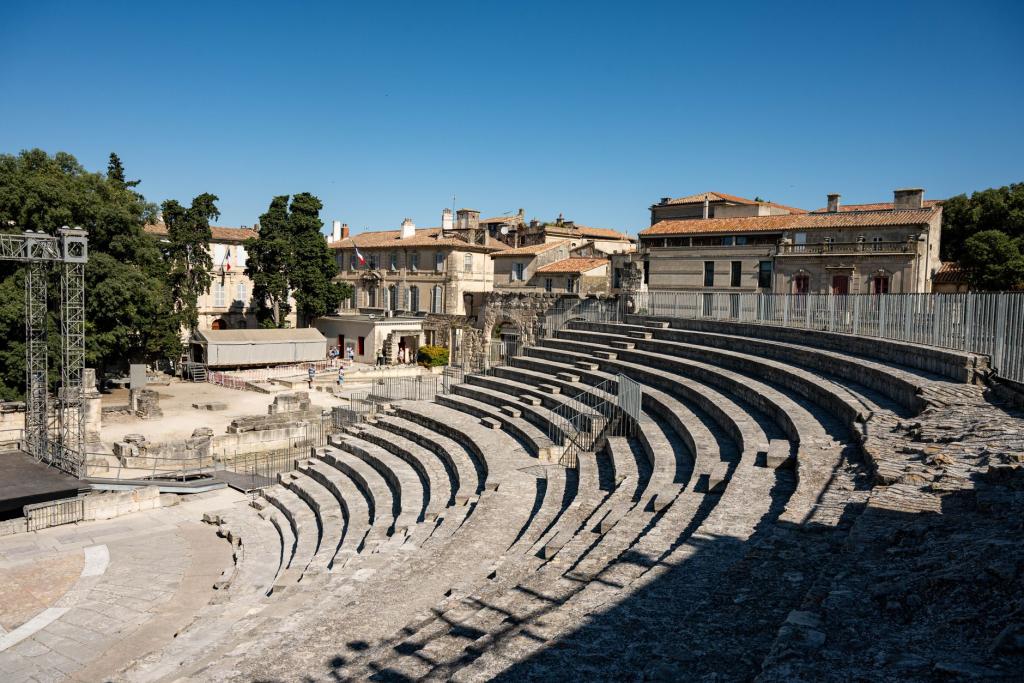
Grand made sense as a setting for something unusual. In Roman times the village was Andesina, a sanctuary town spread over more than seventy hectares, with an amphitheater built on a civic scale and a basilica floored with a mosaic of two hundred thirty-two square meters, among the largest known from the Roman world, the Daily Galaxy reported. Grand was already a famous place before this Roman dice discovery.
Its fame rested on a sanctuary of Apollo Grannus, a healing god whose cult drew visitors seeking cures and sacred waters. A Latin speech delivered in 310 AD describes Constantine visiting a temple of Apollo, and in 1926 the historian Camille Jullian proposed that the temple in question was the sanctuary at Grand, the Daily Galaxy reported. Even before this Roman dice discovery, excavators had already turned up a smaller cache of dice nearby in 2024, local coverage noted, which suggests the area has been yielding its secrets slowly.
The current dig began in 2022 with the goal of relocating and restudying remains explored back in the 1960s, according to the Daily Galaxy, and the red plaster walls of the little building turned up in earlier seasons before the dice did. Local organizers tied this year's Fête de la Science, held in early October, to the find, devoting the weekend to ancient games, local coverage in the Vosges reported. The excavation team plans to return for another season, and until the museum study of the dice is complete, the red-painted building at the heart of the Roman dice discovery keeps its secret. What happens next for the Roman dice discovery is mostly patience: careful cataloging, comparison with other Roman gaming finds, and another summer of digging around a building nobody can name.
For context, the season has produced other ancient surprises worth a look, from what archaeologists now call North Africa's oldest defensive wall to a Neolithic gallery grave in Norway that held an unexpected find. Grand's contribution to that run is stranger than most: a painted room full of small cubes, and still no good explanation. The fullest English-language account of the excavation so far comes from the Daily Galaxy's report on this Roman dice discovery, with additional detail in Ancient Origins' coverage of the find.
Comments 0
No comments yet. Be the first to share your thoughts!
Leave a comment
Share your thoughts. Your email will not be published.