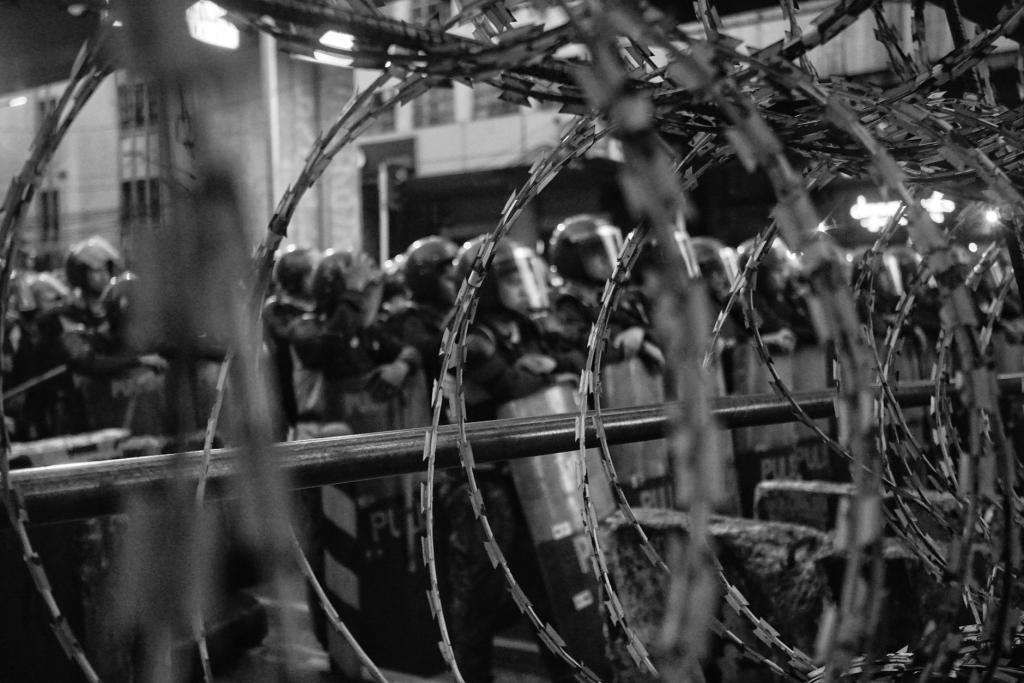
Hundreds of high school students have been detained across France in a wave of school blockades that turned confrontational this week. The France student protests, which began near Paris in late September 2026, spread nationwide by Tuesday as pupils barricaded gates to demand substitute teachers, smaller classes, and buildings they can actually learn in — and the clashes that followed have made school hallways a national political crisis.
The scale is striking. Interior Minister Laurent Nuñez said about 440 people were detained on Tuesday, most of them minors, with roughly two-thirds placed in police custody on suspicion of property damage or assaulting officers. Education Minister Édouard Geffray told RTL radio that 76 people, students and staff combined, had been injured since the demonstrations began. Forty-eight police officers were reported hurt, and officials said officers had been targeted with hydrochloric acid seven times. Around four hundred of France's roughly three thousand seven hundred high schools saw protests or disruptions, with forty-five under full blockade and dozens more partially blocked.
Why the France student protests erupted
The grievances are concrete and long-standing. One of the first flashpoints was a high school in Créteil, a suburb near Paris, where students walked out over unfilled teaching vacancies; the movement then spread to Marseille, Lille, Lyon, Bordeaux, Rennes, and beyond. Seventeen-year-old student Fadila told Reuters that conditions at her school included "cockroaches and rats everywhere," with classroom temperatures swinging from sweltering to below freezing depending on the weather.
A sixteen-year-old protester told the AFP news agency that her class held thirty-four students, calling the education system "fundamentally broken" and saying teachers were overwhelmed. Placards captured the exhaustion: one complained of getting more hours of lessons than sleep Students also cited Parcoursup, the platform French graduates use to apply to higher education, as a source of relentless pressure over grades and admissions.
The numbers behind the anger tell a mixed story. According to an OECD global policy forum cited in reporting, French spending on primary and secondary education sat in the middle of the range among member countries and rose between 2015 and 2022 — but its share of the national budget has slightly decreased, even as classrooms filled up. In poorer districts like Seine-Saint-Denis, the gap feels personal: mayor Bally Bagayoko joined hundreds of students there, calling their demands "completely legitimate" and criticizing the resource divide between poorer and wealthier areas.
A strike day, a budget week, and a political flashpoint
The protests collided with a bigger labor moment. On Tuesday, tens of thousands of public-sector workers struck over pay, with firefighters setting up a tent camp at the Eiffel Tower, and the student blockades landed in the middle of it. The timing matters because the government is due to unveil the 2027 budget on Thursday, expected to carry spending cuts aimed at easing pressure on public finances — and any concession to students now sets a precedent the treasury can ill afford, with state debt near one hundred and nineteen percent of GDP and elections looming next year.
Prime Minister Sébastien Lecornu called further escalation "irresponsible," writing that violence near high schools could not justify endangering students, staff, or police. Geffray acknowledged the students' right to protest while calling the violence "indefensible." But the response itself is contested: Jean-Luc Mélenchon, leader of the hard-left France Unbowed party, accused the government of ordering a crackdown, saying the protesting students were harmless and describing the police response as brutal with what he called a racist undertone — a claim the government rejects.
How the week unfolded
The timeline of the France student protests shows a movement that grew faster than anyone's messaging. It began last week with isolated blockades in the Paris area. Tuesday brought the national surge — hundreds of schools affected, the public-sector strike alongside, and 440 detentions by evening. By Wednesday, blockades continued at schools nationwide: in Saint-Denis, students stood outside their school gates near a fire police watched from a distance, while television images from Lyon and Lille showed projectiles thrown at lines of officers who answered with tear gas. AFP reported riot police striking students with batons in some confrontations.
What happens next hinges on two things: whether the government's budget announcement on Thursday includes anything for education, and whether the detentions harden or cool the student mood. Teachers have already joined pupils in solidarity in some schools, and the union movement watching from the sidelines gives the students unusual leverage — but also exposes them to the accusation that their blockades are being instrumentalized by larger political forces.
For readers the stakes are direct. This is a fight about the rooms you sit in for six hours a day, the teachers who may or may not be hired to teach you, and the admissions system deciding what comes after graduation. France's students forced their government to answer those questions on live television this week — and whatever the budget says on Thursday, they have shown that a school gate can still be a barricade. Follow Youth Activists and The World for more. Reporting draws on Reuters reporting by Lucien Libert and Antony Paone, Reuters-sourced coverage of the strike day, the Reuters dispatch carried by Media Selangor, and PressTV's roundup of the arrests and strikes.
Comments 0
No comments yet. Be the first to share your thoughts!
Leave a comment
Share your thoughts. Your email will not be published.