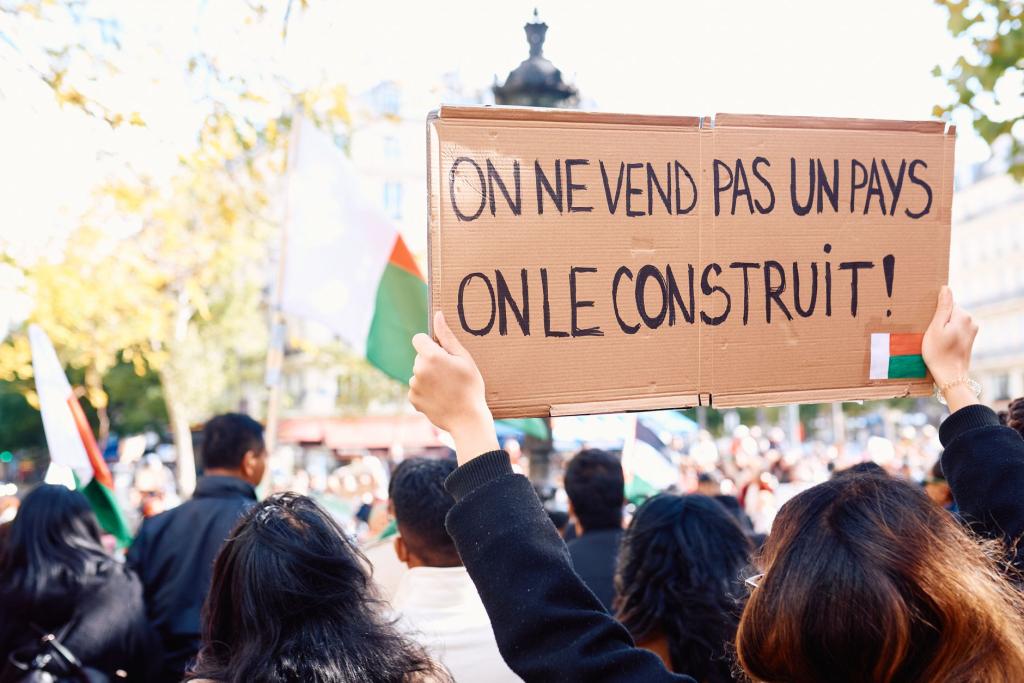
The France protests just became one of the biggest days of street action the country has seen in years. According to CNN, Interior Minister Laurent Nuñez said around five hundred and fifty thousand people marched on Saturday, with about one hundred and ten thousand of them in Paris alone.
What started as a school dispute has turned into a national referendum on cost of living, inequality and how police handle young people. Here is what happened, who showed up, and why the government is nervous.
From one high school to a national crisis
The movement began in late September when students backed striking teachers at a suburban high school. They wanted more teachers, smaller classes and buildings that are not falling apart. Within weeks it snowballed, and the government struggled to contain it, as CNN reported earlier this month.
Saturday was the biggest test yet. Marches took place in about one hundred and ten places, from Rennes and Lyon to Marseille and Strasbourg. Unions, the Yellow Vests, far-left supporters, taxi drivers and some farmers all joined the students, which turned a youth protest into something much broader.
One union member in Paris told CNN she was marching for the cost of living and for the conditions students face. A fifteen-year-old named Vera came with her family and said she hopes things will change. That mix of ages is what makes this moment different from a typical student walkout.
Tear gas, fires and hundreds of arrests
Most people marched peacefully, but the day got ugly fast. Police fired tear gas at Place de la République before the main march even began, and charged into the crowd more than once. Later, large groups of young people set fire to rental e-bikes and looted at least one toy shop, a CNN producer witnessed.
In Lyon, hooded attackers smashed and torched the tourist office, according to French broadcaster BFMTV as relayed by CNN. Protesters also broke into the city halls of Marseille and Lille, where a bust of Marianne, the national symbol of France, was knocked down. No injuries were reported there.
Nuñez said nearly four hundred people were arrested nationwide, and he warned more arrests will follow. Earlier in the day, the Paris prosecutor's office said one hundred and ninety-five people were detained in the capital, thirteen of them minors, some allegedly carrying knives, projectiles or reinforced gloves.
Police tactics are part of the anger
The Paris police prefecture said it would not back down in the face of rioters. But the anger on the streets is also about how officers have behaved in recent weeks. A student in Lens lost a hand earlier this month after reportedly picking up a grenade, which led to a temporary suspension of one type of stun grenade. That pause has now been lifted.
On Saturday, a protester in Saint-Étienne reportedly lost a hand too, a police source told BFMTV. It is the second such case in this movement. Critics say the heavy use of tear gas escalates things, and far-left leader Jean-Luc Mélenchon argued violence was being pushed by a prefect who kept blocking the square.
Politicians pick sides
President Emmanuel Macron wrote that there is no room for violence in the Republic and promised those who attacked buildings and businesses will be prosecuted. Prime Minister Sébastien Lecornu blamed far-left groups and said the unrest might be a warm-up for the presidential election. He also pointed to a bill heading to the Senate that would make rioters pay for the damage.
Marine Le Pen said rioters had poisoned the demonstrations and that legitimate grievances were held hostage by the far left. Paris mayor Emmanuel Grégoire condemned the violence and called for calm and de-escalation, but stressed that grievances must be heard. Everyone is already positioning for the next election.
It is not just France
Student-led anger is showing up across the continent. In Brussels, protesters turned out over the state of education, and a car was overturned. In Tirana, Albania, bins were set alight and a Molotov cocktail was thrown at riot police. In Tunis, thousands marched against President Kais Saied.
For Gen Z, the common thread is simple: a feeling that the economy and the schools are not built for them. Whether the France protests fade or grow will depend on what happens after dark and whether the government offers real concessions. For more world coverage, check our world desk.
Comments 0
No comments yet. Be the first to share your thoughts!
Leave a comment
Share your thoughts. Your email will not be published.