FarmBot Technology and Pixxel Space announced a three-year strategic partnership on Sept. 29, 2026 to bring hyperspectral satellite farming data into everyday farm tools, according to the companies' announcement via Newswire. FarmBot, an AI-powered agricultural platform, will integrate data from Pixxel's Firefly hyperspectral constellation into its product pipeline, converting spectral bands into field-level answers on crop stress, nutrient status, soil condition and water use.
The companies describe it as FarmBot's first technology partnership, and say it came about through NASA's Commercial SmallSat Data Acquisition program, according to the announcement. Under the agreement, FarmBot will use AI to turn Pixxel's bottom-of-atmosphere-corrected hyperspectral imagery into insights for productivity, compliance reporting and regenerative programs. Early access is available through FarmBot's website, according to the release.
Pixxel's Firefly constellation is the technical backbone. The constellation has six satellites, each carrying a hyperspectral sensor that splits light into 135 or more narrow spectral bands across visible, near-infrared and short-wave infrared wavelengths, according to TechTimes. The satellites deliver 5-meter spatial resolution across a 40-kilometer swath and can revisit any point on Earth within 24 hours, according to TechTimes. Pixxel calls Firefly the world's highest-resolution commercial hyperspectral constellation, according to the announcement and TechTimes.
Why voice and compliance matter
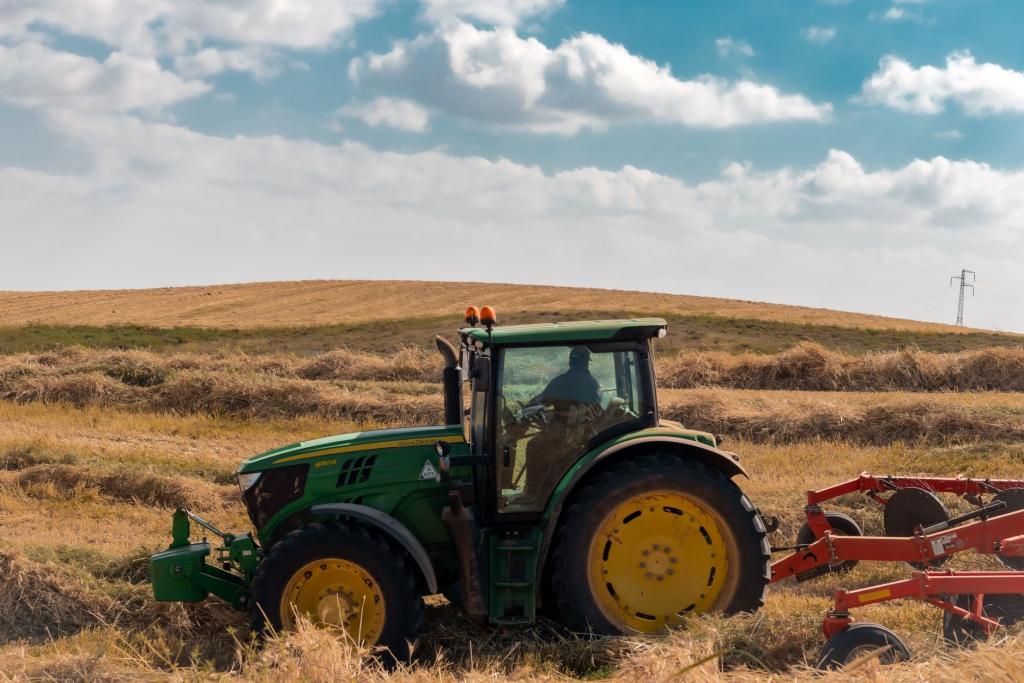
FarmBot's pitch is not just better imagery but lower friction. Growers can query the system by voice, asking plain-language questions such as which fields show stress or where nitrogen is short, from the tractor cab, shop or field, according to the announcement. FarmBot founder Detria Williamson said the company's AI handles interpretation while the voice interface removes the last barrier between complex data and a time-pressed grower. The release cites a projection of 157.1 million voice-assistant users in the U.S. by the end of 2026 to argue that voice is already a familiar interface.
The partnership also targets compliance and climate programs. FarmBot says it is developing products that provide verified, field-level, auditable evidence for lenders, insurers, buyers and conservation programs, alongside insights for regenerative practices and soil and water outcomes, according to the announcement. That focus reflects a real shift: farm data is increasingly used not only to raise yields but to prove practices to third parties.
The equity gap and the timeline
The announcement frames the deal as an equity play. Citing USDA data, it says precision-agriculture tools reach 68% of large U.S. farms but only 13% of small farms, and positions hyperspectral imagery as the newest and least-accessible layer of farm data. Whether a startup partnership can close that gap remains unproven, but the direction is clear: move advanced Earth observation out of research settings and into operational farm hands.
The timeline is aggressive. Pixxel completed the six-satellite Firefly constellation in 2025, with three satellites launched in January 2025 on SpaceX Transporter-12 and three more in August 2025 on the NAOS mission, according to SpaceDaily and TechTimes. NASA selected Pixxel in 2024 as one of eight companies under its Commercial SmallSat Data Acquisition program, and the U.S. National Reconnaissance Office awarded Pixxel a contract in May 2026 under its Strategic Commercial Enhancements program, according to TechTimes. Pixxel then raised $100 million in early September 2026, described as India's largest space-tech round, valuing the company at about $400 million, according to TechTimes.
Integrated Pixxel-powered products are supposed to begin rolling out to FarmBot customers in Q4 2026, starting with grapes, coffee, cattle and dairy in the U.S., EU and Africa, according to the announcement. A joint three-year roadmap covers data delivery, model validation with working farms and product development for compliance reporting, according to the release. Those rollout claims should be read as promises in an announcement, not delivered products.
There is also a competitive caveat. Pixxel already partners with UP42 to sell Firefly data to a broad market, according to UP42, so FarmBot's "first to farmers' hands" framing is about product packaging and voice-driven delivery rather than exclusive access to the satellites. For readers, the story to watch is execution: can FarmBot turn 135 spectral bands into answers a grower trusts, in time to change a decision, before the Q4 rollout window closes?
Sources: Newswire announcement of the FarmBot-Pixxel partnership; TechTimes on Pixxel's Firefly constellation and $100M raise; SpaceDaily on the Firefly fleet expansion.
Comments 0
No comments yet. Be the first to share your thoughts!
Leave a comment
Share your thoughts. Your email will not be published.