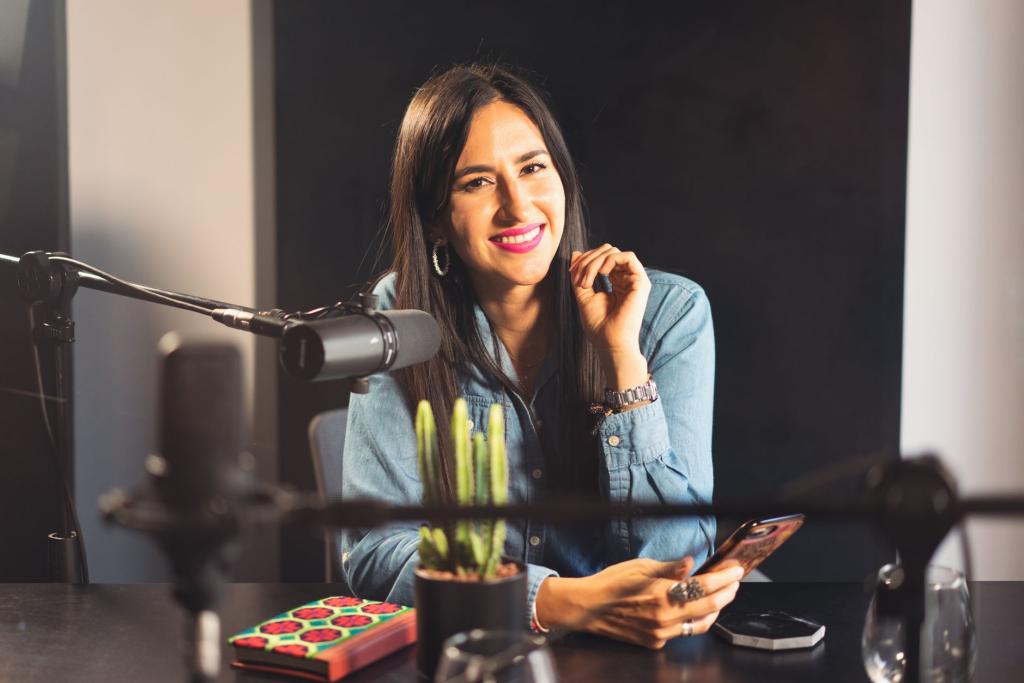
The FAMEHUNGRY Podcast launches on 28 October 2026, and it is not a celebrity chat show. Performance artist Louise Orwin is turning her award-winning stage experiment about online fame into a weekly series that interrogates fame, power, and the economics of being seen — who gets noticed, who gets paid, and who decides.
The podcast grows directly out of Orwin's theatre piece, which staged fame simultaneously in a room and on TikTok Live, with Orwin performing for two audiences at once: the people in the seats and thousands of strangers online. That experiment in attention is what the FAMEHUNGRY Podcast turns into a weekly conversation.
Each episode of the FAMEHUNGRY Podcast brings together leading voices from theatre, criticism, music, comedy, digital culture, sex work, and television for frank, funny, and occasionally uncomfortable conversations, according to Theatre Weekly. The themes range from ambition, money, and gatekeeping to jealousy, failure, and the increasingly precarious business of making art — and making a living from it.
A Fringe hit built for two audiences at once
The stage show was born from an existential crisis. In her mid-thirties, with the arts industry crumbling around her, Orwin found herself asking what the point of making art was anymore. Then she met a teenage TikTok creator performing daily to audiences bigger than any theatre crowd she had ever drawn — and, as her crisis deepened, she proposed an experiment: what if the teenager mentored her?
That question became a production in which Orwin attempts an escalating series of challenges in pursuit of audience engagement, examining how ambition, creativity, and human connection are shaped by the pursuit of attention online. The show won two awards during its 2024 run at the Edinburgh Festival Fringe — The List's Sit-Up Award for best production with a social impact and Summerhall's Lustrum Award — then toured South Africa, Denmark, Malta, Mexico, and the United States, including a three-week run at New York's SoHo Playhouse.
The signature device is the argument made flesh: each night Orwin makes a deal with the internet, promising to do something extraordinary if her livestream reaches twenty thousand likes. The stage becomes an endurance arena where an invisible audience may love her, troll her, tip her, or try to have her banned — a live demonstration of what happens to art, ambition, and human connection when attention becomes currency, as reported by BroadwayWorld.
The tour continues alongside the FAMEHUNGRY Podcast launch, with autumn dates in Brazil, Manchester, and Brighton, followed by Canada and Farnham Maltings in 2027. The show opened its New York run, notably, on the day of the notorious United States TikTok ban — a coincidence that underlined exactly what the piece is about: art living and dying by the decisions of platforms.
The FAMEHUNGRY Podcast episode lineup and launch date
The FAMEHUNGRY Podcast debuts with theatre maker Tim Crouch as the first guest, followed by viral musician and comedian Charlene Kaye, television personality Matt Richardson, cabaret artist Ursula Martinez, broadcaster Iain Lee, artist Kim Noble, and critic Arifa Akbar across the opening run, according to PodcastingToday. Further guests confirmed for later episodes include Midgitte Bardot and the duo In Bed With My Brother, with more names to be announced.
New episodes land weekly from late October through mid-December before a holiday break, with the series returning in January 2027. The show will be available on Apple Podcasts, Spotify, YouTube, and wherever listeners get their podcasts.
Where the stage piece asked its questions through stunts and endurance, the podcast asks them through conversation: what drives us to seek recognition, what we are prepared to sacrifice for it, and how anyone keeps going when the rewards are so uncertain. As one preview puts it, the series keeps circling a deceptively simple question: what is the work worth — and, after all of it, is it worth it?
Why the FAMEHUNGRY Podcast lands for young creators
For young people building creative careers on phones, these are not abstract questions. A generation of musicians, comedians, actors, and makers now learns its craft on platforms where distribution is free but payment is opaque, and where the distance between a breakthrough and a burnout can be a single algorithm change. The show's core inquiry — who gets seen and who gets paid — is the daily arithmetic of anyone posting into the void hoping the numbers move.
Orwin herself has said the project's themes have shifted over the past few years from theatrical speculation to something closer to the morning news, as technology and culture change at terrifying speed. The podcast extends that urgency: alongside the tour, she will be joined by artists and cultural thinkers asking questions about success, failure, ambition, and the return on investment of being an artist that creators rarely get to ask out loud.
Attention as currency: democratizer or new gatekeeper?
The FAMEHUNGRY Podcast also carries a counterpoint worth sitting with. Online platforms genuinely democratized who can be seen: a teenager can now reach audiences no theatre could ever seat, without asking a venue, a funder, or a critic for permission. That is the optimistic version of the story.
The darker version is that the old gatekeepers were simply replaced by new ones. The livestream that can make a performer famous overnight can also disappear her — through censors, bans, or the caprice of a recommendation system. In the stage show, the same invisible audience that cheers can also troll, fetishize, tip, or report the stream; the platform decides which of those impulses survives. For more on how young podcasters themselves are navigating the money side of audio, see Film It or Miss Out: How Gen Z Podcasters Can Finally Get Paid.
That tension is what makes the FAMEHUNGRY Podcast more than an arts-world curiosity. Whether you make videos, music, comedy, or nothing at all, you already live inside the attention economy it dissects — and the podcast's central bet is that naming who benefits from it is the first step toward changing the deal. Explore more audio stories on the podcasts topic page.
Comments 0
No comments yet. Be the first to share your thoughts!
Leave a comment
Share your thoughts. Your email will not be published.