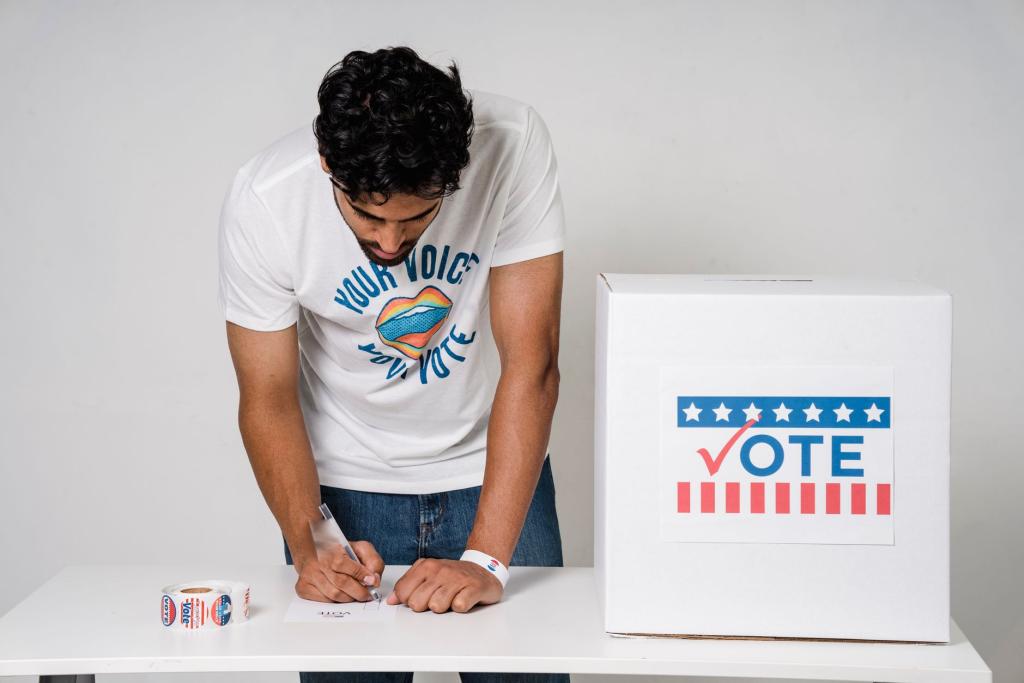
More than eleven thousand Iowa students just cast ballots for U.S. Senate, the U.S. House and governor — and not one of them is old enough to vote for real. The 2026 Iowa Youth Straw Poll, announced by Iowa Secretary of State Paul Pate on October 12, put students in grades K-12 at 94 schools through a mock version of the exact races adults will decide in the midterm elections three weeks from now, according to the Iowa Secretary of State's office.
The young voters behaved like seasoned ones. The closest contest was the governor's race: Zach Lahn took 50.1 percent (5,658 votes) to Rob Sand's 49.9 percent (5,635 votes), a margin of just 23 votes out of 11,293 ballots cast. In the Senate race, 11,273 ballots went 44 percent for Ashley Hinson and 42 percent for Josh Turek, with Thomas Laehn at 14 percent. Across the statewide student tally of 11,671 participants, the marquee races landed as dead heats — the same shape adult polling has shown all fall.
The House results split the map. Christina Bohannan led Mariannette Miller-Meeks 41 percent to 38 percent in the first district, while Zach Nunn took the third district 56 to 44 and Chris McGowan won the fourth 55 to 45, according to the official results. Joe Mitchell led the second district at 49 percent, with Lindsay James at 27 percent. The students did not vote a straight ticket top to bottom — their ballots crossed party lines district by district, exactly the way adult Iowa often does. For the Iowa students who filled out those ballots, it was a first encounter with split-ticket arithmetic — and with just how thin a statewide margin can get.
A generation rehearsing for Election Day
Secretary Pate frames the poll as practice, not prediction. "Early education on civic processes and elections instills lifelong habits of civic engagement," he said, pointing to research on youth civic habits, according to the announcement. In past cycles, he noted, the straw poll results have closely mirrored official results — which he reads as evidence that families are talking about elections around the dinner table in the evenings.
The youth-voice angle matters because this is the generation most often described as checked out. These Iowa students are doing the opposite: studying real candidates, casting ballots in real races, and producing results that track the adult electorate contest by contest. Three weeks before the midterms, the kids who cannot vote yet are treating voting more seriously than plenty of adults who can. If these Iowa students carry the habit into adulthood, the state gains a generation of voters who learned the mechanics long before they ever needed them.
Mock elections are not crystal balls
The honest caveat is that a mock election is not a scientific poll. The participating schools opted in, which makes the sample self-selecting rather than representative of every Iowa student. Pate's own dinner-table observation cuts both ways: if students are echoing what they hear at home, the results may measure household politics as much as youth opinion. And the electorate spans kindergarten through twelfth grade, so some ballots reflect classroom exercises more than considered choice. None of that makes the Iowa students' verdict meaningless — but it does mean reading it as a forecast would be a mistake.
Still, the exercise's value does not depend on its predictive power. As reported by North Iowa Now, the poll is one of several youth initiatives the secretary's office runs to build civic habits early — and habits, unlike predictions, compound over a lifetime.
For teenagers in other states, the takeaway is practical. The midterms land on November 3, and many states let sixteen- and seventeen-year-olds pre-register to vote or serve as poll workers — check your own state's rules, because they vary widely. Even where you cannot vote yet, you can do what the Iowa students did: study the actual candidates on your ballot, bring the races up at your own dinner table, and show up prepared the day you turn eighteen. Their template is simple — practice now, so the real thing feels familiar later.
The underage electorate has spoken, and its message to the adults is simple: the kids are paying attention. Follow the real races in our Social Justice coverage, including the Supreme Court's decision reviving the SAVE voter database before the midterms.
Comments 0
No comments yet. Be the first to share your thoughts!
Leave a comment
Share your thoughts. Your email will not be published.