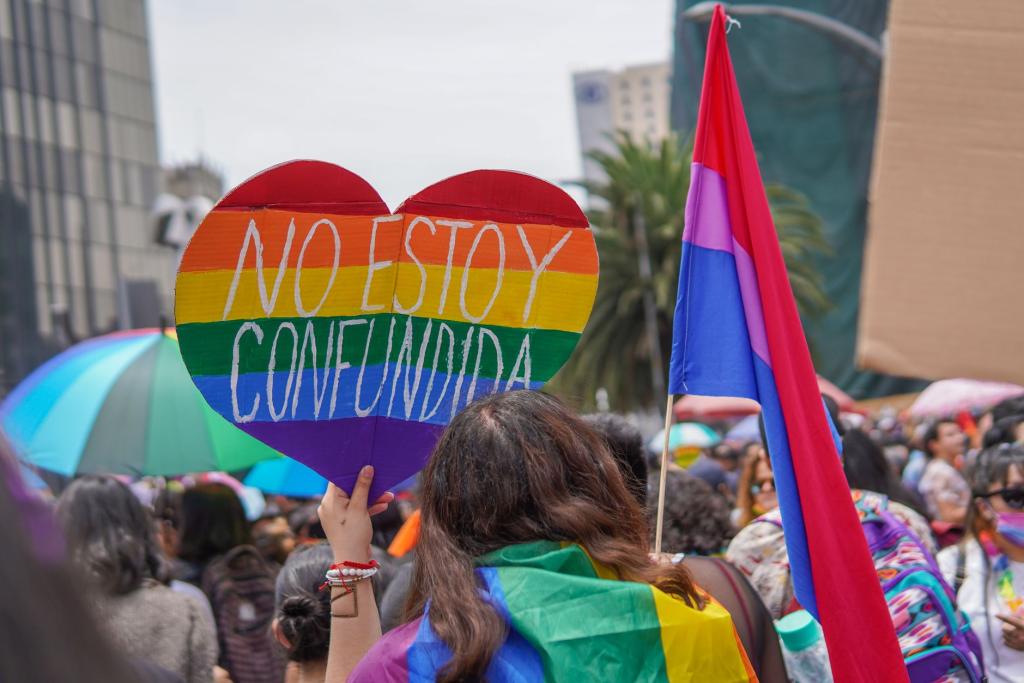
Queer Gen Z Voters are not waiting for permission to shape American politics. Ahead of the November 2026 midterm elections, new research from the Williams Institute at the UCLA School of Law finds that young queer voters are motivated, civically engaged, and ready to cast ballots — and they care far more about whether a candidate shares their values than whether that candidate shares their identity. The study, based on online data gathered by the research company Verasight, compares LGBTQ+ and non-LGBTQ+ adults between the ages of eighteen and twenty-nine.
The most striking takeaway is how eager both groups are to vote. According to the study, 73.6% of LGBTQ+ and non-LGBTQ+ Gen Z respondents alike said they would definitely vote in the November midterms. That matters because roughly fifty million Americans between eighteen and twenty-nine are eligible to vote this fall, and about one in six Gen Z adults identifies as LGBTQ+ — a share large enough to swing competitive races.
Queer Gen Z Voters also look unusually civically active. As reported by GO Magazine, the study found queer respondents were more likely than their straight or cisgender peers to have taken part in civic or political activities in the past year, and a majority said they had encouraged others to vote too. “Gen Z is sometimes described as less engaged in politics, but these findings show a politically tuned-in generation,” said lead author Nathan Cisneros, Program Director at the institute, in the study’s press release.
When it comes to choosing candidates, Queer Gen Z Voters look past identity. More than 76% of queer Gen Z respondents said they would pick a candidate who shares their values over one who shares their identity, according to the study. For campaigns that lean on descriptive representation alone — running on shared identity rather than shared policy — that finding is a warning shot.
What Queer Gen Z Voters Want From Their Candidates
Queer Gen Z Voters break heavily toward Democrats, though party label is not the whole story. The study found that 70.7% of LGBTQ+ Gen Z respondents would vote for a Democrat in their congressional race, compared with 9.5% for a Republican. Among straight and cisgender Gen Z adults, the split was narrower — 48.9% for the Democrat and 34.8% for the Republican. As reported by OUT FRONT Magazine, the report stressed that these young voters cared far more about a candidate’s shared values than about age or demographic background.
Civil rights sit at the top of the priority list. The study found 84.6% of LGBTQ+ Gen Z voters called anti-discrimination legislation an urgent or serious concern, compared with just 49.5% of straight and cisgender respondents, and 69.9% rated protections for transgender youth healthcare as an urgent priority versus 52.1% of their peers. “Gen Z is the queerest and fastest-growing voting generation in America,” said Isaac James, co-founder and executive director of OutVote, an organization focused on queer Gen Z voters, in comments on the findings.
Where Queer Gen Z Voters Diverge From Their Peers
The widest urgency gaps show up on climate, immigration enforcement, and foreign policy. On climate change, 88.1% of LGBTQ+ Gen Z respondents called the issue urgent or serious, compared with 72.4% of straight and cisgender young adults, according to the study. On how immigration enforcement agencies operate under the second Trump administration, 87.2% of queer Gen Z voters rated the matter urgent or serious versus 68.1% of their peers. And on the war in Gaza, 81.8% expressed heightened concern compared with 67.1% of non-LGBTQ+ youth.
What Unites the Generation: The Cost of Living
If the urgency gaps define where young queer voters differ, affordability defines where the generation agrees. Nearly 90% of all Gen Z respondents — LGBTQ+ and straight or cisgender alike — described rising prices, inflation, and housing costs as what the study’s authors call an “urgent crisis or serious issue,” according to the report. For campaigns hoping to reach Queer Gen Z Voters and their peers, that shared economic anxiety is the common ground.
The practical takeaway for candidates is straightforward: they will not be won over by biography alone. With competitive House and Senate races on the ballot this November, campaigns courting young voters need to speak to economic pressure, civil rights protections, and the specific issues where these voters report the highest urgency — not just field candidates who look the part. Personal relationships and chances to work alongside peers on civic action also mattered to respondents, the study notes. Voter access itself is part of the story: see our earlier reporting on the Supreme Court reviving the SAVE voter database before the midterms, and more on the Social Justice beat.
Gen Z will only grow as a share of the electorate in the cycles ahead. Co-author Laurel Sprague, Research Director at the institute, said it is vital that candidates address these voters’ concerns and work to encourage their political participation — a message the data backs up. Queer Gen Z Voters, it turns out, were never the apathetic generation. They were just waiting for candidates worth voting for.
Comments 0
No comments yet. Be the first to share your thoughts!
Leave a comment
Share your thoughts. Your email will not be published.