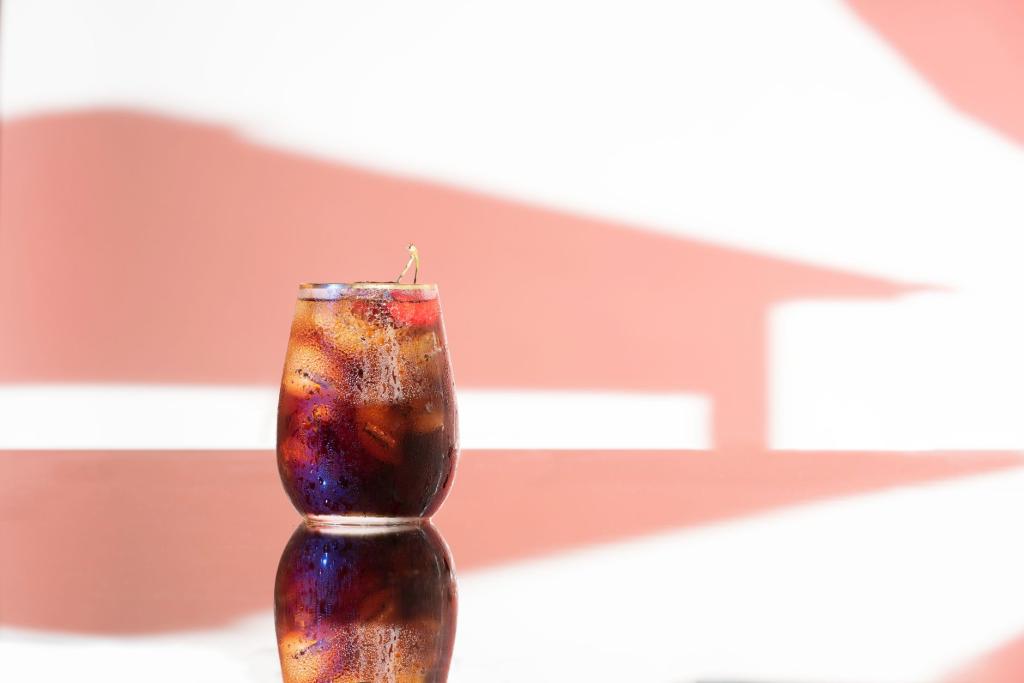
A drink that is basically soda, creamer, and a flavored syrup you would normally put on a snow cone now has its own franchise empire. The dirty soda trend started as a Utah drive-thru ritual, blew up on short-form video, and is currently one of the fastest-growing corners of American food culture, with search data, franchise deals, and big-box soda brands all confirming the same thing: people want to build their own drinks.
The numbers are striking. According to Rising Trends' September 2026 food data, searches for "Dirty Dr Pepper" have more than tripled over the past year, while the broader "dirty soda recipe" term keeps climbing at a pace most food trends would kill for. That is search traffic, not hype. It means hundreds of thousands of people are actively looking up how to make these drinks at home, and that kind of searching usually comes right before a trend turns into an industry.
What even is a dirty soda?
The recipe is almost insultingly simple, which is exactly the point. As the Arizona Republic explained in a recent explainer, a dirty soda mixes sodas like Coke or Dr. Pepper with custom flavored syrups, fresh fruits, purees, and creams. Think of it as a soda fountain's rebellious middle child: half cocktail bar, half ice cream parlor, zero alcohol.
The format traveled from Utah, where Swig's founder Nicole Robison opened the first shop back in 2010, onto TikTok and Instagram Reels, where the mixing process itself is the content. You can film a dirty soda being made in under thirty seconds: the pour, the syrup swirl, the cream cloud. Rising Trends noted this social-video-native quality is one of the main engines behind the dirty soda trend, alongside its no-alcohol appeal for people who want a fun drink ritual without drinking.
The customization is the other hook. Coconut cream, vanilla, lime, blackberry, brown sugar: the combinations are effectively infinite, which means every drink feels like a personal recipe. Sonic helped mainstream the mix-your-own soda culture years ago, and modern better-for-you brands like Poppi and Olipop now orbit the same space, but the dirty soda shops are the ones selling the pure, unapologetic sugar version.
The franchise gold rush
Here is where the story gets serious. Swig, which bills itself as "the home of the original dirty soda," now operates more than one hundred fifty locations across sixteen states, according to Chain Store Age. And the company is nowhere near done expanding.
The deal flow has been relentless. In April 2026, Swig signed a twenty-five-unit agreement to blanket South Florida, targeting Port St. Lucie, Palm Beach, and Stuart, with the initial stores expected before the end of the year. The franchisees (James Laskaris, Spiro Laskaris, and Stephen Attard) already run dozens of Dunkin' and Baskin-Robbins locations. James Laskaris said the product "stands out" while "the brand's marketing and energy really resonate with a younger, highly engaged customer base."
Two months later came Chicago: a thirteen-unit deal with husband-and-wife operators Derek and Michelle Hincks to bring Swig to the city's southwest suburbs, including Naperville and Joliet. "We've admired Swig for years, not only because it created the dirty soda category, but because of the way the brand brings people together and makes every visit a fun, memorable experience," Derek Hincks said in the company announcement covered by QSR Magazine. The debut Chicago-area store was scheduled to open in August.
Then Colorado, where father-son team Alex and Alan Knox signed on for ten units around Colorado Springs. Add the new Arizona locations slated for Glendale and Tempe, and you have a single regional concept expanding into at least four new states in a single year.
Swig's growth math is deliberately lean. The stores are drive-thru-centric footprints of around eight hundred square feet, with no complex kitchen infrastructure. That keeps build-out costs low and lets operators stack units quickly. As Fast Casual reported, the model lets franchisees streamline labor and scale fast. The string of new deals suggests the approach is working.
Why this trend keeps winning
The dirty soda trend checks nearly every box that makes a food fad durable rather than disposable. It is cheap to try, easy to film, endlessly remixable, and available in a drive-thru lane near you. The reality-show boost did not hurt either: the cast of "The Secret Lives of Mormon Wives" frequented Swig while filming, giving the brand national name recognition well beyond Utah.
But the deeper driver might be generational. The dirty soda trend sits squarely in the same lane as other Gen Z beverage obsessions: the iced coffee debate that supposedly decides job interviews, the aesthetic matcha trend, the eternal boba order. Drinks have become identity statements, the same way viral food moments keep racking up views (we covered one earlier this month when a LongHorn kitchen video exploded online), and a customizable soda lets you perform personality without saying a word. Your syrup combination is your brand.
There is also the matter of timing. As more young people drink less alcohol, the "fun drink" slot in social life is wide open, and dirty soda shops have claimed it with cheerful branding, drive-thru speed, and a price point well under a cocktail. The whole ritual (order, watch it get made, post the video, sip) fits a phone-first social life perfectly.
So what is next? If the franchise pipeline is any indication, your hometown probably gets a dirty soda shop before it gets a fourth coffee chain. The Utah secret is out, the search data says the appetite is still growing, and the biggest risk for Swig and its copycats is not demand. It is keeping up with it. The dirty soda trend stopped being a TikTok novelty a while ago. It is a business model now.
Comments 0
No comments yet. Be the first to share your thoughts!
Leave a comment
Share your thoughts. Your email will not be published.