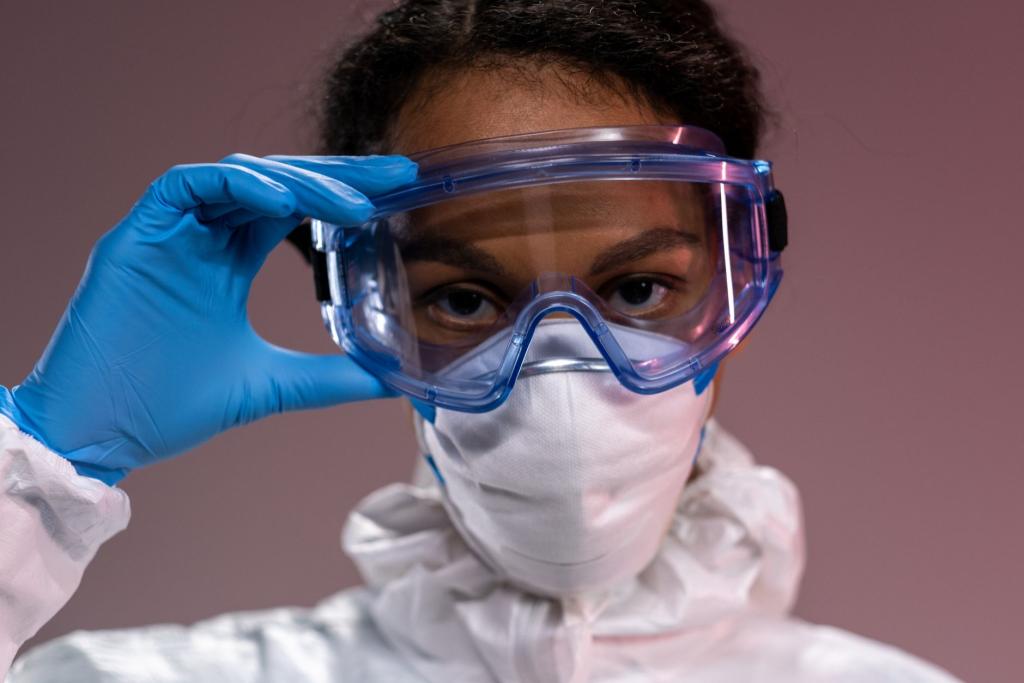
BUNIA, Democratic Republic of Congo — Health workers in Ebola-hit districts of eastern Congo began receiving the Ervebo vaccine on September 20, the start of a study that will test whether this Ebola vaccine can protect people against a different strain. According to reporting published on September 20, about 20,000 frontline health workers are expected to take part across Ituri and North Kivu provinces in a programme that could run for up to a year.
The effort is backed by the World Health Organization and Doctors Without Borders, known as MSF. Frontline staff were prioritised because of their direct exposure to patients and their central role in the response. Health workers in Bunia, the capital of Ituri province, were among the first to be vaccinated as the programme began.
The outbreak has been linked to the Bundibugyo species of Ebola, for which no licensed vaccine or treatment currently exists. Authorities cited in the latest reporting put the toll at 7,541 confirmed cases and 3,639 deaths, a fatality rate of roughly 48 percent. That makes this the largest recorded Bundibugyo outbreak in the Democratic Republic of Congo.
A borrowed vaccine, an open question
Ervebo was developed against the Zaire species of Ebola and has been used in earlier outbreaks. Whether it can offer real protection against Bundibugyo is unknown, and answering that question is the point of the new programme. Steve Ahuka, a Congolese official involved in the response, said researchers do not yet know how effective it will be against the current virus. MSF research coordinator Nana Mimbu said the shot could provide some level of cross-protection, but the study is intended to measure how far that effect goes.
The new programme is not the only line of research. Separate clinical trials of a vaccine designed specifically for the Bundibugyo species began in the United Kingdom in July, followed by a second trial in Canada. The World Health Organization said in August that no proven safe and effective vaccine, preventive or treatment options existed specifically for Bundibugyo Ebola, adding that more time would be needed before firm conclusions could be drawn from the trials.
Reuters reported on September 16 that more than 3,000 healthcare and frontline workers had already received Ervebo, and that an observational study of those workers was about to begin. A separate mid-to-late-stage trial, led by Congo's National Institute of Biomedical Research with international partners, is expected to follow in the coming weeks. That trial will first evaluate Ervebo and then vaccine candidates built specifically for Bundibugyo, including candidates from Moderna and the University of Oxford.
An outbreak that is 'far from over'
The WHO said on September 16 that there were encouraging signs that containment measures were gaining ground, while warning that the outbreak was far from over. Transmission was declining in the hardest-hit parts of Ituri, according to WHO Director-General Tedros Adhanom Ghebreyesus, but he cautioned that the virus could still spread across a region with very high population mobility. Maria Van Kerkhove, the WHO's acting director of epidemic and pandemic threat management, said improved surveillance could push detected case counts higher even as contact tracing expands.
The epidemic is now the second most lethal Ebola outbreak on record, behind only the West Africa epidemic of 2014 to 2016, and it has spread to a seventh province. Transmission chains have run through areas where insecurity, delayed detection and stretched supplies have made control harder. MSF warned on September 18 that there was not yet clear evidence the epidemic was under control.
Relief agencies say the treatment network has grown sharply since the outbreak was declared in May. In Ituri province alone, care capacity stood at 974 beds across 25 facilities at the start of September, up from a single nine-bed treatment centre in May. More than 4,000 additional health professionals have been deployed to reinforce care teams across the affected provinces.
International support is also scaling up. The European Commission has allocated an extra 15 million euros in humanitarian assistance for the Ebola response in Congo and Uganda, including an emergency airlift of nearly 100 tonnes of medicines, protective equipment and tents to eastern Congo.
For now, the Ervebo programme has a double purpose: shield the people working closest to the virus and produce the evidence that could shape the response for months to come. Researchers will keep assessing the shot's performance against Bundibugyo as the study unfolds, while the species-specific trials in the United Kingdom and Canada continue in parallel. For continuing coverage of global health emergencies, see GenZ Newz's health section.
Comments 0
No comments yet. Be the first to share your thoughts!
Leave a comment
Share your thoughts. Your email will not be published.