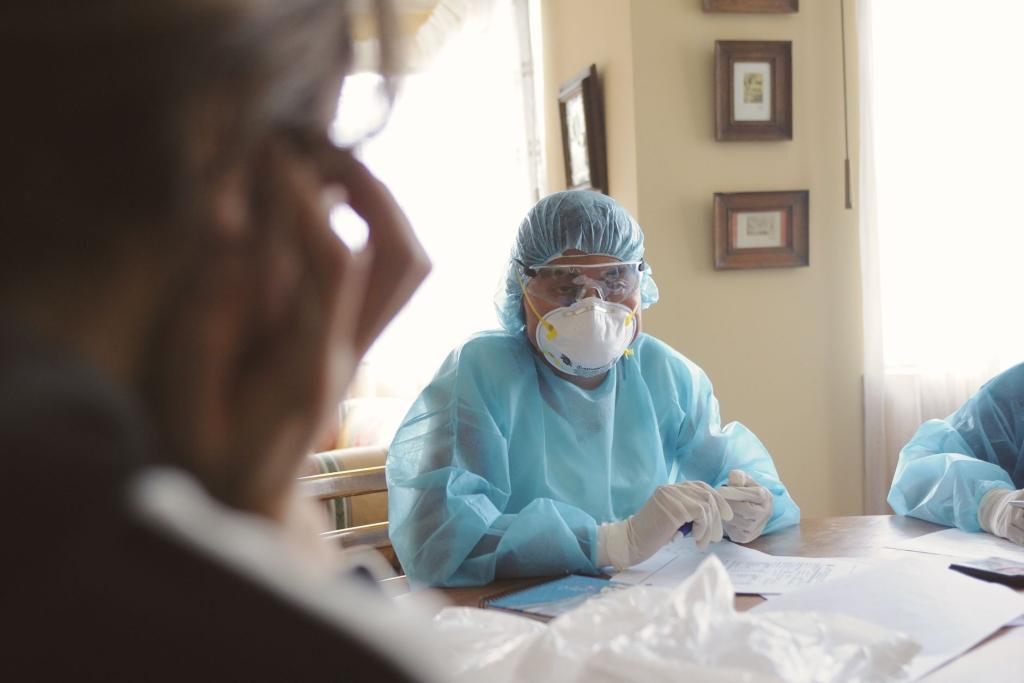
On Saturday, September 19, health teams in the Democratic Republic of Congo pushed Ebola vaccination into Ituri Province, the epicentre of the DRC Ebola outbreak, as the total number of doses administered across the country passed 3,771. The expansion marks a new phase in the response to the deadliest Ebola outbreak ever recorded in Congo. For months, the campaign operated around the edges of the worst-hit areas. Now it is heading straight into the centre.
The scale of the crisis is stark. Congolese health authorities have reported 7,541 confirmed cases and 3,639 deaths since the outbreak was declared in May 2026, a case fatality rate of 48.3 percent. Roughly 1,823 patients have recovered. No previous Ebola episode in the country has reached this size, and worldwide only the 2014 to 2016 West Africa epidemic ranks higher. Each day brings more confirmed cases than the country's fragile health system can easily absorb.
A vaccine with an open question
There is a catch at the heart of the vaccination campaign. Ervebo, the vaccine being deployed, was originally developed and licensed to counter the Zaire Ebola virus, not the Bundibugyo strain driving this outbreak. Whether it protects humans against Bundibugyo has never been established, which makes the science unfolding alongside the campaign unusually consequential. Congo is immunising its frontline workers with a tool that may or may not match the pathogen they are fighting.
To answer that question, Médecins Sans Frontières, Congolese health authorities, and the Africa Centres for Disease Control and Prevention have launched a vaccination study called BRAVO in Bunia, the capital of Ituri. The plan is to vaccinate about 20,000 frontline workers across Ituri and North Kivu, the two hardest-hit provinces, and follow them over time to measure protection against the Bundibugyo virus. A separate Phase 3 randomised ring-vaccination trial is running in parallel. The studies are expected to take nine to twelve months, including three months of vaccination and at least six months of participant follow-up, according to reporting from September 20.
Supply remains tight. The International Coordinating Group on Vaccine Provision approved 70,000 Ervebo doses for Congo in August, with 50,000 earmarked for health and frontline workers and 20,000 reserved for the clinical trial. Africa CDC says 16,520 doses had reached the country by mid-September. Vaccination of high-risk individuals under a protocol-governed programme began on August 27. As of September 17, the 3,771 people vaccinated included 3,063 in Tshopo Province and 708 in Bas-Uele Province, according to the government's latest epidemiological update. Ituri has now joined that map.
An outbreak that keeps moving
The campaign is racing a virus that refuses to stay put. On September 16, MSF teams in the field warned that declining admissions at some Ebola treatment centres look like progress but are not. The group's emergency coordinator in Congo cautioned that the outbreak is shifting rather than shrinking: South Ubangi has become the seventh affected province, while North Kivu now accounts for nearly half of all newly confirmed cases, with test positivity climbing sharply in recent days. The warning, published by MSF on September 16, argues that falling patient numbers in one place should never be read as containment when the national case count keeps rising.
The pattern of spread is uneven but persistent. By September 7, the World Health Organization reported that the Bundibugyo outbreak had reached 61 health zones across six provinces, with 6,757 confirmed cases and 3,267 confirmed deaths. Transmission had slowed in Ituri, the original epicentre, even as it surged in North Kivu. The International Organization for Migration, in a response plan revised on September 18, noted that nearly three-quarters of reported deaths have occurred within communities rather than treatment centres, a sign that early detection, contact tracing, and community surveillance are still falling short.
Geography is working against the response. The virus has pushed into provinces where health systems are thinner, and movement along the Congo River has created new exposure routes. The IOM plan warns that more than 150 river ports along the waterway now face elevated risk, with traders, transport workers, and riverine communities complicating containment and threatening spillover into the Central African Republic and the Republic of Congo. Insecurity, displacement, chronic staffing shortages, and weak referral capacities keep stretching the fragile clinics at the front of the fight. Strained health systems take their toll on both patients and workers, a theme recent GenZ Newz health reporting has also examined from the patient's side.
What comes next
The immediate test is speed. With Ituri now formally inside the vaccination programme, health authorities need to reach frontline workers there fast enough to break chains of transmission before the study's data-readout phase. The BRAVO results will shape vaccine strategy not just for Congo but for any future Bundibugyo outbreak anywhere in the world. If Ervebo works against the strain, the playbook for the next crisis changes. If it does not, responders need to know that too.
The uncomfortable reality is timing. A nine-to-twelve-month study horizon means the DRC Ebola outbreak could peak and recede before firm efficacy data arrives to guide the response in real time. The lag between declaring an outbreak and deploying a vaccine matched to the pathogen remains the structural problem this crisis keeps exposing. For now, the best available shield against a virus that has already killed more than 3,600 people is a vaccine nobody can yet prove works against it, and health workers in eastern Congo are taking it anyway.
Comments 0
No comments yet. Be the first to share your thoughts!
Leave a comment
Share your thoughts. Your email will not be published.