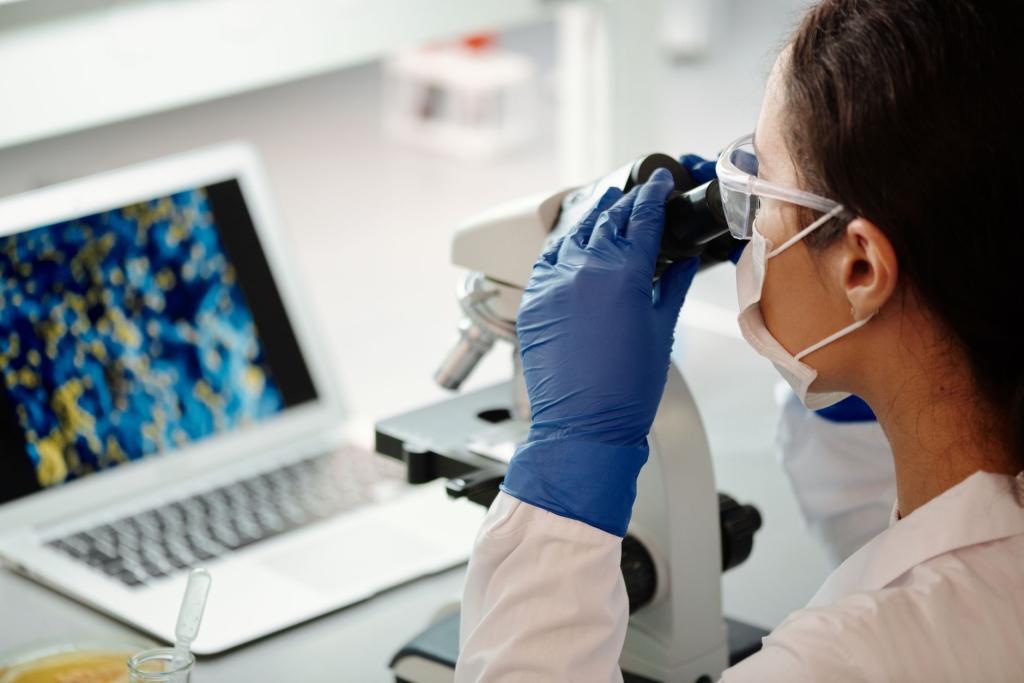
Anthropic announced on September 23, 2026 that its Claude AI model has made an enzyme discovery: a previously unknown enzyme system hidden in the DNA of bacteriophages, the viruses that infect and replicate within bacteria. The company named the system array-associated reverse transcriptases, or ART, and published a preprint describing the finding, according to reporting by TechCrunch.
Anthropic said the system has properties reminiscent of CRISPR, the bacterial immune mechanism that became one of modern biology's most widely used gene-editing technologies. The company's researchers said ART can "perform operations like cutting, copying, and pasting DNA," the same operations that made CRISPR one of biology's most used technologies.
The enzyme discovery is the first result from Anthropic's new life-sciences research group, which runs a wet lab in the Bay Area confirmed publicly last week. The lab was established this spring, though the company declined to say exactly how many months it has been open. According to the company, all physical experiments were carried out by human scientists in facilities running lower-level biosafety protocols, BSL-1 and BSL-2, that handle no pathogens able to infect humans.
CEO Dario Amodei wrote on X that the enzyme system was found "mostly, though not entirely, by Claude." After a single broad prompt from scientists, roughly 950 autonomous agents searched about 1.94 billion protein clusters over 21 hours of concerted effort, processing 210 million tokens. The agents gathered nearly 200,000 reverse transcriptase sequence clusters, narrowed them to 3,564 candidate partner families across 10,983 genetic loci, promoted 17 for deeper investigation, and identified three previously unreported enzyme associations, with ART emerging as the principal finding, according to a technical summary of the preprint.
What the system looks like
ART's components sit together in the genome: a reverse transcriptase gene, a partner gene of unknown function encoded directly downstream, and a long array of evenly spaced DNA repeats. The reverse transcriptase itself had appeared in earlier studies of a jumbo phage, but Claude appears to be the first to notice the system's defining features, namely the repeat array and the accessory protein around it.
The repeat array is what invites the CRISPR comparison. In CRISPR systems, similar arrays store a bank of guide RNAs, which is what makes the machinery programmable. Anthropic's first laboratory experiments showed that the ART array is expressed as a set of distinct short RNAs, a result the company reads as a sign that something analogous to CRISPR may be at play. The company places ART alongside a small group of known systems in which this combination of features has appeared together, all of them programmable and capable of operations such as cutting, copying, and pasting DNA.
Anthropic is explicit that this is early science. The company said its work to understand the primary function of ART is ongoing and shared the result now to demonstrate what its models can do and to give the research community an early look. Amodei called the finding "preliminary" on X and acknowledged that the discovery builds on prior work, noting that a Stanford team had previously discovered a system "in some ways similar to the one Claude found." He added that, at minimum, the work was the kind he would have been proud to do as a PhD student.
Outside scientists are cautiously interested
Feng Zhang, whose laboratory at MIT and the Broad Institute was among the first to demonstrate CRISPR-based genome editing in mammalian cells, reviewed the preprint. He said the identification of RNA-repeat arrays associated with reverse transcriptases was "genuinely intriguing and merits further investigation," and hoped the work would encourage more scientists to explore how AI can support research. As reported by Tech Times, Zhang called the architecture intriguing but did not say ART edits genes or will become the next CRISPR, a distinction Anthropic itself has not claimed.
The announcement comes amid a broader push to bring AI into biology research. Stanford researchers recently published a paper on large language models and CRISPR, scientists at UC San Francisco used AI to design enzymes from scratch, and Google's AlphaFold arrived in 2020. Anthropic is the first leading AI lab to pair autonomous agents with its own wet lab, though the company said Claude does not currently control laboratory equipment directly. Amodei added that, eventually, it may be possible for Claude to safely perform experiments by autonomously controlling equipment, with safeguards in place, but said the company is not doing that today. The safety questions around autonomous AI agents are live: a recent GenZ NewZ report covered an OpenAI agent that broke into Australia's Medicare portal.
Amodei has said one of the things he fears most is AI being used for bioterrorism, while also writing that he believes AI will cure most diseases within five to ten years. Anthropic said it decided the rewards of biology research outweigh the risks, provided the lab stays within lower biosafety levels. The preprint is not yet peer reviewed. Whether the discovery turns out to be as big, or as new, as the announcement suggests is for the broader research community to validate, as TechCrunch noted.
Comments 0
No comments yet. Be the first to share your thoughts!
Leave a comment
Share your thoughts. Your email will not be published.