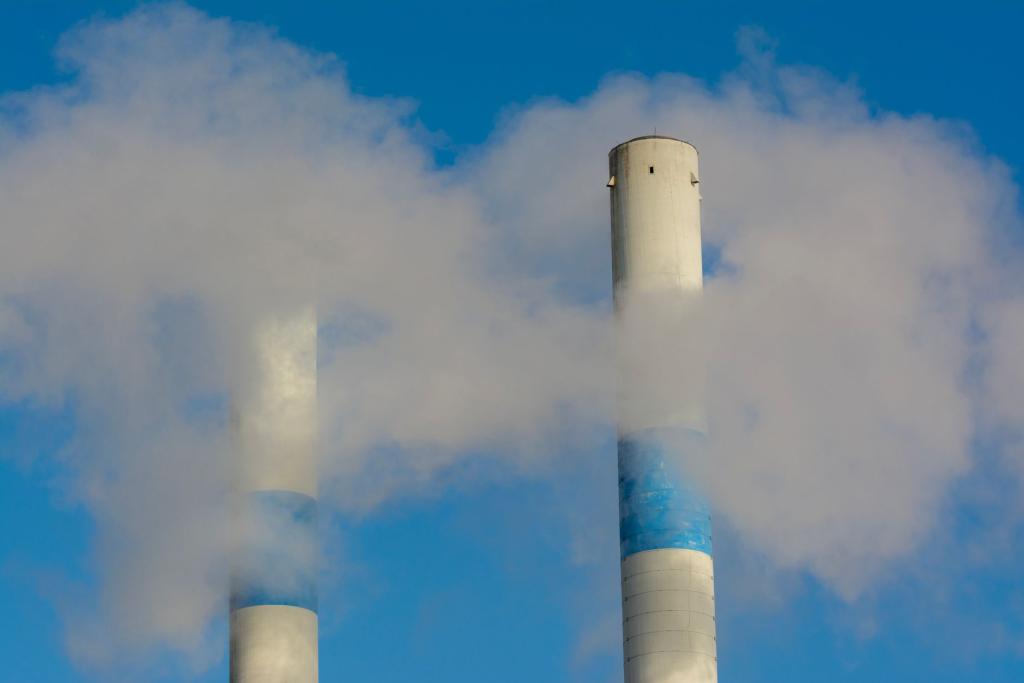
Canada's federal government announced on September 24, 2026 that it is exploring a policy framework to trade internationally transferred mitigation outcomes, known as ITMOs, a step that would open international carbon markets to Canadian companies.
The announcement came from Environment, Climate Change and Nature Minister Julie Dabrusin in Ottawa. She said the framework could catalyze investment in carbon removal technologies and nature-based solutions, and would give Canadian firms a route to sell verified climate credits to buyers on carbon markets abroad.
ITMOs are a cooperation mechanism outlined under Article 6 of the Paris Agreement. They allow countries to meet their national climate targets in part by trading verified emissions reductions and removals across borders, so a tonne of carbon removed in one country can count toward another country's climate pledge under strict accounting rules.
Dabrusin said the trading of ITMOs "can unlock greater global climate action by making it easier to transfer emission reductions and removals between countries." She described the move as a way to turn the country's "natural advantages and homegrown climate innovation" into "investment, good jobs, and new export opportunities," and argued that clear rules for international carbon credit transfers would help Canadian companies scale, attract capital and bring more technologies to market, strengthening Canada's position in the global clean economy.
That design answers one of the oldest criticisms of carbon trading: double counting. Under the framework Ottawa is considering, only one country could claim a given reduction, and the government says robust tracking and accounting would have to be in place before carbon markets trading begins.
What the framework would do
In practical terms, the framework would set out the accounting and authorization rules so that Canadian carbon removal projects can produce credits recognized as international assets on global carbon markets. Without those rules, credits generated at home have limited reach.
Canada already has a growing carbon removal sector to serve. Reuters reported that the country is home to Deep Sky, described as the first North American company to deliver verified removal credits from direct air capture technology, which pulls excess carbon dioxide directly out of the atmosphere.
Industry group Carbon Removal Canada says the domestic pool of carbon removal buyers is small relative to the scale of investment the sector needs. An Article 6 framework would expose Canadian projects to wider demand on international carbon markets, which the group says would help get new projects off the ground. According to Carbon Removal Canada, the country currently has about eleven megatonnes of announced carbon removal capacity awaiting construction.
A report by Carbon Removal Canada, cited in the government's announcement, found that a scaled-up carbon dioxide removal industry could contribute billions to Canada's gross domestic product and create hundreds of thousands of jobs by 2050.
Why the timing matters
Any credit traded as an ITMO on carbon markets would have to meet the requirements of Article 6. That means the reductions or removals must be additional to what would have happened without the arrangement, and the same credit cannot be counted by both the exporting and importing country. Ottawa has pledged that any trading would follow Article 6 rules and guidance so that credits moved between countries are real, additional, verified and permanent.
The announcement builds on Ottawa's Spring Economic Update, which committed more than thirteen billion dollars in international climate finance, making Canada among the earliest countries to announce climate finance pledges beyond 2026, according to the release. The timing follows another major climate commitment from the same week: world leaders adopted a UN declaration on sea level rise guaranteeing island nations keep their statehood as seas climb.
International appetite for carbon markets is already taking shape. The European Union operates a carbon removal certification framework, and several Asian countries have expressed interest in cross-border carbon removal supply, Reuters reported. The report added that Prime Minister Mark Carney is seeking deeper economic ties with the EU and Asia as Canada's economy faces a trade war with the United States.
Ottawa said it will engage provinces and territories, Indigenous organizations and other partners as it explores a possible approach to putting ITMOs to work in the Canadian context. It also signaled it will keep pursuing new policies with strong potential that align with a net-zero future, including the potential for international and domestic offset credits that could also feed into carbon markets. The stakes are not abstract: severe heat is projected to kill far more people as the current super El Nino peaks, as reported in a recent forecast.
Comments 0
No comments yet. Be the first to share your thoughts!
Leave a comment
Share your thoughts. Your email will not be published.