August 2026 was the warmest August ever measured and effectively tied July 2023 as the hottest month in the observational record, according to data published September 10 by the Copernicus Climate Change Service. The global average surface air temperature reached 16.96 degrees Celsius, a value the service puts within a hundredth of a degree of the previous all-time monthly peak.
The reading sits 1.65 degrees above the pre-industrial reference period of 1850 to 1900, making August the first month since November 2025 to breach the 1.5-degree threshold tied to the Paris Agreement. "August 2026 was a remarkable month in the global climate record. It was both the warmest August and the warmest month ever recorded," said Samantha Burgess, Strategic Lead for Climate at the European Centre for Medium-Range Weather Forecasts, which implements the Copernicus service. The August figure was also 0.85 degrees above the 1991-to-2020 average the service uses as its standard reference.
Burgess told AFP that evidence from ice cores, tree rings and coral skeletons places the heat in a much longer historical context. "Humans haven't seen temperatures as hot as today for, arguably, at least the last one hundred thousand years," she said. The three northern summer months combined, June through August, formed the joint-warmest boreal summer on record globally, matching the summer of 2024.
Heat concentrated over Western Europe
The global average was driven by sharply regional extremes. Western Europe recorded its warmest summer ever, beating the previous high from 2003, after a string of early, persistent and intense heatwaves that began in May. Europe as a whole recorded its fourth-warmest August in the ERA5 record, with the average temperature over European land reaching 20.26 degrees Celsius. Summer 2026 was the third warmest for the continent overall, behind 2024 and 2022.
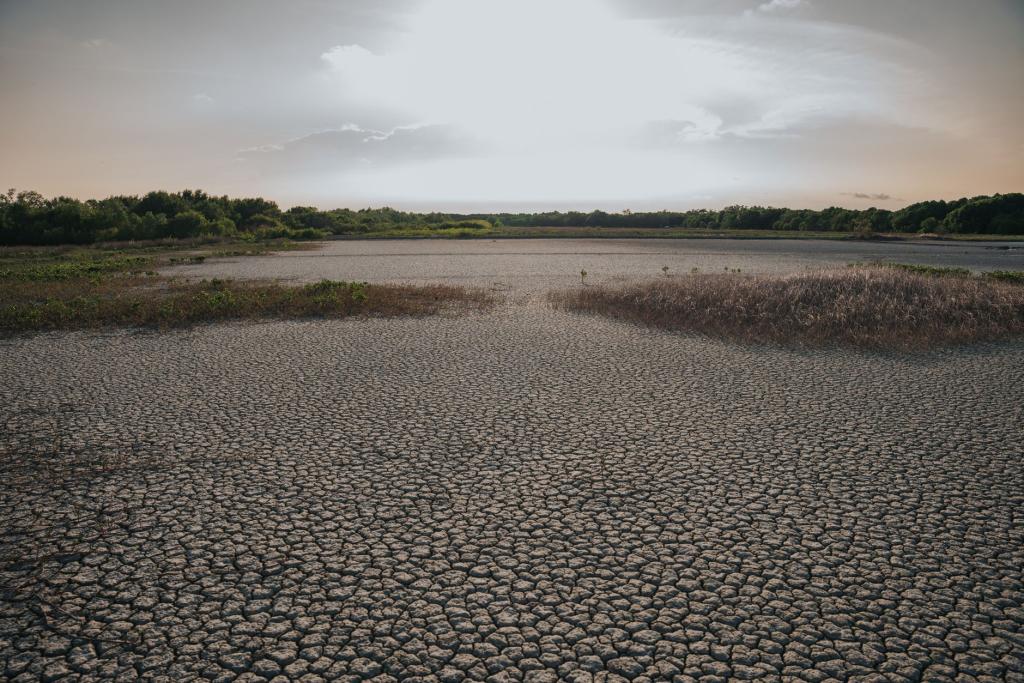
France, the United Kingdom and Belgium each logged their hottest summers on record. In France, 53 days of heatwave conditions combined with rainfall roughly 40 percent below average, making it the country's second-driest summer since 1959. Large stretches of the Seine, Rhone, Loire and Glomma rivers posted their lowest seasonal flows since 1992, and record-low conditions ran along the entire length of the Danube, Vistula and Rhine. Severe drought was reported in France, Britain, Hungary, Romania and Serbia. More than 25,000 heat-related deaths were attributed to Europe's successive heatwaves this year, according to Grist's reporting.
Oceans at record warmth as El Nino builds
The heat extended across the oceans. Outside the polar regions, the average sea surface temperature hit 21.07 degrees Celsius in August, an August record and the joint-highest of any calendar month, matching March 2024. On August 24 and 25, daily sea surface temperatures reached 21.11 degrees, an all-time daily high. Copernicus attributed much of the pattern to record warmth across the tropical Pacific, where an El Nino event continues to strengthen.
The service's atmospheric monitoring reports that conditions now favor intensified seasonal wildfires across Indonesia, a pattern strong El Nino events have historically produced in the tropics.
Scientists point to fossil fuels
U.N. climate chief Simon Stiell responded to the data by connecting the record to emissions. "The evidence is irrefutable: this is the spiraling price of humanity's fossil fuel addiction," he said, according to AFP reporting on the Copernicus bulletin. Scientists say the buildup of greenhouse gases, chiefly from burning fossil fuels, is driving the long-term warming that makes such records more frequent.
The Copernicus bulletin does not project what comes next. Whether September and October extend the pattern will depend partly on the strength and duration of the El Nino developing in the Pacific. The service's ERA5 dataset stretches back to 1940, and the record book now shows two months sharing the title of hottest month, separated by less than 0.01 degrees Celsius. The pattern is part of a summer GenZ NewZ has been tracking closely, from the 7,500 donors who paid a logger to save the Elwha rainforest to the way Big Tech is going nuclear to feed AI's data center hunger.
The full Copernicus climate bulletin for August 2026 is available through the service's monthly climate reports, and the findings were summarized by phys.org. An overview was also published by GTP Headlines.
Comments 0
No comments yet. Be the first to share your thoughts!
Leave a comment
Share your thoughts. Your email will not be published.