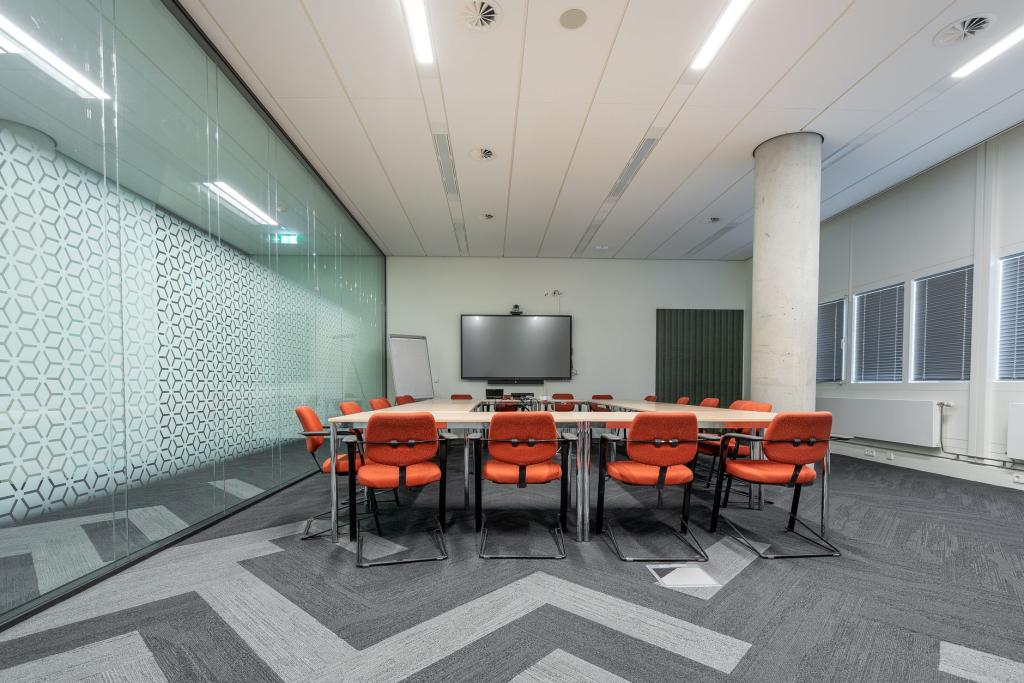
When a meeting room's camera refuses to connect or the audio drops out mid-sentence, the cost is bigger than the awkward silence while everyone waits. According to a new study from Logitech, a single technical disruption in a meeting burns a median of 12.2 minutes of workplace productivity per person. For nearly a third of respondents, one glitch costs 16 minutes or more per person.
The findings come from Logitech's Workplace Equation research, released September 9, which surveyed 1,700 workplace experience decision-makers across 11 countries. The study set out to measure the gap between how companies intend their offices to work and how they actually work day to day. What it found, Logitech reported, was a costly pattern of late technology decisions, unclear ownership, and meeting rooms that were not designed with the tools inside them in mind.
The late-tech trap
The clearest finding is about timing. Only 24 percent of organizations bring IT or AV teams into the process before space planning begins. The rest design rooms, buy furniture, and finalize layouts first, then hand the finished space to technology teams and ask them to make it work. Logitech calls this the late-tech trap: gear gets bolted onto rooms it was never planned for, and the retrofits that follow cost time and money on top of the daily friction workers already feel.
The study put a number on that friction. It asked decision-makers to estimate the productivity lost when meeting technology fails, things like dead microphones, cameras that won't pair, or connection drops that stall a call. The median answer was 12.2 minutes per person per disruption. Thirty percent of respondents said a single failure costs 16 or more minutes per person. Spread across a company that runs hundreds of meetings a week, Logitech reported, the cumulative impact of lost productivity and retrofitting can reach into the millions of dollars, depending on the size of the organization.
Nobody owns the meeting room
Part of the problem, according to the study, is that no one department has a clear claim on the workplace experience. When respondents were asked which group holds primary authority over it, 81 percent said human resources. But IT and AV leaders, along with real estate leaders, also named their own departments as the primary authority. The result is fragmented decision-making: several teams each believe they are in charge, and none of them has the full picture.
That split matters because meeting rooms sit at the intersection of all three functions: how the space affects morale and collaboration, whether the equipment works, and how the layout gets used. When those groups plan in isolation, the room that looks good in a floor plan can be the same room where every call starts with five minutes of troubleshooting.
The ROI proof gap
The study also documents a disconnect between what leaders believe and what they can justify. Eighty-seven percent of respondents said they link a strong workplace experience directly to better productivity and collaboration. But only 58 percent said they feel confident they have the ROI data to back up workplace experience and technology spending. Just 27 percent treat workplace experience as a core business strategy at all.
Logitech's read on that gap is that workplace experience is widely seen as important but rarely managed as a priority. Most leaders know the office environment affects output, yet they lack the numbers to defend the budget for it, and few elevate it to a strategic decision. The study suggests the loss is already happening, in small increments, every time a meeting stalls.
What would actually fix it
The report recommends procedural fixes: bring IT and AV teams into the process before space planning starts, instead of after rooms are finished, so equipment can be designed into rooms from the beginning. Clarify which department owns the workplace experience to end the overlapping claims of authority. And track the productivity cost of technical failures, which would give leaders the ROI data most say they lack.
The study's argument is that the expensive design flaw is the order of operations itself: rooms planned first, technology fitted in last, and everyone losing a quarter hour of workplace productivity at a time to the difference.
This is not the only recent study to put a number on lost work time. BambooHR found workers lose the equivalent of 20 workdays a year to troubleshooting AI errors, and 97 percent of Singapore workers say poor sleep cuts their productivity. The full release includes additional detail on the survey methodology and the 11 countries covered.
Comments 0
No comments yet. Be the first to share your thoughts!
Leave a comment
Share your thoughts. Your email will not be published.