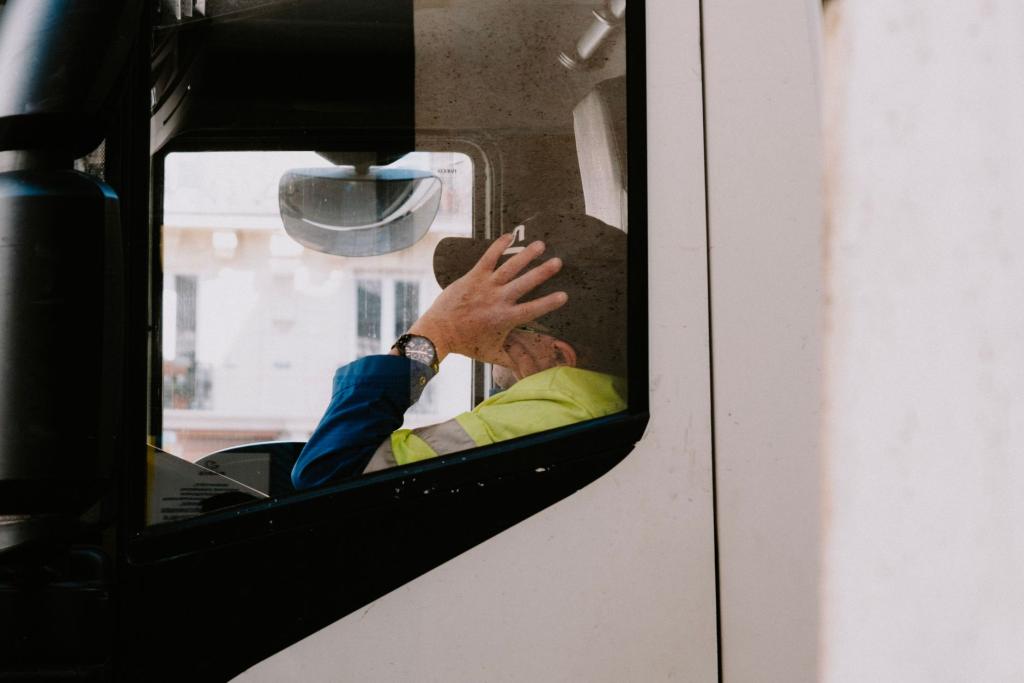
Poverty had pushed Arun out of school when he was in Class Four, at around ten years old. Like many children from poor families, he started working to help his household survive, taking small jobs until he landed as a truck cleaner, riding long routes as a helper to drivers. People who met him on the road remembered the same thing: he stayed upbeat through it all. That unguarded cheer is exactly what a driver named Nehru caught on camera during a break, and it is what turned an ordinary afternoon into the clip behind Arun's viral laugh second chance.
A comment section he could not read
When the video took off, the comments poured in, full of praise for Arun's positivity and innocence. Then came the detail that changed the story's direction. Arun could not read any of them. The boy whose smile was reaching millions had been shut out of school as a child, and the most basic skill the internet runs on, reading, was one he never got. Nehru saw that gap and decided it could not stay that way. The original account, reported by Humans of Bombay and recounted in The Brighter World's retelling of the story, says Nehru recognized himself in Arun: years earlier, financial hardship had forced Nehru himself to abandon his own studies.
Nehru went further than well-wishing. He bought the teenager books, paid his examination fees, and handled the paperwork to enroll him for the Class Ten board examinations as an external candidate. Then came the part of the story that sounds made up but is not: the truck cabin turned into a moving classroom. On long hauls and between trips, with highway noise in the background, Nehru patiently taught Arun the alphabet, basic mathematics, and the rest of the lessons he had missed. As Indian outlets covering Arun's comeback have reported, the strange little classroom kept rolling while Arun worked his way back into education, a viral laugh second chance playing out at highway speed.
The exam that made it real
Earlier this year, Arun Kumar passed his Class Ten board examinations. For a teenager who had dropped out in childhood and spent his early teens cleaning trucks, it was the outcome that had once looked impossible. The result landed the way good news does on the internet: strangers who had laughed at the original clip found themselves cheering for the exam result instead. This was the viral laugh second chance fully realized, fame converted into something far more durable than views.
Arun's life looks different now. He has become a professional content creator with a large following on Instagram and YouTube, and he has appeared on several reality shows as a special guest and contestant. He still credits Nehru with transforming his life, which makes sense, since Nehru was the one who saw past the viral moment to the kid underneath it. Most internet fame stories end at the view count. Arun's became a viral laugh second chance with an exam certificate to show for it. Anyone who has watched a feel-good clip turn into something bigger will recognize the pattern from stories like the paralyzed marathon runner who refused to quit.
Why this one keeps getting shared
Viral fame is usually a dead end. A clip blows up, the algorithm moves on, and the person in it goes back to whatever they were doing. Arun's story bends that arc. The same internet that passed his laugh around also ended up funding, in spirit, his return to school, because Nehru made the link between the two explicit: attention without opportunity changes nothing. That is why the viral laugh second chance keeps circulating years after the original post. It answers the question that follows every feel-good clip, which is whether anything real came of it. Here, something did. The pattern is not unheard of online, where a viral moment sometimes opens a door to learning, as happened with the tiny library whose Bye Bye AI class went mega viral, but it is rare enough to notice.
There is a wider context that makes the story land harder. Millions of children around the world leave school to work, and few ever get a second route back in. Arun got one because a single person refused to treat him as content. The internet gets mocked, often fairly, for turning strangers into entertainment and moving on. Every so often it does the opposite, and the exception is worth noticing. The viral laugh second chance is not really about going viral at all. It is about what happens when the person behind the camera decides to stay after the filming stops.
Comments 0
No comments yet. Be the first to share your thoughts!
Leave a comment
Share your thoughts. Your email will not be published.