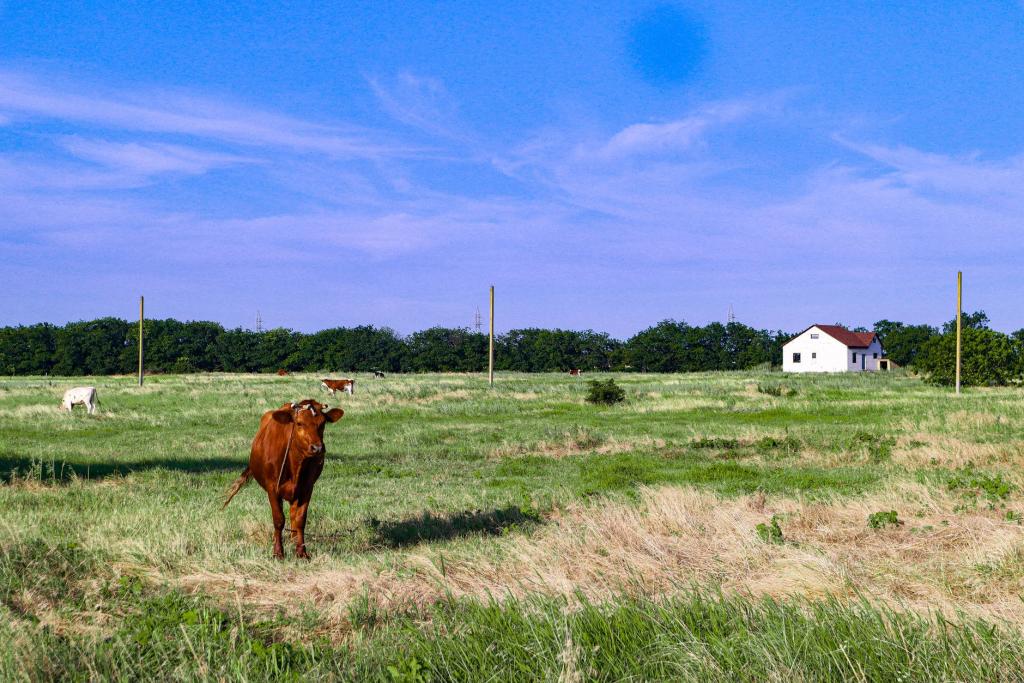
Argentina's Supreme Court has revived a decree that scraps nearly all limits on Argentina foreign land ownership, handing President Javier Milei one of his biggest judicial victories yet. In a decision issued Tuesday, September 29, 2026, the court overturned a lower-court ruling that had declared Article 154 of the mega-decree DNU 70/23 unconstitutional and suspended its effect. The practical result of the ruling is that the article is operative again, restoring the Milei administration's 2023 repeal of the Rural Land Law and removing the numeric caps and registry controls that had constrained Argentina foreign land ownership since 2011.
According to reporting by LaPresse, the justices did not decide whether Milei's decree was itself constitutional. Instead, they found that the plaintiff, the Centro de Ex Combatientes Islas Malvinas La Plata (CECIM), a group of Falklands/Malvinas war veterans that had challenged the decree, lacked legal standing and had not presented a concrete case or controversy. The court ruled that territorial sovereignty is an attribute of the State rather than a "collective good" under Article 43 of the constitution, and it warned lower courts against stretching the doctrine of collective-action standing, reported Particle's coverage of the ruling.
What the repeal actually changes
The law being restored, DNU 70/2023, was issued just ten days after Milei took office and its Article 154 repealed Law 26.737, the Rural Land Law passed in 2011. As explained by the South American real estate news site GTSA, that law placed strict limits on foreign buyers: a national cap on the share of rural land foreigners could own, per-nationality limits, maximum sizes for individual foreign holdings in core farming areas, and restrictions on land containing or bordering major bodies of water. The outlet Clarín noted that the overall ceiling sat at 15 percent of rural land at national, provincial, and departmental levels, and every one of those barriers to Argentina foreign land ownership is now back in legal limbo.
With the Supreme Court's decision, those limits no longer apply in practice. Constitutional scholar Andrés Gil Domínguez warned on social media that, following the ruling, any foreign individual, company, or even state can now buy rural land wherever it wants, including in border areas, without any limit, according to Naked Capitalism's reporting on the fallout. Critics of the Argentina foreign land ownership repeal argue the decision invites a sell-off of some of the most productive farmland in the world at a moment when Argentina's economy is under strain, while the government counters that opening the land market will attract investment and raise rural productivity.
A political fight just getting started
President Milei praised the decision as proof that republican checks and balances work, saying the executive would not interfere with judicial independence, reported Particle. But the political battle over Argentina foreign land ownership is far from over. Opposition blocs immediately moved to force a special session in the Chamber of Deputies to annul DNU 70/23 itself, with lawmakers discussing dates in early October and coordinating with CECIM and allied parties.
The ruling has also reignited a parallel fight over the government's Ley Malvinas, which proposes wider sanctions on unauthorized resource extraction, new criminal and administrative penalties, and a presidential-led security council. Committee debate on September 30 reportedly ended in insults, shoving, and an abrupt suspension, as the government presses to bring the bill to a full vote around October 21. Meanwhile, senior officials have been quietly reopening consultations on a new rural-lands regime: at a dinner at the Argentine Embassy in Paris, Interior Ministry figures and twelve governors discussed foreign-investment rules that would protect border zones, state-linked deals, and strategic resources, though officials stressed that no agreement or legislative plan has been finalized.
For Argentina's farmers, investors, and the communities who live on the land, the bottom line is uncertainty. The court revived the decree on procedural grounds without ruling on its constitutionality, leaving the core legal question at the heart of the Argentina foreign land ownership debate open for future litigation or for Congress to settle by vote. Who owns the pampas, and under what rules, remains an open question, one that will likely shape Argentina's economy and its debates over sovereignty for years to come.
More from this desk on GenZ NewZ: ASEAN's DEFA: The $2 Trillion Digital Deal the West Ignores and Gen Z Investing at 19, Way Ahead of Older Generations.
Sources: LaPresse, citing La Nación and Clarín; GTSA; Particle; Naked Capitalism.
Comments 0
No comments yet. Be the first to share your thoughts!
Leave a comment
Share your thoughts. Your email will not be published.