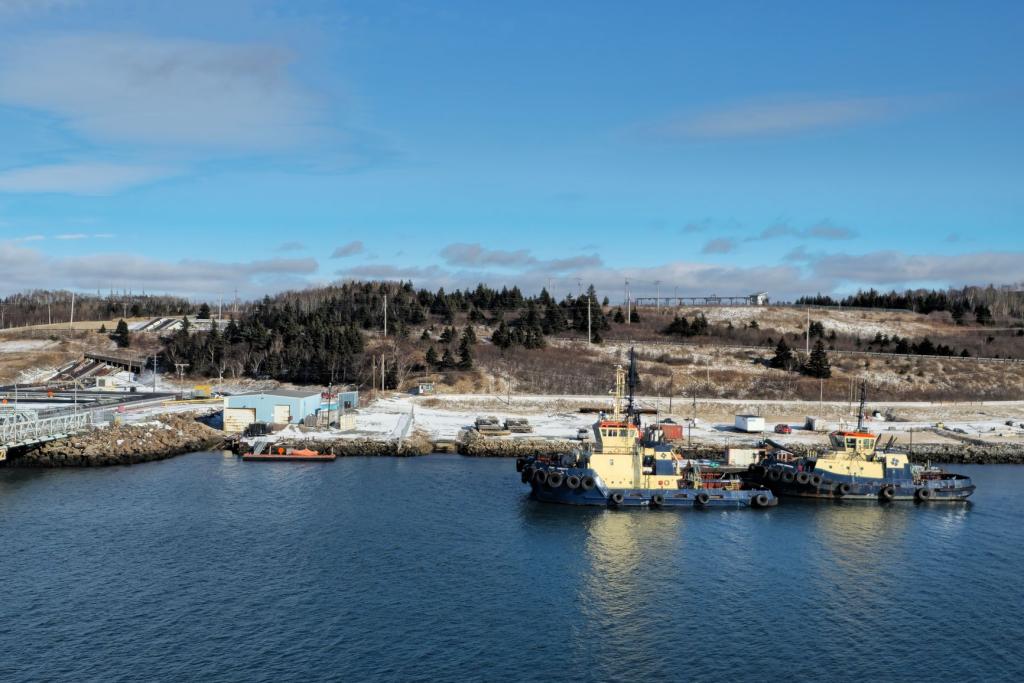
Anthropic signed a long-term lease with EverWind on Friday for data centre capacity at Point Tupper, Nova Scotia. It is the first data centre agreement the company has made in Canada. The Anthropic Nova Scotia deal commits the Claude maker to the site for at least twenty years, according to Reuters, which cited a company executive.
The facility will help run Anthropic's Claude models for Canadian users and customers around the world. The lease covers the first phase of a campus EverWind plans to build at Point Tupper, just outside Port Hawkesbury in Cape Breton. That phase would draw 95 megawatts of power and is due to come online late in 2027.
The deal and the money
EverWind unveiled the broader project the same day: a data centre campus plus wind energy development carrying a price tag above ten billion Canadian dollars. The company called it the largest privately funded investment in Nova Scotia's history. Roughly eight billion of that would go toward the data centre campus itself, with another two billion earmarked for four onshore wind farms that would feed it clean power.
The full campus is targeting 420 megawatts of capacity by 2028. Anthropic's leased slice is less than a quarter of that. The second phase, which would add 325 megawatts, has no named tenant yet and still needs financing and grid approval, according to a project wire report tracking the buildout.
The economics look substantial for the province. The project is expected to create roughly two thousand construction jobs and 215 permanent positions once it is running. At full operation, the campus is projected to add about 137 million Canadian dollars a year to Nova Scotia's GDP.
Why Point Tupper
Point Tupper sits in Cape Breton, a region that has long sought industrial investment and has steady wind resources for the onshore farms tied to the project. For Anthropic, the deal is part of a much larger infrastructure push. The company spent 7.33 billion dollars on computing and infrastructure last year, a threefold surge from 2024, Reuters reported. It is also preparing for a possible U.S. stock listing that could value it at more than two trillion dollars, though New York City Comptroller Mark Levine has urged the company to delay the offering over safety and governance concerns.
Data centres keep landing in places with available land, water, and grid connections, and Canada has become an attractive destination as costs and permitting in the United States rise. The Nova Scotia site puts the finished campus among the largest single power users in the province, whose total generating capacity sits close to 3,000 megawatts. For readers watching the infrastructure race, Gartner has also flagged a wave of AI infrastructure write-downs on the horizon, a reminder that buildouts this size carry financial risk.
The power and water question
Data centres have drawn criticism for their heavy power and water use and the strain they can place on local infrastructure. That scrutiny has followed nearly every large project in the sector. Jacob Glick, Anthropic's head of public policy for Canada, addressed the concern directly in a statement, saying the company would protect ratepayers and water resources while ensuring local communities benefit from the project.
It is a promise that will be tested. Once the first phase comes online, the campus becomes one of the province's biggest single electricity loads, and the expansion to full capacity depends on approvals that have not yet been granted. Communities across North America have watched that same question play out with mixed results.
What comes next
Construction timelines, financing, and regulatory sign-offs will decide whether the full campus materialises. The first phase has a clear tenant and a target date of late 2027. The rest of the buildout is still a plan looking for money and permission. Anthropic's lease anchors the project, but most of the campus has yet to be spoken for.
The deal is part of a wider shift in how AI companies operate. Agents and models are moving into workplaces, devices, and shopping journeys, which is why the companies building them are racing to secure power and compute years in advance. The Cape Breton campus is one more bet that demand for AI capacity keeps growing faster than anyone planned for.
Comments 0
No comments yet. Be the first to share your thoughts!
Leave a comment
Share your thoughts. Your email will not be published.