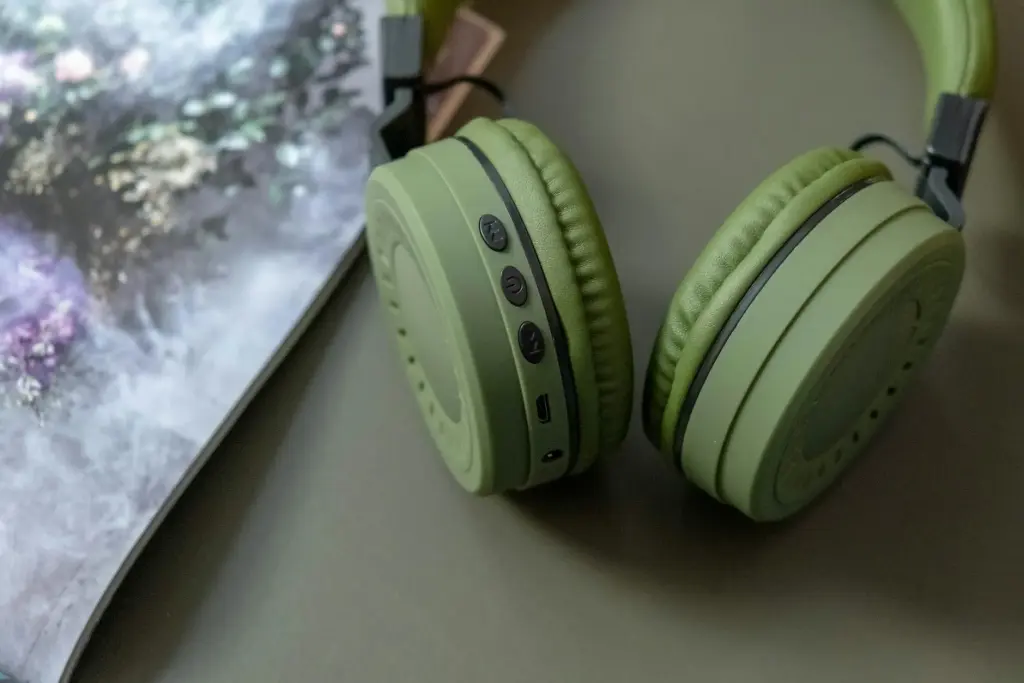
What Are AI Translator Headphones and Why Are They Trending in 2026
AI translator headphones are one of the most exciting consumer technology trends of 2026, with search interest surging 2,900% according to Exploding Topics. These devices combine advanced artificial intelligence, natural language processing, and high-quality audio hardware to provide real-time language translation directly in the ear of the wearer. AI translator headphones allow users to have seamless conversations with people who speak different languages, hearing instant translations of what the other person says as naturally as if they were speaking your native language. The appeal of AI translator headphones has grown dramatically as global travel, international business, and cross-cultural communication have become increasingly important in a connected world. Whether you are a business professional negotiating deals with international partners, a traveler exploring countries where you do not speak the language, a student studying abroad, or simply someone who wants to connect more deeply with people from different linguistic backgrounds, AI translator headphones offer a transformative solution that was science fiction just a decade ago. For the latest tech product reviews and AI device news, visit GenZ NewZ Technology and GenZ NewZ.
How AI Translator Headphones Work: The Technology Behind Real-Time Translation
The technology behind AI translator headphones is a sophisticated integration of several AI subsystems working together in near real-time. When someone speaks near the AI translator headphones, the device's microphone captures the audio and sends it to a speech recognition system, which converts the spoken words into text. This speech-to-text conversion is powered by large neural network models trained on vast amounts of multilingual audio data, enabling the system to accurately recognize speech across different accents, dialects, and speaking speeds. Once the speech has been transcribed, a neural machine translation system converts the text from the source language into the target language. Modern AI translator headphones use transformer-based translation models, similar to those used in Google Translate and DeepL, but optimized for speed and accuracy in real-time conversational contexts. The translated text is then sent to a text-to-speech synthesis system, which generates natural-sounding audio in the target language and plays it through the earphone speaker directly into the wearer's ear. The entire process, from capturing speech to delivering the translated audio, happens in approximately one to three seconds in the best AI translator headphones, which is fast enough to maintain the natural flow of conversation. Some premium AI translator headphones perform the translation processing on-device rather than in the cloud, enabling translation to work even without an internet connection, though typically with somewhat lower accuracy than cloud-based models. For detailed product comparisons, visit TechRadar and GenZ NewZ Technology.
Top AI Translator Headphones and Earbuds of 2026
The market for AI translator headphones has grown significantly in 2026, with several leading products standing out for their translation accuracy, audio quality, battery life, and usability. The Timekettle WT2 Edge remains one of the most acclaimed AI translator headphone systems on the market, featuring simultaneous translation that allows both speakers in a conversation to wear one earbud each and hear real-time translations of what the other person says. The Timekettle supports over 40 languages and 93 accents, with particularly strong performance in major world languages including English, Mandarin, Spanish, French, German, Japanese, and Arabic. Google's Pixel Buds Pro have evolved to incorporate Google's state-of-the-art translation capabilities, leveraging the company's industry-leading neural machine translation models to deliver highly accurate real-time translation with seamless integration with Android devices and Google Assistant. The ANFIER language translator earbuds are a popular budget-friendly option that delivers competent real-time AI translation in over 70 languages, making AI translator headphone technology accessible to a broader audience. The ili Wearable Translator has carved out a niche in the travel market with its completely offline translation capability, allowing users to translate in remote areas or countries where internet connectivity is unreliable. The Mymanu CLIK S earbuds feature smart call translation that can translate phone and video calls in real time, enabling multilingual business communications without the need for human interpreters. For product reviews and buying guides, see GenZ NewZ Technology and CNET.
AI Translator Headphones for Business and International Travel
The business and travel sectors are among the most enthusiastic adopters of AI translator headphones in 2026. For international business professionals, AI translator headphones remove one of the most significant barriers to global business: the language gap. Business meetings, negotiations, and presentations that previously required professional interpreters can now be conducted with the assistance of AI translator headphones, reducing costs and logistical complexity while enabling more direct, personal communication. Many multinational corporations have begun equipping their international teams with AI translator headphones as standard business equipment, recognizing the competitive advantage of faster, more fluid cross-language communication. In the travel industry, hotels, tour operators, and airlines have deployed AI translator headphone solutions to improve customer service for international guests. A hotel concierge wearing AI translator headphones can provide assistance to guests in dozens of languages, dramatically improving the guest experience without the need for multilingual staff. For international travelers, AI translator headphones provide an unprecedented level of independence and confidence when exploring countries where they do not speak the local language, enabling them to navigate transportation, order food, seek medical assistance, and engage in authentic cultural experiences that would be impossible with a translation app on a phone. For business and tech news, visit GenZ NewZ Business.
Limitations and Challenges of AI Translator Headphones
Despite their impressive capabilities, AI translator headphones still face several significant limitations that users should be aware of when choosing and using these devices. Translation accuracy remains the most critical challenge: while AI translator headphones perform very well with common conversational phrases in major world languages, accuracy drops significantly for technical vocabulary, idiomatic expressions, cultural references, and regional dialects. A doctor using AI translator headphones to communicate with a patient should supplement the device with professional medical interpretation for critical discussions where misunderstandings could have serious consequences. Latency, the delay between when someone speaks and when the translated audio is delivered, remains a challenge for maintaining natural conversational flow, particularly for longer or more complex sentences. Background noise significantly degrades the performance of AI translator headphones, as speech recognition accuracy drops in environments with high ambient noise like busy restaurants, crowded markets, or construction sites. Battery life is another practical constraint: most AI translator headphones provide between four and eight hours of continuous translation use, which may not be sufficient for full-day business meetings or extended travel days. Privacy is also a concern for some users, as most AI translator headphones rely on cloud-based processing, meaning conversation audio is transmitted to remote servers for translation. For users with privacy-sensitive conversations, on-device AI translator headphones that perform all processing locally offer a more secure alternative, though typically with more limited language support and lower accuracy.
AI Translator Headphones vs. Traditional Interpretation: A Comparison
The rise of AI translator headphones raises important questions about the future of professional human interpretation. Traditional human interpreters remain superior to AI translator headphones in several important respects: they can handle highly technical, legal, medical, and cultural nuances with a level of accuracy, judgment, and contextual understanding that current AI translation systems cannot match. Human interpreters can ask for clarification, detect inconsistencies, and adapt to the specific communication needs of complex situations. However, AI translator headphones offer compelling advantages over human interpretation in terms of cost, availability, and scalability. A pair of AI translator headphones costs a few hundred dollars and can translate continuously in dozens of languages, whereas professional human interpreters cost hundreds of dollars per hour and must be scheduled in advance. For everyday conversational use in travel, hospitality, customer service, and general business communication, AI translator headphones have already reached a level of accuracy and usability that makes them a practical alternative to human interpretation for the vast majority of use cases. The professional interpretation industry is adapting in response, with many interpreters now specializing in high-stakes, high-complexity situations where AI translation tools are not yet reliable enough, while embracing AI tools to assist with routine translation tasks. See related technology coverage at BBC Technology.
How to Choose the Right AI Translator Headphones
Choosing the right pair of AI translator headphones requires considering your specific use case, budget, and technical requirements. If your primary use case is travel, prioritize AI translator headphones with wide language support, long battery life, and offline translation capability, as you may not always have reliable internet access. If your primary use case is business communication, prioritize translation accuracy, low latency, and features like meeting mode that can translate multi-person conversations simultaneously. Sound quality and comfort are important for any use case, as AI translator headphones that are uncomfortable to wear for extended periods or that produce poor audio quality will detract from both the communication and listening experience. Connectivity features like Bluetooth range, multipoint connection, and compatibility with your devices should also be evaluated. Consider whether the AI translator headphones you choose use on-device or cloud-based processing, and evaluate the privacy implications for your specific use case. Budget is of course a key factor: premium AI translator headphones with the most accurate and versatile translation capabilities typically cost between $200 and $500, while more affordable options are available in the $50 to $150 range, with corresponding trade-offs in translation quality and feature set. For shopping guides and reviews, check GenZ NewZ Technology and PCMag.
The Future of AI Translator Headphones: Where Is the Technology Heading
The trajectory of AI translator headphones points toward devices that will become dramatically more capable, accurate, and integrated into everyday life over the next few years. Advances in on-device AI processing will enable future AI translator headphones to perform real-time translation entirely locally, eliminating latency, reducing battery consumption, and addressing privacy concerns without sacrificing accuracy. Improvements in speech recognition will extend accurate AI translator headphone performance to more dialects, accents, and challenging acoustic environments. The integration of contextual AI capabilities, where the AI translator headphones learn the vocabulary, communication patterns, and subject domains most relevant to each user, will enable increasingly personalized and accurate translation. Augmented reality integration is another exciting direction for AI translator headphones, with devices that can overlay translated text, cultural information, and contextual guidance directly into the user's field of view through AR glasses or smart contact lenses. As AI translation models continue to improve and edge computing hardware becomes more powerful, the dream of truly universal communication across language barriers, once a staple of science fiction, is rapidly becoming a practical reality for billions of people worldwide. Stay up to date with AI translator headphones and consumer tech trends at GenZ NewZ, Reuters Technology, and The New York Times Tech.
Comments 0
No comments yet. Be the first to share your thoughts!
Leave a comment
Share your thoughts. Your email will not be published.