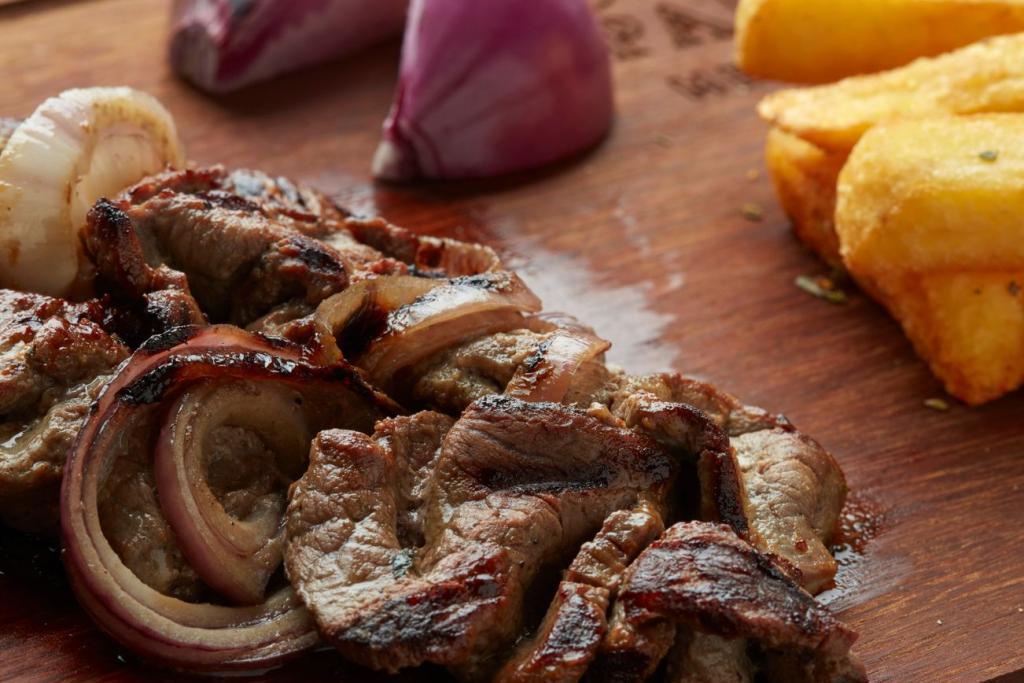
The case against red meat may have a new suspect, and it is a sugar your body was never supposed to meet. Research presented at this year's meeting of the European Association for the Study of Diabetes found that people with the highest intake of a meat-derived sugar called Neu5Gc faced a 63 percent higher diabetes risk than people with the lowest intake.
The study followed nearly ninety thousand French adults who were free of diabetes and cancer when it began. Over a median follow-up of about seven years, the research team recorded 966 new cases of type 2 diabetes, and diabetes risk rose steadily as estimated Neu5Gc intake climbed. The pattern held after the researchers adjusted for age, sex, physical activity, overall diet, smoking and other health conditions, according to the researchers.
Lead author Leopold Fezeu of Université Sorbonne Paris Nord in Bobigny, France, said the results point to chronic inflammation as a specific mechanism linking red meat consumption with type 2 diabetes, partly beyond the amount of red meat a person eats and partly independent of body fat. The findings were presented in Milan at the association's annual meeting, which runs Sept. 28 through Oct. 2. More detail on the presentation is available from the association.
A sugar humans stopped making
Neu5Gc, short for N-glycolylneuraminic acid, is produced by most mammals, but humans lost the ability long ago through a mutation in the CMAH gene. It is abundant in red meat, especially beef and lamb, and present in smaller amounts in dairy products.
When people eat these foods, the foreign sugar is absorbed and woven into human tissues, where the immune system treats it as an invader. The body makes antibodies against it, producing a low-grade, long-running immune activation that scientists call xenosialitis. The process has previously been linked to cardiovascular disease and cancer, but no large prospective study had examined whether it also contributes to diabetes risk.
How the study was run
The researchers drew on the NutriNet-Santé study, a long-running French cohort tracking the relationship between diet, lifestyle and health. Participants completed three detailed dietary records, and the team estimated each person's daily Neu5Gc intake using a validated database of the sugar content of different foods.
Participants were divided into five equal groups by their meat-derived Neu5Gc intake, separately for men and women, and the diabetes risk in each group was compared with the lowest-intake group. The average participant was 42 years old, and roughly four in five were women. The analysis covered beef, lamb, pork, rabbit, goat and game meats, while processed meats and dairy were examined separately.
People in the highest-intake group carried the heaviest diabetes risk, and those in the second-highest group faced a 41 percent higher risk than the lowest group. In the highest group, men ate a median of 97 grams of red meat a day and women ate 73 grams, while women in the lowest group ate essentially no red meat at all.
Meat drove the effect, dairy did not
The researchers found no association between Neu5Gc from dairy products and diabetes risk, consistent with milk's lower Neu5Gc content and the smaller serving sizes people typically consume. Looking at Neu5Gc from all foods combined, the highest-intake group showed a 37 percent higher risk, an effect the team said was driven largely by the red meat component.
Obesity accounted for roughly 13 percent of the association, which suggests most of it runs through other routes, most likely direct inflammatory effects on insulin-producing cells and insulin-sensitive tissues. After adjusting for total red meat intake, the association weakened and was no longer statistically significant, though it pointed in the same direction, which suggests Neu5Gc may explain part, but not all, of the well-known link between red meat and diabetes.
The result lands amid a wave of research rethinking everyday food. Recent work has looked at how even small daily portions of ultra-processed food relate to heart health, and at how major chains are reshaping menus for customers managing weight and blood sugar.
What comes next, and what it does not prove
Fezeu said the next step is to measure anti-Neu5Gc antibodies directly in large cohorts, which would test whether the immune response truly drives diabetes risk. He also suggested future studies examine Neu5Gc alongside other red meat components, such as heme iron, and explore whether favoring poultry or plant proteins over beef and lamb, which carry the most Neu5Gc, could help prevent diabetes.
The authors stressed that the results are preliminary and have not been validated, and the estimates could shift once the analysis is finalized. Because the study was observational, it cannot show that Neu5Gc caused the extra diabetes risk, and unmeasured lifestyle factors may still play a role.
Still, for a food group that sits at the center of many Western diets, the study offers the most detailed account yet of a biological route from steak to elevated diabetes risk.
Comments 0
No comments yet. Be the first to share your thoughts!
Leave a comment
Share your thoughts. Your email will not be published.