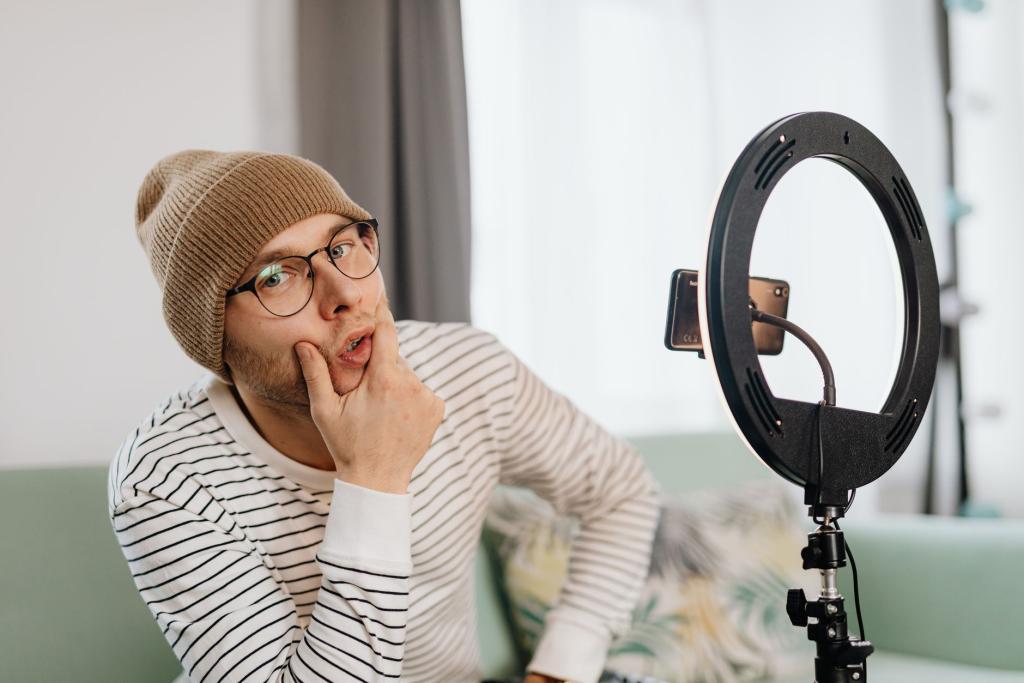
How paid political creators actually work
Some of the most relatable political rants on your feed were bought and paid for. A New York Times investigation published September twenty-second found that campaigns and advocacy groups are paying everyday people with small followings to flood TikTok, Instagram and YouTube with political content, and most of the time nobody tells you the praise was purchased. The paper identified more than one hundred creators who took money from a progressive group to make videos about the cost of living.
The face of the operation was a guy who called himself Drew. According to the Times, Drew's TikTok feed showed a young man living near Dallas who complained about skyrocketing grocery bills and said he was hunting for thrift stores to get by. His LinkedIn profile told a different story: his name was Alex Forrester, he was from Utah, and he had since moved to Florida. "All of it was paid for," he said in a video posted in late June that was later deleted, adding, "I don't even live in Texas." The Times reported that Forrester did not respond to its requests for comment.
The group behind the affordability push was Project Bullhorn, a Democratic-aligned venture that says it wants to break the right's grip on social media. Early this year, according to the Times, it went to SideShift, a marketplace where brands hire people to make user-generated content, looking for creators to talk about the affordability crisis ahead of the twenty twenty-six midterms. The rate started at thirty dollars a video and later dropped to twenty-five. Few of the creators who took the money disclosed that they had been paid.
The personas were not always local, either. The Times found that only a third of the affordability creators appeared to actually live in the states they were posting about. One man who claimed to be "born and raised" in Texas was really from Leicestershire, England, according to his SideShift profile. A woman hired to post about the cost of living in the United States actually lived in Ontario, Canada.
The strategy is about volume. The Times described these campaigns as functioning "more like birdshot than a single bullet": a flood of posts from accounts nobody has ever heard of saturates a topic until it feels unavoidable, which can trick recommendation algorithms into treating coordinated messaging as organic conversation. Samuel Woolley, a professor at the University of Pittsburgh who studies how new technologies get used to manipulate public opinion online, said in the Times investigation, "This is digital astroturfing, plain and simple. The more people see an idea online, the more inured to it they become and the more commonplace and acceptable it becomes."
It is not just one side
The Times found paid-creator campaigns across the political spectrum this year. Ordinary people were paid to promote a Republican candidate for mayor of Los Angeles, to oppose a regulatory bill pushed by the crypto industry, and to call for tighter regulation of artificial intelligence. Separately, an unidentified nonprofit group offered more than a thousand dollars a video for TikTok, YouTube and Instagram posts supporting "mail voting working correctly."
There is a whole marketplace for this now. DrumBeat is a platform that specializes in paid advocacy work, and Jafari Jackson, a creator based in Arizona, told the Times he had joined several campaigns he found there, including one that called for content opposing the Save Our Bacon Act, reported by AgDaily. The bill was Congress's answer to California's Proposition Twelve, which put strict limits on how poultry and swine sold in the state can be housed, and AgDaily reported that the paid opposition may have distorted how much grassroots support the bill's critics really had.
The disclosure loophole
Federal rules treat a paid moisturizer post more strictly than a paid political one. The Federal Trade Commission requires commercial influencers to disclose material connections like payment clearly and conspicuously. But there is currently no equivalent federal rule for political content: a FactVerify fact check found no Federal Election Commission regulation that explicitly requires influencers to say when a campaign, super PAC or political group paid for their posts, a gap that campaign-finance watchdogs have formally asked the commission to close.
With no federal rule covering political posts, spotting paid political creators is on you. A few habits help: check whether an account ranting about an issue has ever posted about it before, look for #ad or "paid partnership" labels, and be skeptical of hyper-local grievances from accounts whose bios point somewhere else. The creator economy runs on trust, and Gen Z built that trust, which is exactly why campaigns want to rent it. If you want a sense of how much money is sloshing around creator culture right now, GenZNewZ has covered YouTube's million-dollar podcast deals and the fall of looksmaxxing star Clavicular, and the platform at the center of all of this just went through its own ownership saga.
Comments 0
No comments yet. Be the first to share your thoughts!
Leave a comment
Share your thoughts. Your email will not be published.