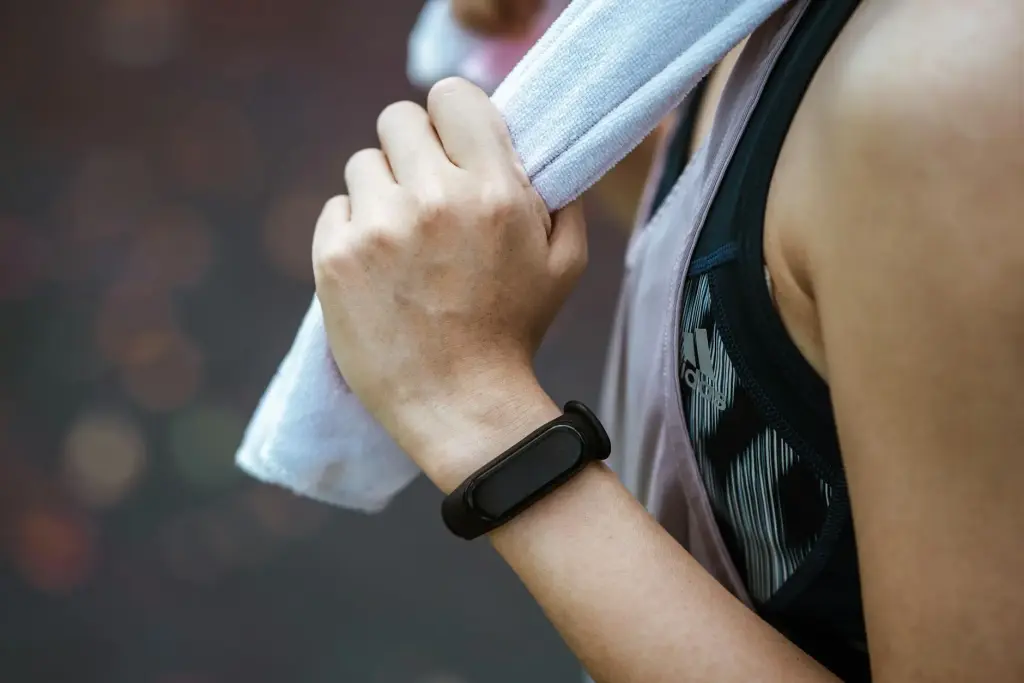
WHOOP Just Became a $10 Billion Company and Gen Z Is Driving the Hype
The wearable that tracks your sleep, strain, and recovery just hit a massive milestone. WHOOP, the screen-free fitness band favored by elite athletes and wellness obsessives, announced it raised $575 million in fresh funding — pushing its valuation to $10.1 billion. That is nearly triple its previous valuation of $3.6 billion, and it signals that personalized health tech is officially having its mainstream moment with younger consumers leading the charge.
According to Bloomberg, the Series G round was led by Collaborative Fund and drew in some serious heavy hitters. We are talking Qatar Investment Authority, Abu Dhabi sovereign wealth fund Mubadala, medical device giant Abbott Laboratories, and yes — superstar athletes like LeBron James and Cristiano Ronaldo who are already investors and users. The company is reportedly eyeing an IPO as its next major move, which could make it one of the most valuable health tech companies to go public.
Why This Matters for Your Health Data
WHOOP is not just another fitness tracker. The band measures everything from heart rate variability and sleep quality to blood pressure insights and recovery metrics. The goal? Help you understand when to push harder in the gym and when to prioritize rest. For a generation that is grown up with data-driven everything, this level of biometric insight is basically the holy grail of wellness optimization.
The numbers back up the hype. WHOOP told Bloomberg it now has over 2.5 million members, saw subscriptions jump 103% in 2025, and was cash flow positive last year. Even more impressive: four years ago, only 30% of users were outside the US. Now, 60% of new sales come from international markets spanning Europe, Latin America, Asia, and the Middle East. The company plans to use this funding to expand globally, hire over 600 new employees across software and hardware teams, and develop new features including a Women is Health Specialized Blood Biomarker Panel launching later this year.
"I do envision the potential of WHOOP to predict that you are going to have a heart attack before you do," CEO Will Ahmed told The New York Times. That is ambitious, but it is exactly the kind of preventive health promise that could change how we think about medicine. Instead of waiting until something goes wrong, wearables like WHOOP aim to catch warning signs early — potentially saving lives through continuous biometric monitoring that was once only available in hospitals.
Of course, it is not all smooth sailing. The company received an FDA warning letter last year over its blood pressure monitoring feature, with regulators arguing it should be classified as a medical device rather than a wellness tool. WHOOP stands behind the feature as a wellness offering, similar to its sleep and exercise tracking. The regulatory tension highlights a bigger question facing the entire industry: as health tech gets more sophisticated and medical-grade, where is the line between consumer wellness gadget and regulated medical equipment?
The Bottom Line for Gen Z Wellness
Here is why this funding round actually matters to you. WHOOP is massive valuation proves that investors are betting big on personalized health — meaning more competition, better features, and hopefully more accessible prices as the market grows and matures. Whether you are optimizing your workouts, managing stress, tracking your menstrual cycle, or just curious about what your body is doing 24/7, the wearable health revolution is accelerating faster than ever before.
The company is also expanding far beyond just hardware. With new hiring across software, research and design, hardware engineering, and product development, expect smarter algorithms and more actionable insights delivered straight to your phone. For a generation that treats sleep as a competitive sport and recovery as a science, WHOOP is growth signals that the future of health is wearable, data-driven, deeply personal, and increasingly powered by artificial intelligence that learns your unique biometric patterns over time.
Read more about the funding details at The New York Times.
Comments 0
No comments yet. Be the first to share your thoughts!
Leave a comment
Share your thoughts. Your email will not be published.