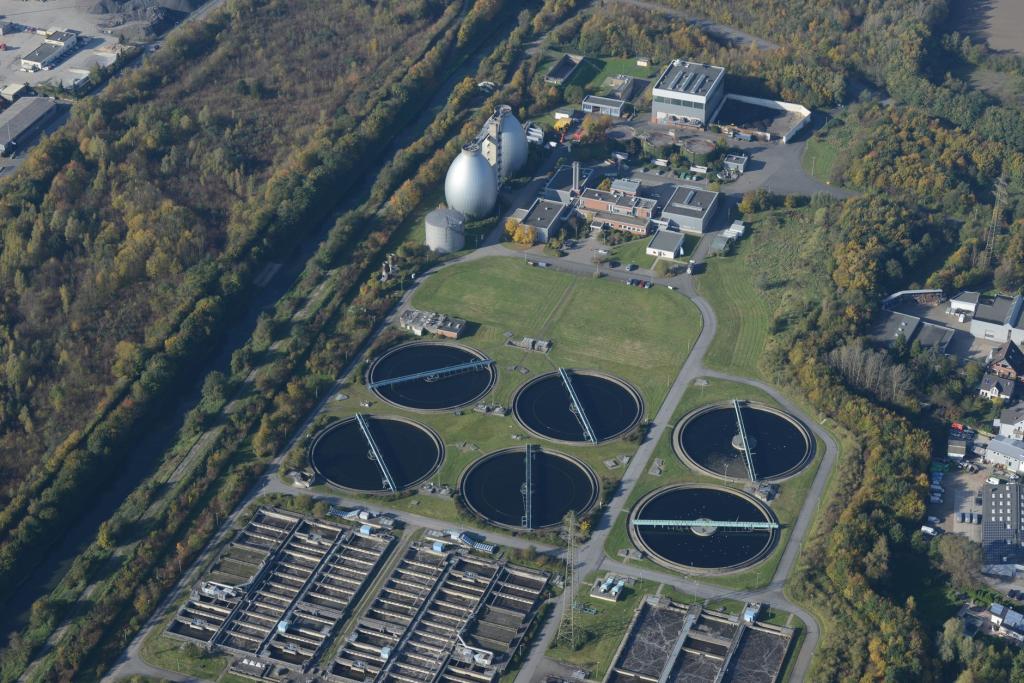
A city's sewers say a lot about its residents. Every pathogen a community sheds ends up in the same water, and now researchers in Washington state have shown that wastewater can reveal where sexually transmitted infections are spreading, even when clinics see nothing.
A study published August 7 in the journal ACS ES&T Water found that the bacteria that causes chlamydia showed up in up to 88 percent of wastewater samples collected across five treatment plants in Washington state, a promising first case for wastewater STI monitoring. The work, led by researchers at the University of Washington and the Washington State Department of Health, suggests public health agencies could spot STI transmission rising in a community long before case reports catch up.
"Wastewater is cool because it's population level. You don't need people to go to the doctor and seek out treatment to know that there are people in a community shedding specific pathogens," said co-lead author Erica Fuhrmeister, an assistant professor of environmental and occupational health sciences and of civil and environmental engineering at the UW, according to the university's announcement. The catch is that American public health agencies don't routinely test wastewater for STIs. This study argues they should start.
What they found in the water
The team ran two rounds of sampling. The first set of 132 samples was collected weekly across five wastewater treatment plants in Washington between November 2024 and February 2025, a mix of urban and rural sites, including one rural plant serving fewer than 5,000 people. A second set of 86 samples came from six neighborhood-level sewer sites around Seattle between January 2022 and June 2022. Every sample was tested for the three most common bacterial STIs: chlamydia, gonorrhea, and syphilis.
Chlamydia's bacteria, Chlamydia trachomatis, dominated. It was detected in 65 percent of the treatment-plant samples, and at the neighborhood sites it ranged from 13 to 80 percent depending on the location. Gonorrhea's bacteria, Neisseria gonorrhoeae, appeared in only 0 to 11 percent of plant samples. Syphilis's bacteria, Treponema pallidum, showed up in 4 to 8 percent. Both were found less often even though clinic data confirmed those infections were present in the same areas.
That mismatch is exactly the point. STIs are underreported for a lot of reasons: stigma, people not knowing they have them, doctors missing early symptoms. Wastewater doesn't need anyone to show up and ask for a test. It just measures what's moving through a community, which is why the researchers see it as an early warning system rather than a diagnostic one.
The college campus with invisible chlamydia
The most striking detail came from one neighborhood site next to a college campus, where more than 87 percent of residents were between 18 and 34, the age group at highest risk for STIs. Clinic records for the area showed very low chlamydia case counts. The sewers told a different story: chlamydia bacteria were consistently detected in the wastewater there.
"From a public health perspective, data like this allows us to elevate awareness that this pathogen is here and spreading in the community, even if cases aren't presenting to clinics or providers are not identifying the infections in their patients," said co-lead author Breanna McArdle, program manager of the Washington State Department of Health's wastewater surveillance program. That gap could mean infections are going unreported because of stigma or because people have no symptoms and never get tested.
The team also noticed patterns over time, including spikes in pathogen concentration near the winter holidays and after Valentine's Day. Fuhrmeister says the next step is longer sampling series and, pointedly, a focus on college dormitories, where the combination of young adults and low testing rates makes wastewater monitoring especially useful.
How this could actually be used
None of this is about catching individuals. The researchers masked the names and locations of their sampling sites to protect community privacy, and the method is designed to work at the neighborhood level, not the person level. Instead, local health departments could use the data to aim resources where they're needed: more on-campus screening, social marketing campaigns, self-testing kits for students, and earlier alerts to providers when transmission ticks upward.
There are still open questions. Researchers don't fully know the true rate at which these bacteria shed into wastewater, and they're still investigating why chlamydia showed up so much more reliably than gonorrhea or syphilis. People moving between sewer areas and the makeup of each community can skew results, and more sampling is needed to understand those effects.
Independent experts urged the same caution. "Wastewater surveillance can complement, but not replace, traditional STI testing and case reporting," said Shirin Mazumder, an infectious diseases specialist at the University of Tennessee Health Science Center who was not involved in the study, speaking to Medscape. She noted that the true burden of STIs is likely underestimated because of asymptomatic infections, stigma, limited health care access, and inadequate testing, and that wastewater offers a way to monitor infections without relying on individuals to seek testing. She also flagged open issues like pathogen degradation in wastewater, the effect of rain and snow on concentrations, and privacy concerns when monitoring smaller communities.
Still, the direction is clear. Wastewater monitoring started with polio in the 1940s and became a household concept during COVID-19. The CDC's wastewater program now tracks a range of viruses. STIs may be next on the list, and this study gives health agencies a proof of concept: the pipes can warn them before the clinics do.
Related reading: 20-minute STI tests could end Australia's days-long wait and syphilis is surging in Japan while a cure runs short.
For more detail, the University of Washington's announcement walks through the full study and its methods and findings, and Medscape's coverage adds independent analysis of the public health implications.
Comments 0
No comments yet. Be the first to share your thoughts!
Leave a comment
Share your thoughts. Your email will not be published.