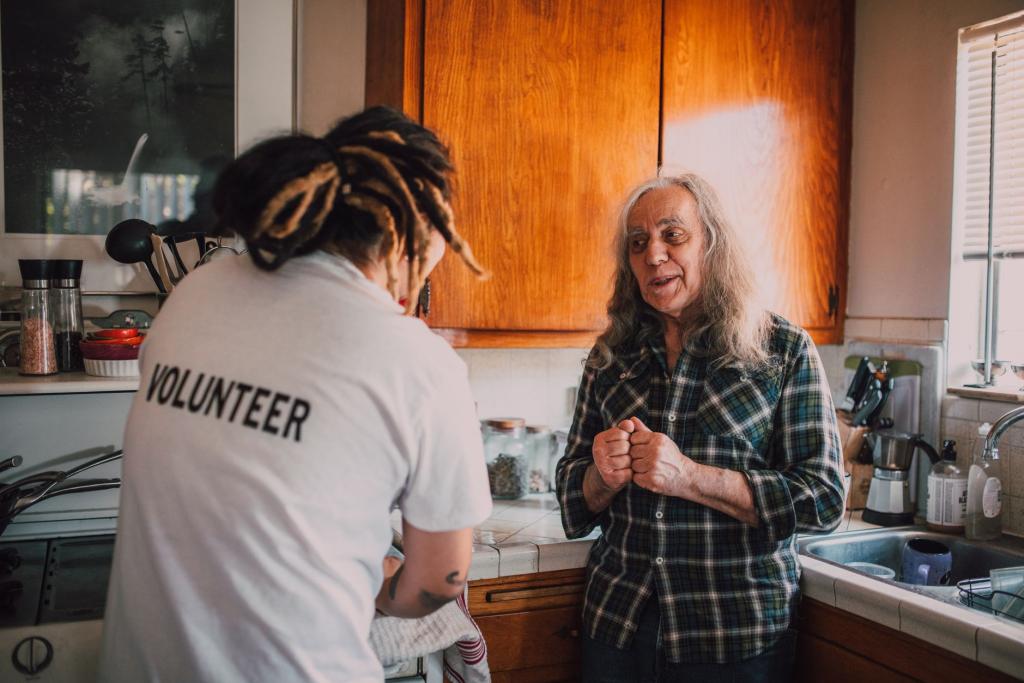
Regularly volunteering and helping other people may slow the loss of memory and thinking skills in people who carry the strongest known genetic risk factor for late-onset Alzheimer's disease, according to new research led by The University of Texas at Austin.
The study, published in Alzheimer's & Dementia, drew on 22 years of data from the Health and Retirement Study, a nationally representative survey of older U.S. adults. The data covered 1998 through 2020 and followed nearly eighteen thousand adults. It focused on carriers of the APOE ε4 gene variant, which is tied to faster cognitive decline. Researchers found that people who began and sustained volunteering or other helping activities outside the home showed substantially slower cognitive decline than those who did not, and the association was strongest among people at the highest genetic risk.
The timeline of decline shifted
Among people at the highest genetic risk, those who began and sustained helping others reached the same significant level of cognitive impairment on a screening tool almost two years later than those who did not engage in those activities. That gap amounts to a meaningful change in the timeline of decline rather than a marginal statistical difference. Sae Hwang Han, an associate professor of human development and family sciences at UT Austin and the lead author of the study, said that "very few pharmaceutical or lifestyle approaches" had been shown to slow the decline driven by the variant, and that helping others was linked to markedly slower decline for this group. Jessica Faul of the University of Michigan was the co-author.
Modest amounts of helping were enough
The benefits did not require a large time commitment. Slower cognitive decline was seen in people averaging less than about four hours a week of volunteering or other informal helping activities outside the home. That threshold puts the behavior within reach of many older adults, including those managing health problems or family responsibilities. The helping activities in the study ranged from formal volunteering to informal support outside the home.
The design tracked the same people over time. Rather than comparing volunteers with non-volunteers at a single point, the researchers looked at what happened to cognitive performance as participants began or stopped helping. The analysis accounted for demographic, socioeconomic and health characteristics that could otherwise influence the results, which makes it harder for fixed differences between people to explain the finding. The study is observational, so it still shows an association rather than proof that helping others directly causes slower decline.
The type of helping mattered
Formal volunteering was associated with slower cognitive decline across all racial and ethnic groups in the study. Informal helping, such as assisting friends, neighbours and relatives, showed the strongest benefits among Hispanic older adults, a pattern the researchers said may reflect the cultural importance of such support. The distinction suggests that both organized service and everyday neighbourliness may support brain health, even if the pathways differ.
What the study does not show
Previous research has connected helping others to biological processes involved in stress and inflammation, which are also tied to cognitive decline. This study did not examine those mechanisms. That leaves the mechanism an open question for future research. The work was supported by the National Institute on Aging and the Eunice Kennedy Shriver National Institute of Child Health and Human Development at the National Institutes of Health.
Han's earlier research had already established links between helping others and slower cognitive aging. The new study is among the earliest to examine volunteering and other helping alongside this gene variant. For families and communities, the findings suggest that opportunities to contribute to the lives of others could be an important component of healthy aging, particularly for those at heightened genetic risk. Local volunteering programmes, neighbourhood support networks and informal caregiving all sit within the range of activities the study examined. Anyone concerned about memory changes should seek medical advice, and genetic risk is only part of the picture for any individual. The full study is available through Alzheimer's & Dementia, and UT Austin has published an announcement summarising the findings.
Related coverage on genznewz includes Scientists Found the Glitch in mRNA Vaccines, and How to Fix It and England's Mental Health Baseline: Happy Lives, Strained Minds.
Comments 0
No comments yet. Be the first to share your thoughts!
Leave a comment
Share your thoughts. Your email will not be published.